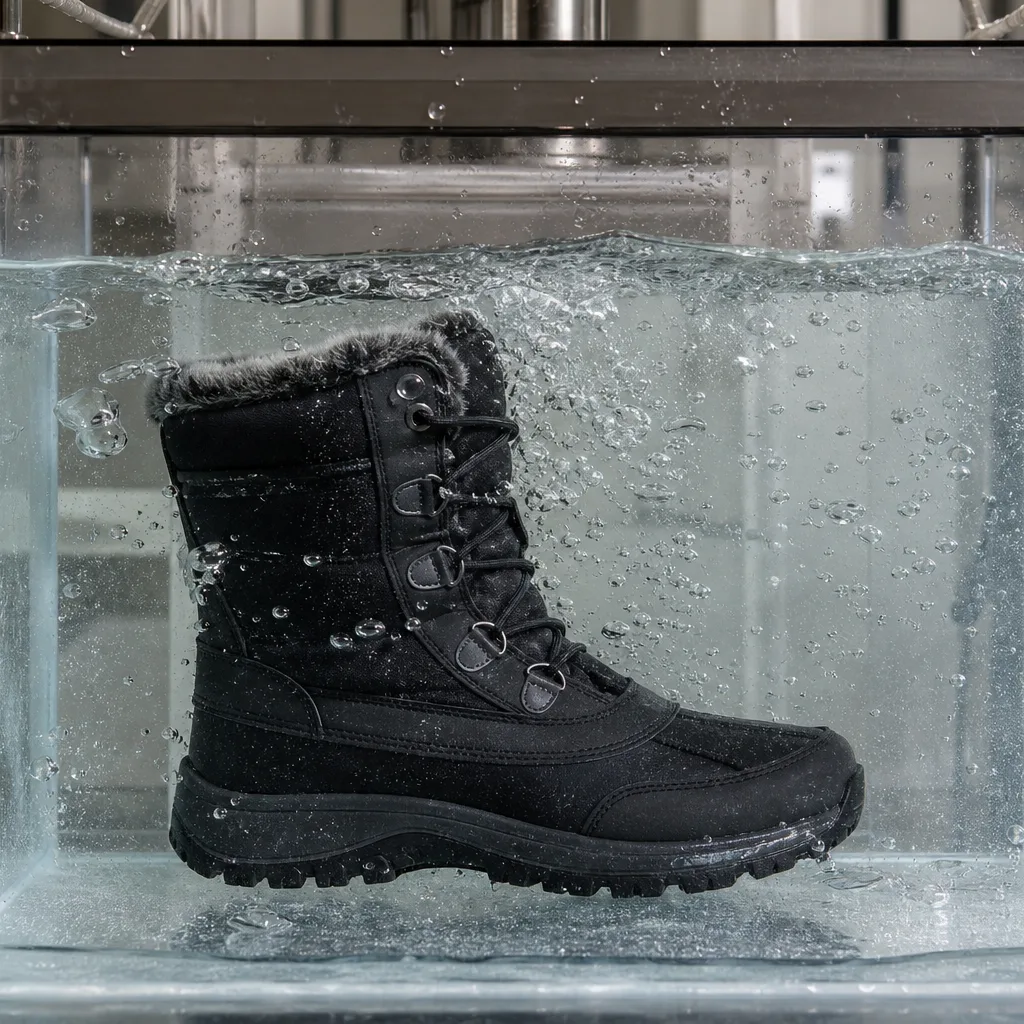
This guide is written for product teams, importers, wholesalers, and brand operators. Use it to structure supplier conversations and document decisions before samples or bulk production move forward.
Membrane booties provide broad internal coverage
A membrane bootie can create a continuous barrier behind several upper panels, which is useful when the exterior design has many seams. The result depends on bootie pattern, seam sealing, joins, handling, and protection from puncture. Membrane choice also affects moisture management and hand feel, but breathability claims should be tied to appropriate evidence and the complete construction.
Seam sealing targets selected entry paths
Seam-sealed construction applies tape, sealant, or another treatment to specified seams, often alongside water-resistant upper materials. It can be efficient when the pattern has controlled seam placement and the protection boundary is clear. The process needs stable application width, adhesion, curing, and inspection. Not every decorative or structural seam is equally accessible to treatment.
Compare manufacturability and inspection
Ask the factory to show the operation sequence and the point at which treated areas become hidden. Membrane booties require controls for seam integrity and puncture, while seam sealing requires controls for coverage and adhesion. Both benefit from visual work instructions, trained operators, defined defect examples, and finished-product verification. Choose the approach the factory can execute consistently for the intended design.
Select by use and claim, not terminology
Consider exposure, boot height, flex, lining, internal moisture, weight, target cost, repairability, and production volume. A lower weather boot may use a different solution from a technical winter hiking style. Define the required outcome first, then evaluate constructions and testing with qualified partners. Avoid assuming that a named material automatically supports a finished-product claim.
Decision framework
Buyer checklist
- Define exposure and waterproof boundary
- Review membrane or sealing operation sequence
- Inspect hidden areas before closure
- Set finished-boot verification criteria
- Use claim language supported by evidence
Continue the specification
Move from research to a controlled brief.
Frequently asked questions
Questions buyers ask next
Is a waterproof membrane better than seam sealing?
Neither is universally better. Suitability depends on pattern, use, claim scope, factory process control, comfort, cost, and testing.
Can seam sealing be added after a boot is designed?
Sometimes, but seam position and access affect feasibility. It is more reliable to design seam treatment into the pattern and assembly sequence from the start.