This guide is written for product teams, importers, wholesalers, and brand operators. Use it to structure supplier conversations and document decisions before samples or bulk production move forward.
Set the gusset height from the claim boundary
The tongue gusset connects the tongue to the quarters and limits water entry through the lace opening. Its height should follow the intended protection boundary and practical exposure. A higher gusset can improve coverage but may reduce entry or create bulk. Mark the finished gusset height in the specification and check it on the foot, not only laid flat.
Place seams away from high-risk zones
Reduce unnecessary seams near flex points, splash zones, and the lower perimeter when the construction allows. Where seams are required, select suitable allowances, stitch density, thread, backing, and treatment. Decorative stitching can puncture a barrier or complicate sealing, so every visible line should be reviewed against the weather plan rather than approved only from artwork.
Design for operator access and inspection
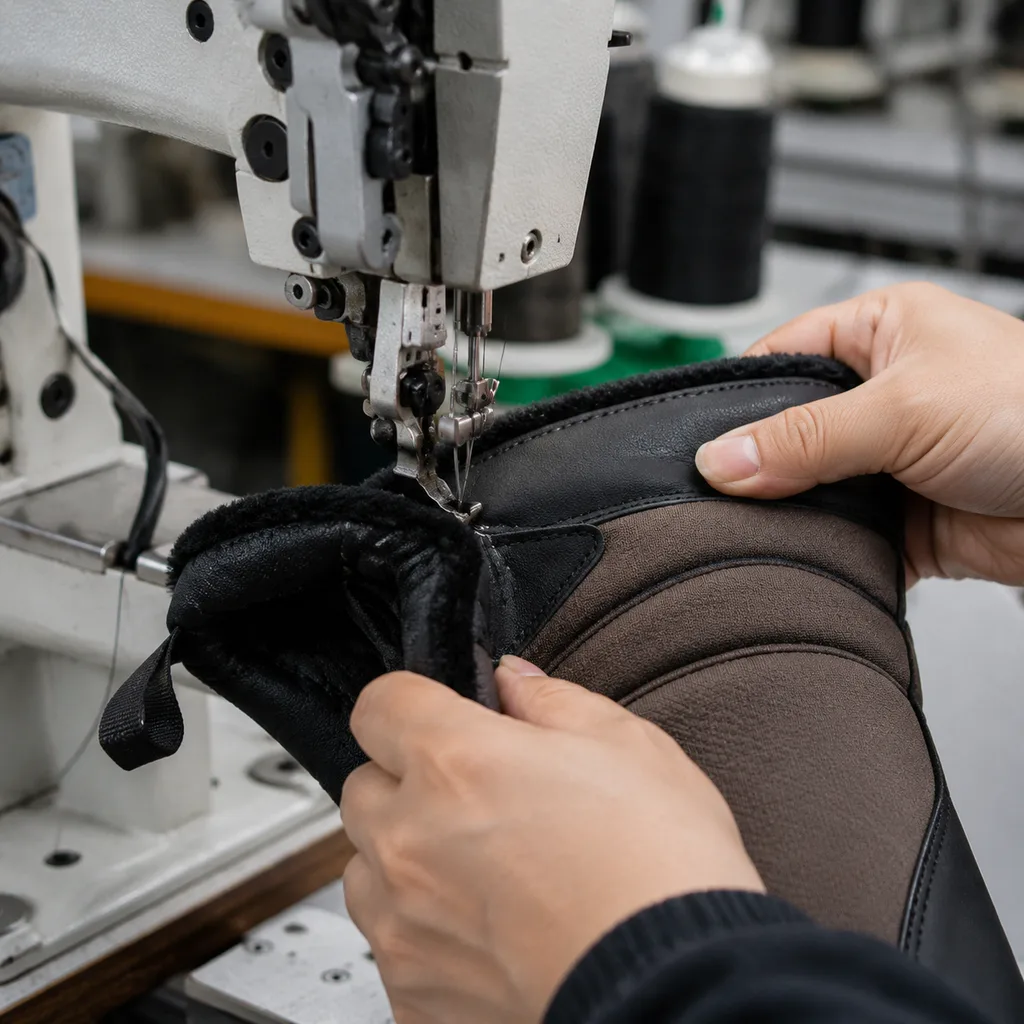
A seam treatment that cannot be reached consistently during assembly is not a stable production solution. Review the sequence with the factory and identify when tape, sealant, or membrane joins are applied. Add inspection before lining or lasting hides the area. Use simple visual standards showing acceptable coverage, wrinkles, gaps, and edge lift.
Test entry, flex, and pressure points
The gusset folds as the boot opens and flexes. Excess material can bunch against the instep, while too little material restricts entry or pulls at seams. Fit with the intended sock and closure tension, then flex the boot repeatedly before water verification. Review seam positions near toes, ankles, and collar foam for rubbing or stiffness.
Decision framework
Buyer checklist
- Set gusset height from the intended boundary
- Remove avoidable seams from splash and flex zones
- Confirm treatment access in the assembly sequence
- Inspect waterproof work before it is hidden
- Fit and flex the final gusset construction
Continue the specification
Move from research to a controlled brief.
Frequently asked questions
Questions buyers ask next
What is a gusseted tongue on a snow boot?
It is a tongue connected to the sides of the upper by material panels, reducing open paths through the lace area and helping define the water-protection height.
Does a full gusset make a boot waterproof?
No. It addresses one entry path. Upper materials, seams, sole attachment, other openings, workmanship, and verification still matter.