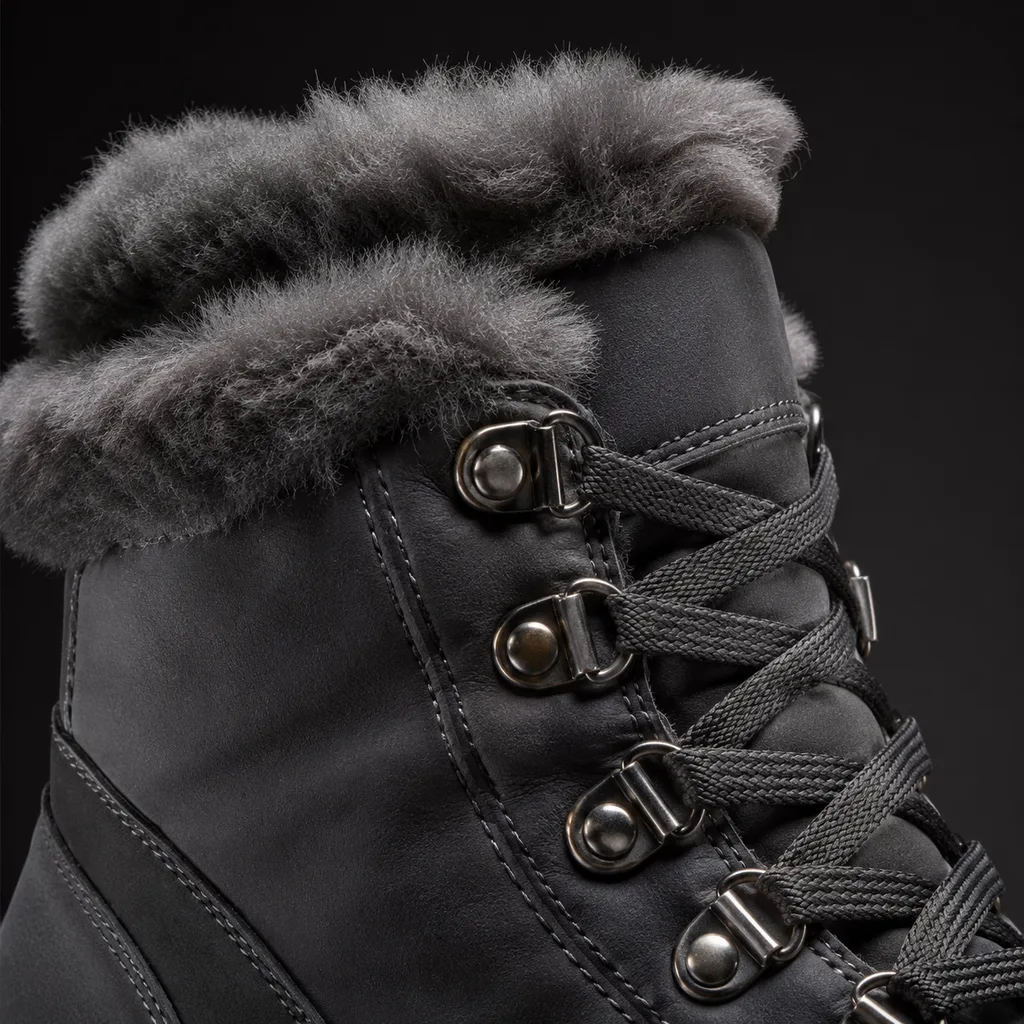
This guide is written for product teams, importers, wholesalers, and brand operators. Use it to structure supplier conversations and document decisions before samples or bulk production move forward.
Water resistance describes limited protection
A water-resistant material or boot may repel light moisture or brief exposure, depending on its construction and finish. The term should not be used as a substitute for a broader waterproof claim. Buyers need to define the intended condition, maintenance expectations, and evidence supporting the selected wording. Market rules and consumer expectations can vary, so obtain current claim guidance where needed.
Waterproof requires a controlled finished system
A waterproof specification normally addresses upper barrier, seams, gussets, closures, sole interface, and a defined test or verification plan. Protection has a physical boundary at the opening or gusset height. A boot can be waterproof below that line while still allowing water over the top. Product descriptions should make that limitation understandable.
Choose the claim from the use case
Light urban snow, short commutes, deep slush, sustained wet work, and winter hiking create different exposure. Stronger construction may add cost, weight, stiffness, or process complexity. Rank the consumer need and price architecture before specifying the highest possible claim. Overbuilding a fashion style can hurt comfort and margin without improving the buying proposition.
Align RFQ, test plan, and retail copy
Use the same terminology in the supplier brief, test request, quality plan, packaging, and marketing content. Record test method, sample condition, boundary, and pass criteria. If a claim changes after development, review the construction again rather than editing only the copy. This alignment reduces disputes and helps buyers communicate realistic performance.
Decision framework
Buyer checklist
- Describe intended water exposure in the RFQ
- Choose claim language after construction review
- Mark protection height and limitations
- Connect the claim to a defined verification plan
- Repeat the same scope in retail copy
Continue the specification
Move from research to a controlled brief.
Frequently asked questions
Questions buyers ask next
Are water-resistant boots suitable for snow?
They may suit limited or light exposure if the construction and care match the use. Buyers should not assume suitability for deep slush or sustained wet conditions.
Does waterproof mean water cannot enter from the top?
No. Openings and protection height still limit the boot. Waterproof claims should state or imply only the tested and intended boundary.