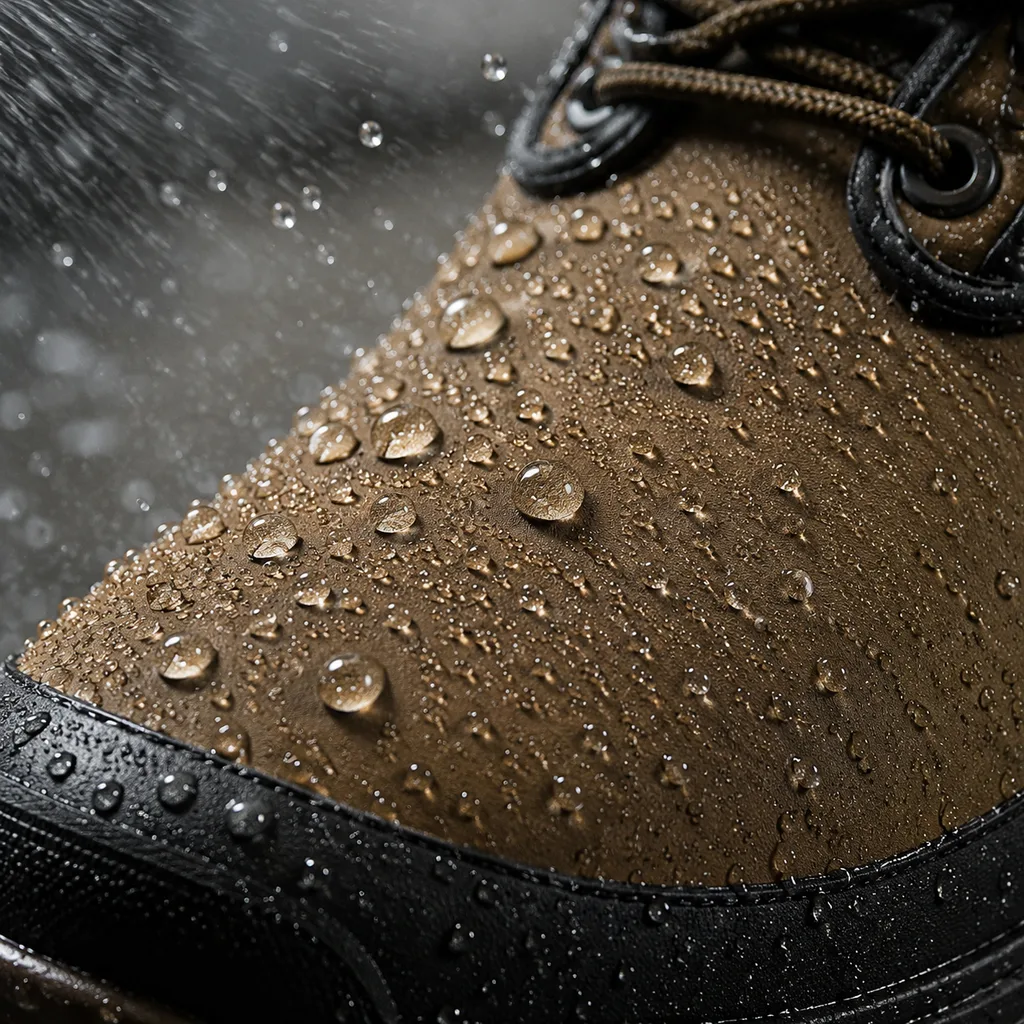
This guide is written for product teams, importers, wholesalers, and brand operators. Use it to structure supplier conversations and document decisions before samples or bulk production move forward.
Write the claim before choosing the method
State the intended exposure, waterproof boundary, water height, duration, movement, and acceptable result. A material spray test, static boot immersion, flexing water test, and field evaluation answer different questions. Work with a qualified laboratory or inspection provider to select current methods appropriate to the market and product. Avoid copying a competitor’s test without understanding its scope.
Use the correct sample stage
Early prototypes can compare constructions, confirmation samples can support claim decisions, and production samples verify repeatability. Record sample size, production status, conditioning, and any temporary materials. If a test is destructive, plan enough pairs and define how failed units are analyzed. Material test reports should remain linked to the exact lots and finished construction they support.
Diagnose failure by entry path
Mark the first observed ingress location and inspect upper material, membrane seams, gusset, stitching, eyelets, zipper, sole interface, and damage. A simple pass or fail does not guide corrective action. Repeat tests only after the suspected cause and process change are documented. Multiple random leaks may indicate handling or workmanship variation rather than one design flaw.
Connect testing with production checkpoints
If seam treatment or membrane joins drive performance, inspect them before closure. Control needle condition, tape temperature or pressure where applicable, sealant coverage, gusset height, and sole attachment. Define production verification frequency based on risk and method practicality. Keep marketing claims within the evidence and update review if materials or construction change.
Decision framework
Buyer checklist
- Define claim, boundary, exposure, and pass criteria
- Select methods with qualified specialists
- Record sample stage and conditioning
- Analyze the first ingress path
- Link production controls to failure modes
Continue the specification
Move from research to a controlled brief.
Frequently asked questions
Questions buyers ask next
Can a factory perform waterproof testing in-house?
In-house checks can support process control. Independent laboratory or inspection testing may still be appropriate depending on the claim, market, order risk, and buyer requirements.
Does a passing material test prove the finished boot is waterproof?
No. Seams, openings, gussets, sole attachment, damage, and workmanship also affect finished footwear.