This guide is written for product teams, importers, wholesalers, and brand operators. Use it to structure supplier conversations and document decisions before samples or bulk production move forward.
Prepare the inspection reference pack
Provide purchase order, approved sample, specifications, measurement method and tolerances, bill of materials where relevant, color references, artwork, size ratios, packaging files, carton marks, test requirements, and known approved exceptions. Inspectors cannot enforce details they have not received. Confirm the goods are sufficiently complete and packed before the visit is booked.
Define sampling and defect classification
Use a sampling plan and acceptance criteria appropriate to order risk, buyer policy, and applicable practice. Define critical, major, and minor defects with product-specific examples. A loose thread and a wrong size label do not carry the same consequence. Qualified inspection providers can help structure the plan, but the buyer should approve release rules before results arrive.
Inspect product, function, and measurements
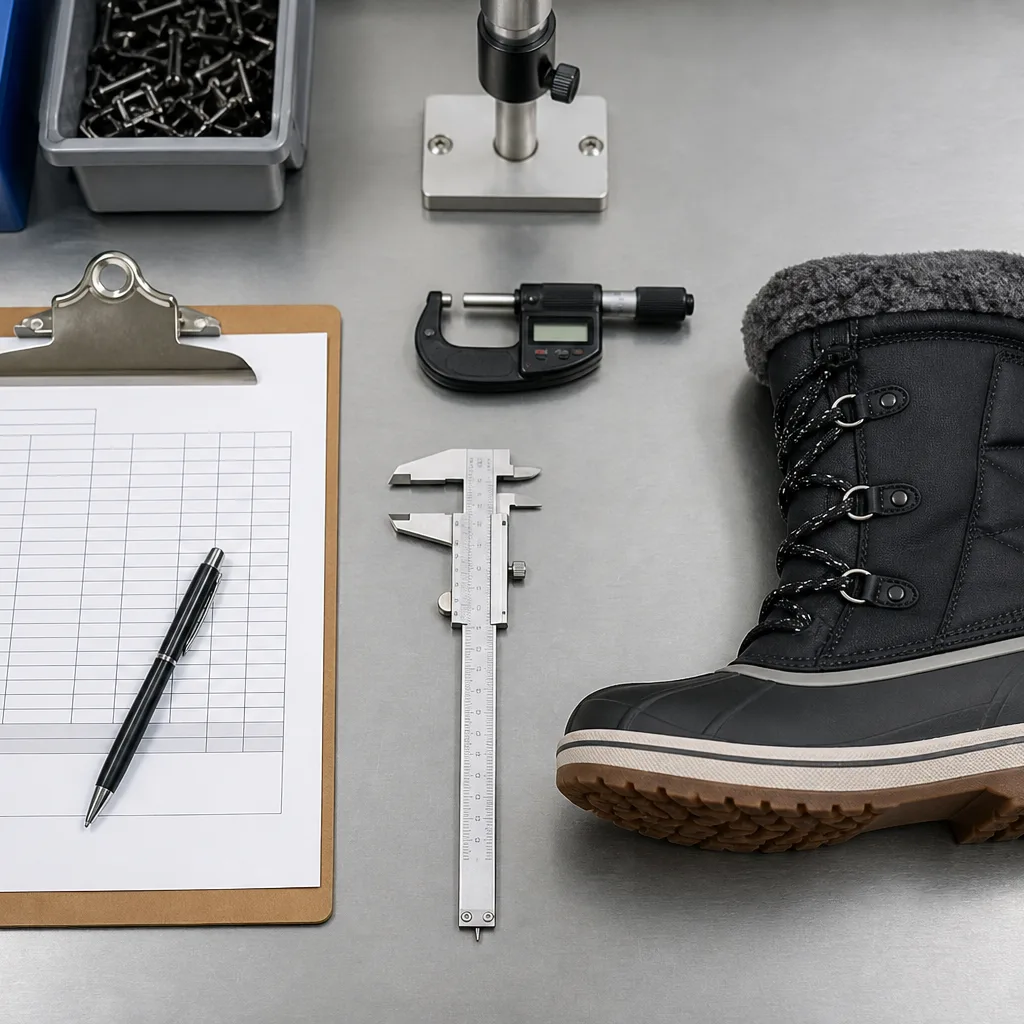
Check pair matching, appearance, construction, odors or contamination, closures, hardware, footbeds, size and country markings, flex, sole attachment, internal finish, and agreed on-site tests. Measure a spread of sizes using the specified method. Record defects by style, color, size, location, and photo so the factory can contain and correct them.
Verify packing and control the release decision
Check unit packaging, labels, inserts, accessories, box condition, barcodes, size stickers, pack ratios, assortment, carton quantity, shipping marks, dimensions, weight, and closure. Compare packed count to documents. A failed inspection should trigger containment, root-cause review, corrective action, and reinspection or another agreed verification before release, not only a promise to sort later.
Decision framework
Buyer checklist
- Send the complete approved reference pack
- Define defect classes and acceptance rules
- Measure a risk-based spread of sizes
- Verify unit packaging and master cartons
- Require evidence of correction before release
Continue the specification
Move from research to a controlled brief.
Frequently asked questions
Questions buyers ask next
When should a snow boot pre-shipment inspection occur?
It is typically scheduled when production and packing are substantially complete, with enough time remaining for correction or reinspection before shipping.
Does a passed inspection guarantee zero defects?
No. Sampling estimates lot quality within the selected plan. Strong process controls and clear specifications are still necessary.