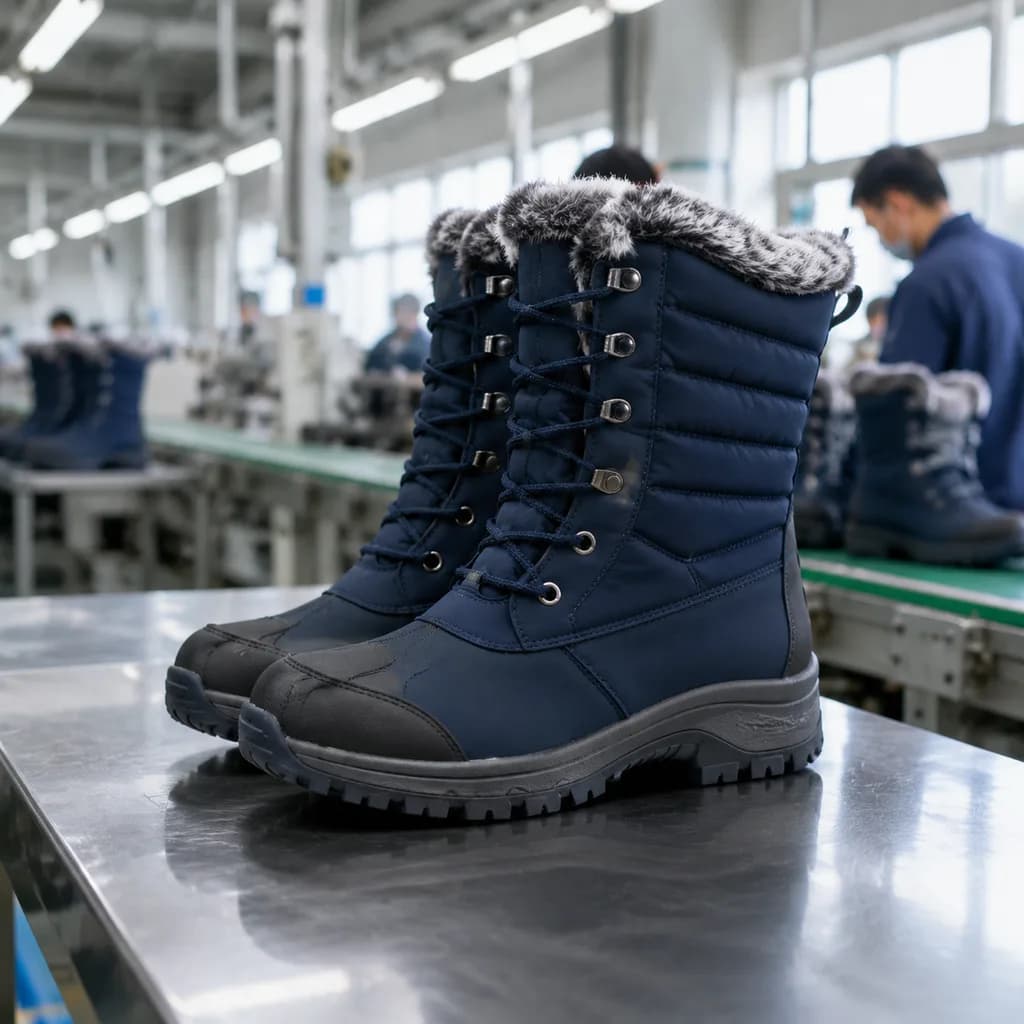
Lock a wholesale women's winter boots fit reference before style boards. Name the sizing system, map fit-led platforms, then brief OEM sampling and private-label paths.
Wholesale women's winter boots fit reference decisions often lag style boards and insulation debates. Catalog teams lock silhouettes early, then factories grade size runs from notes that never named a sizing system or a last. Samples come back with conflicting comments on toe room, heel hold, and shaft entry because each reviewer is comparing against a different mental model of the brand fit. That is a procurement timing failure, not a design preference.
On the SnowBootWorks product catalog, fashion-and-fit women's snow boots are framed as fit-led platforms. The sequence is explicit: decide the target sizing system and fit reference first, then review clean urban, quilted, or plush cold-weather directions. Product developers, catalog teams, and wholesale buyers who need samples, grading, and private-label approvals to share one interpretation of fit should follow that order.
What goes wrong when fit arrives late
Programs rework late when fit was treated as a sampling outcome instead of a brief input. Once a factory grades a size run from an ambiguous last note, every colorway inherits the same drift. Retailers see inconsistent try-on feedback across the line. Private-label teams reopen construction debates that were never about construction.
A written fit lock is cheaper than a restyle. It forces the commercial question early: which women's winter boot sizing system will the assortment use, and which reference defines acceptable volume, length, and shaft feel for the customer? Style, upper treatment, and cold-weather packaging can still vary after that answer is recorded. Without it, comfort becomes a subjective sample comment rather than a measurable brief field. Teams that skip the gate often recycle the same notes on every round (toe room, heel hold, calf entry, sock bulk) because reviewers never shared one model of the brand last. Catalog calendars compress further when those disputes surface after color and packaging are already approved, so the cost is schedule as well as tooling.
Platform mood boards still need a written fit basis before they become sample requests. Platform language without a sizing system only multiplies interpretations of the same sketch. The fit reference is the document that keeps wholesale assortment planning, factory grading, and brand approval on one track.
The minimum fields in a buyer fit reference
The catalog-level decision is simple: name a target sizing system and a fit reference. Buyers still need enough detail for that phrase to travel cleanly into sampling and approval language. The fields below are an editorial recommendation for a shared brief. They are not a published measurement standard or a factory guarantee.
- Sizing system for the wholesale assortment (for example US women's, EU, or dual-marking intent if the channel requires it)
- Fit reference type: brand last, retained sample, competitive product the team wants to approximate, or an internal size chart the brand already owns
- Width or volume intent in plain language, so half-size and width debates do not start from silence
- Shaft and entry expectations for the women's program, especially if the line mixes short and mid heights
- Approval rules: who signs fit, on which sizes, and with which sock condition
- How size-run grading will be checked against the same reference, not against a new reviewer's foot alone
Keep the language precise enough that a sample technician and a merchandiser read the same intent. Vague notes such as "true to size" or "generous" do not survive a multi-round program. If your team lacks a brand last, document a competitive reference and state what must match versus what may differ. That is still a fit reference; it is simply owned by the brand brief rather than by an existing tool room. When you later ask which development, sampling, or quotation options may apply to the project, attach this fit section first so conversations do not drift into style-only comparisons while size intent remains open.
Tradeoff: platform direction after the sizing system
After the sizing system and fit reference are locked, platform direction becomes a controlled choice. SnowBootWorks describes fit-led women's snow boot platforms spanning clean urban, quilted, and plush cold-weather directions. Those directions are not substitutes for a sizing decision. They are assortment architecture options that still rest on the same women's fit basis.
| Platform direction | What it typically signals in a collection | What still depends on the fit lock |
|---|---|---|
| Clean urban | Quieter lines and city-ready shelf presence | Length, width, and heel hold still come from the named sizing system and reference |
| Quilted | Visible cold-weather surface language and layered upper character | Bulk from quilting can change how volume feels; the reference must say what remains acceptable |
| Plush | Softer interior or collar cues that read as winter comfort | Lining and collar build can alter entry and instep feel; grade and approve against the same fit basis |
Use the table as a planning aid, not as a material specification. Clean urban, quilted, and plush each change how a sample looks and how insulation or lining packages occupy space, but none invent a new sizing system. If two platform directions will share a size chart in wholesale, say so early. Shared charts reduce SKU chaos; separate charts need explicit justification and more sample time. Catalog teams often want all three directions in one season story. That is feasible only when the fit reference is stable enough that merchandising can compare platforms on design merit rather than on accidental last differences. For a broader view of women's wholesale assortment structure beyond this fit gate, see the women's snow boots wholesale guide.
Retail shelf promise versus private-label last ownership
The same product family is positioned for women's retail and private-label winter collections. Ownership of the fit reference still differs by commercial model, even when factory work looks similar on the bench.
For wholesale retail collections, the brand or importer usually owns the commercial fit promise to the end customer. Outdoor retail winter footwear programs, as framed on the industries page, need to balance comfort, weather protection, and shelf appeal. Comfort here is inseparable from fit. Shelf appeal without a coherent size story creates returns and broken size runs. Weather protection belongs in materials and construction decisions, but those decisions should not rewrite the fit basis midstream.
Private label women's winter boots fit ownership raises a different question: whose last and size chart will define the brand on the label? A documented private-label waterproof winter boot path on the case studies page shows how a brand brief can move from reference samples to an export-ready, branded production run. That path is about program sequence, not about a free-form redesign of fit on every sample round. Reference samples only accelerate the work when the brief already names what reference means for fit, not only for waterproof intent.
Editorial recommendation for buyers: write fit ownership into the brief the same way you write logo and hangtag ownership. If the private label will inherit an existing size chart, say so and accept the commercial consequences. If the brand must own a distinctive fit, plan sample rounds against that requirement and keep platform styling secondary until the reference is approved. Do not assume waterproof construction language automatically solves fit disputes; the private-label program overview is scoped to waterproof winter boots moving from reference samples to branded export production, not to a universal fit service claim.
OEM specification steps that keep the fit basis intact
OEM work on custom snow boots is driven by the buyer's own specification, with construction, materials, and approval standards guiding each decision. That capability statement from the capabilities page is the right place to attach a fit reference. Without fit language in the specification, construction and materials teams still build something, but approval standards have nothing stable to enforce on size and volume.
- Record the sizing system and fit reference in the master specification before upper materials or insulation debates dominate the file.
- State how reference samples will be judged: which sizes, which sock condition, and which acceptance notes close a round.
- Map platform direction (clean urban, quilted, or plush) as a design and materials package on top of the approved fit basis, not as a replacement for it.
- Align approval standards so fit, construction, and materials each have a clear owner and clear pass or fail language.
- If the commercial path is private-label waterproof production, connect the approved reference samples to the export-ready branded run only after fit and construction comments are no longer competing for the same sample round.
This sequence keeps OEM development from becoming a circulating set of style comments. It also keeps private-label branding work from starting on a last the brand never actually accepted. When your internal team is ready to package inquiry fields more broadly, the quote-ready wholesale brief can sit beside this fit-first gate rather than replace it.
Pre-inquiry checklist for development or quotation options
Use this short list before you open a development or quotation conversation. It is a buyer-side discipline checklist, not a catalog of documented services.
- Write the women's winter boot sizing system the wholesale assortment will sell against.
- Name the fit reference and attach photos, retained samples, or chart files when they exist.
- State width or volume intent and shaft height range for the collection.
- Choose whether clean urban, quilted, and plush directions will share one size chart or need separate fit paths.
- Assign who owns fit sign-off for retail versus private-label SKUs.
- List construction, materials, and approval standards that must follow the fit lock in OEM language.
- Note any waterproof private-label intent so reference samples are planned toward an export-ready branded run, if that is the commercial path.
- Prepare to share the current winter footwear definition for the project and to ask which development, sampling, or quotation options may apply, rather than assuming a fixed package.
If the fit section is incomplete, pause styling decisions. Platform images and color stories are easy to debate; size-run rework is expensive. When the checklist is filled, bring the brief to a focused inquiry and use the request a quote path to share that winter footwear definition and confirm which development, sampling, or quotation options may apply to the project.
A stable fit reference does not freeze creativity. It gives clean urban, quilted, and plush directions common ground so retail and private-label teams can argue about merchandising instead of about why one sample feels longer than another. Lock the fit basis first, then build the season on top of it.
Evidence layer
Evidence checklist: Lock Fit Before Style: Wholesale Women's Winter Boots Fit Reference
OEM, ODM, and private label are not just marketing labels. The practical difference is who owns the starting design, how much the construction changes, and which decisions must be approved before bulk production. Put the decision in writing: reference style, required changes, branding locations, packaging scope, tooling assumptions, and the point at which a sample becomes the production reference. For this guide, map each supplier response to “What goes wrong when fit arrives late” so a claim is supported by a written specification, sample reference, controlled document, or a clearly marked open question.
A strong brief also records what is out of scope. That prevents a fast sample discussion from silently becoming a new mold, a new size run, or a new compliance requirement. Use the same approval language in the quote, sample comments, and purchase documentation. Cross-check the response against “The minimum fields in a buyer fit reference” and keep every unresolved point visible in the approval record.
- Design ownership and permitted adaptations — scoped to wholesale women's winter boots fit reference
- Branding, packaging, and tooling boundaries — cross-checked against “What goes wrong when fit arrives late”
- Sample approval gates before bulk commitment — with open risks from “The minimum fields in a buyer fit reference” recorded
Decision framework
Buyer checklist
- Name the sizing system and fit reference before platform styling for wholesale women's winter boots.
- Clean urban, quilted, and plush directions are fit-led platform options, not replacements for a fit lock.
- Retail and private-label models both need explicit fit ownership written into the brief.
- Carry the same fit basis into OEM specification language so construction and materials decisions do not rewrite size intent.
- Share a clear winter footwear definition, then ask which development, sampling, or quotation options may apply to the project.
Sources and verification
Evidence used for this guide.
Continue the specification
Move from research to a controlled brief.
Frequently asked questions
Questions buyers ask next
What must a wholesale women's winter boots fit reference name at minimum?
At catalog level, name the target sizing system and the fit reference itself. Editorially, add width or volume intent, shaft expectations, and who signs fit on which sizes so samples and grading share one interpretation.
Can clean urban, quilted, or plush styling replace a sizing system decision?
No. Those directions are fit-led platform choices that sit on a locked fit basis. Quilting and plush packages can change how volume feels, so the same fit reference should still govern grading and approval.
How does a private-label waterproof path relate to fit?
The documented path moves a brand brief from reference samples to an export-ready branded production run for waterproof winter boots. Fit still needs to be named in that brief so reference samples are judged against a shared last or size chart, not reinvented each round.