Define product direction, sizing, fit, construction, materials and approval criteria before requesting a women's winter boot quotation.
A hypothetical early inquiry might say: “We need private-label women's winter boots. Please quote.” It identifies the product category and commercial intent, but it does not tell a supplier which boot to discuss. The product direction, sizing system, fit reference, construction, materials and approval criteria are still unknown.
A more useful inquiry does not need to settle every detail. It does need to show what the buyer has decided, what remains flexible and which questions require supplier input. The framework below is an editorial method for organizing that information; it is not presented as a SnowBootWorks procedure.
What the initial request leaves open
SnowBootWorks describes winter footwear programs for outdoor retail brands as balancing comfort, weather protection and shelf appeal. These are broad program considerations rather than a specification for an individual boot.
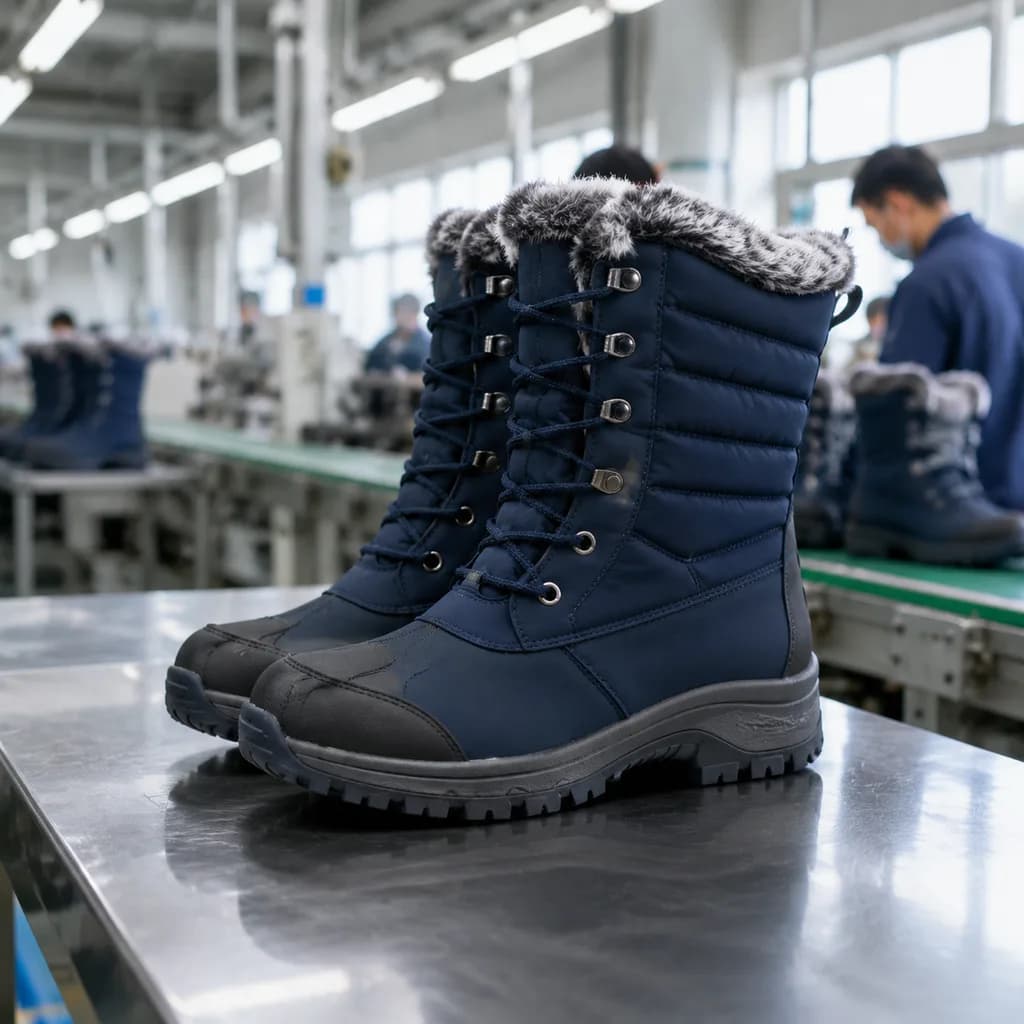
The phrase wholesale womens winter boots leaves basic product choices unresolved. A reference image may clarify the desired appearance, but it may not identify the sizing basis, fit controls, construction requirements or documents needed for approval.
Start the brief with two short statements: what the project is intended to produce and how far the definition has progressed. An early product direction should be identified as such. When the buyer already controls a specification or approved reference, the brief should name it and explain which decisions it governs.
This opening context prevents visual inspiration, preferences and approved requirements from being treated as equivalent. It also gives the recipient a clearer basis for identifying which development or quotation questions can be addressed.
Choose the platform before the details
The SnowBootWorks women's product catalog presents clean urban, quilted and plush cold-weather directions as examples of fit-led women's winter boot platforms. These examples can help a buyer name the lead direction without treating the catalog excerpt as an exhaustive style range.
| Documented platform direction | Details to define in the buyer's brief |
|---|---|
| Clean urban | Identify the proportions, surface treatments and visual details that should establish the intended direction. |
| Quilted | Show where quilting belongs and whether it is a primary upper treatment or a limited detail. |
| Plush cold-weather | Mark where the plush treatment should be visible and which aspect of its appearance matters. |
Select one lead direction for each proposed product. If the intended assortment contains distinct platforms, give each platform its own definition rather than combining their attributes in a single description.
References are more useful when they are annotated. Mark the features that should guide discussion, such as upper proportions, closure position, collar treatment, quilting placement or branding location. Label each annotation as fixed, preferred or open so the recipient can distinguish a requirement from an idea under review.
Sizing and fit need named references
The same catalog entry directs buyers to decide the target sizing system and fit reference first. It does not provide grading rules, measurement tables, size ranges or market-specific fit outcomes.
Name the sizing system in the inquiry rather than relying on “women's sizes.” Include a size range only if the buyer has selected one. Otherwise, mark the range as open and state the question that must be resolved before it can be approved.
Define where the fit reference came from and exactly what it is intended to control. A buyer-controlled reference could be a physical sample, an existing brand style, a last requirement or a measurement specification. The brief should identify its approval status and limit its scope to the features it actually represents.
For example, a reference may communicate toe shape without establishing shaft volume or entry. Recording those limits is more precise than describing the whole sample as the fit standard.
Terms such as “comfortable” or “true to size” are not complete fit instructions on their own. Keep them as review objectives unless the buyer can connect them to a defined measurement basis, comparison reference or wearer condition.
Build the technical definition in three parts
SnowBootWorks describes its OEM manufacturing scope as developing custom snow boots to the buyer's specification. It separately states that construction, materials and approval standards drive the decisions.
Those fields provide a practical structure for the technical portion of the inquiry:
| Field | Record in the brief | Ask when unresolved |
|---|---|---|
| Construction | Document the intended boot height, closure concept, major upper sections, sole concept and any buyer-defined waterproof-construction requirement. | Which construction routes or component relationships may be considered for the current specification? |
| Materials | Describe the required appearance, hand feel, color direction and lining preferences. Record insulation and cold-weather material requirements separately. | Which alternatives may be discussed, and what information would the buyer need to compare them? |
| Approval standards | List buyer-controlled references, review criteria, required evidence and the person or team responsible for approval. | Which samples, documents or review points may be relevant to this project? |
Waterproof construction, insulation and cold-weather materials should remain specification topics rather than implied performance claims. When the project has a required test method, rating or market obligation, quote its exact terms in the brief and identify who will review the resulting evidence. When no requirement has been selected, mark the topic as open.
Keep separate requirements in separate fields. A material preference does not establish a construction requirement, and a construction description does not establish an approval standard. This separation makes later changes easier to identify and review.
A status for every decision
Assigning a status to each field shows the recipient where alternatives can be discussed. Use a simple three-part system:
- Fixed
The requirement must be maintained. State the basis on which the buyer will accept or reject it.
- Preferred
The direction is favored, but the buyer may review alternatives. Explain which characteristic an alternative must preserve.
- Open
No final direction has been selected. Add a focused question and identify the information needed to make the decision.
One feature may contain decisions with different statuses. The branding location could be fixed while the application method is preferred and the supporting material remains open. Recording these separately keeps a flexible detail from obscuring a mandatory requirement.
Commercial and operational subjects should stay in the question section until they are confirmed for the project. Buyers may ask which development, sampling, minimum-order, packing, quotation, quality-control or export-logistics information applies. The inquiry should not assume that a standard sequence, service inclusion or commercial term applies to every project.
The inquiry package
A buyer contacting a women's winter boot wholesale supplier can assemble the definition under the following fields. Any incomplete field should be marked open and paired with a specific question.
- Project purpose: the intended collection and its current stage of definition.
- Product direction: the selected platform direction and annotated references showing the relevant features.
- Target sizing system: the named system, the range if decided and any buyer-controlled grading information.
- Fit reference: its source, approval status, applicable features and stated limitations.
- Construction: boot height, closure concept, upper structure, sole concept and waterproof-construction requirements or questions.
- Materials: upper appearance, hand feel, color direction and lining preference, with insulation and cold-weather material topics recorded separately.
- Branding: intended locations, application preferences, artwork status and approval responsibility.
- Approval standards: the buyer's required references, documents, samples or other evidence.
- Open project questions: the development, sampling, minimum-order, packing, quotation, quality-control or export-logistics points that require confirmation.
SnowBootWorks publishes a private-label waterproof winter boot program overview. The published overview shows a brand brief moving from reference samples to an export-ready branded production run. It describes that program overview only and does not establish the route that a new inquiry will follow.
From definition to discussion
A quote-ready brief makes the buyer's present position visible. It separates approved requirements from preferences and gives each unresolved topic a focused question. That structure is useful when discussing a project with a custom women's winter boots manufacturer because it keeps the conversation tied to a defined product rather than a category label.
Share the current winter footwear definition through the quotation inquiry. Include the product direction, target sizing system, fit reference, construction requirements, material preferences, branding needs, approval criteria and open questions. Ask which development, sampling or quotation options may apply to the project as currently defined.
Evidence layer
Evidence checklist: Wholesale Women's Winter Boots: Build a Quote-Ready Brief
A product category page is a starting point, not an assortment plan. Decide which customer, climate, price band, and selling channel each direction serves. Then compare shaft height, warmth, waterproofing, outsole behavior, color architecture, size coverage, and packaging as a group. A range with fewer clearly differentiated roles is easier to brief, sample, and explain than a long list of near-duplicates. For this guide, map each supplier response to “What the initial request leaves open” so a claim is supported by a written specification, sample reference, controlled document, or a clearly marked open question.
Document the role of every style in the seasonal plan: traffic builder, core repeat, premium option, kids or family extension, or workwear solution. This makes later decisions about size ratios, colorways, and replenishment more explicit. Cross-check the response against “Choose the platform before the details” and keep every unresolved point visible in the approval record.
- One clear role for each style — scoped to wholesale womens winter boots
- Size, color, and channel assumptions — cross-checked against “What the initial request leaves open”
- Range gaps and avoidable duplication — with open risks from “Choose the platform before the details” recorded
Decision framework
Buyer checklist
- Define one lead product direction for each proposed boot and annotate the features that matter.
- Name the target sizing system and limit the fit reference to the features it is intended to control.
- Record construction, materials and approval standards as separate decision fields.
- Mark each requirement as fixed, preferred or open so the permitted flexibility is visible.
- Keep development, sampling, minimum-order, packing, quotation, quality-control and export-logistics topics as questions until they are confirmed for the project.
Sources and verification
Evidence used for this guide.
Continue the specification