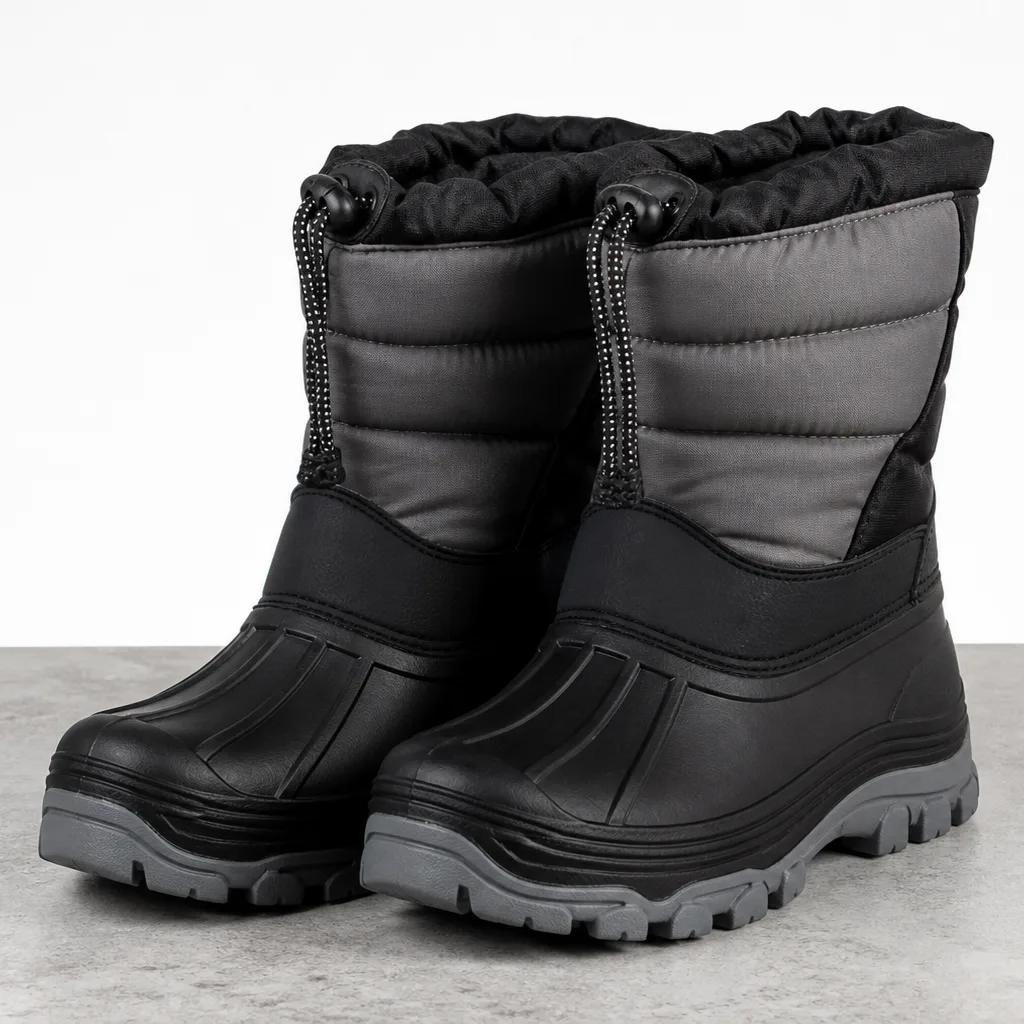
This guide is written for product teams, importers, wholesalers, and brand operators. Use it to structure supplier conversations and document decisions before samples or bulk production move forward.
Measurements, entry, and functional fit
Measure agreed points and assess entry, heel hold, toe room, instep pressure, shaft opening, flex, and intended sock thickness. Review more than one representative size when possible. Record wearer context and do not replace fit evidence with a single subjective comfortable or uncomfortable comment.
Materials, colors, and component identity
Match every visible and hidden component to the approved material code, color reference, thickness, density, and finish. Record temporary substitutions. Review shade under production-relevant lighting and confirm that lining, foam, membrane, adhesive, and outsole compound match the test plan.
Waterproof construction details
Inspect gusset height, seam position, stitch density, seam treatment, membrane coverage, lasting, and potential water paths around closures and attachments. Run the agreed water check after conditioning when required. A waterproof material does not prove that the assembled boot is waterproof.
Outsole, bonding, flex, and traction features
Confirm outsole compound, tread geometry, flex zones, weight, sidewall appearance, bonding coverage, and alignment. Use relevant adhesion, flex, cold-conditioning, or wear checks for the program. Visual approval alone cannot establish whether the sole construction will remain attached or suitable in intended use.
Branding, packaging, and production file
Verify logo artwork, placement, orientation, attachment, hangtags, labels, barcodes, box dimensions, tissue, stuffing, and carton marks. Then reconcile the sample with the final specification and comment log. Approval should identify any accepted deviations rather than hiding them under a general sample signature.
Decision framework
Buyer checklist
- Approve measurements and functional fit on representative sizes
- Reconcile the sample against the complete approved material list
- Inspect and test the complete water barrier as an assembled system
- Close outsole identity, bonding, flex, and test requirements
- Sign one approval record covering product, branding, packing, and deviations
Continue the specification
Move from research to a controlled brief.
Frequently asked questions
Questions buyers ask next
What should buyers prioritize first from this list?
Fit and material identity should be reviewed first because they affect nearly every later judgment. Waterproof and outsole checks then confirm that the assembled construction supports the intended performance direction.
Does every snow boot program need all five items?
All five checks should be closed before bulk release. A buyer may split approvals among technical, merchandising, quality, and packaging teams, but one owner should maintain the final consolidated status.