This guide is written for product teams, importers, wholesalers, and brand operators. Use it to structure supplier conversations and document decisions before samples or bulk production move forward.
Select a base model with channel fit
Review comfort, fit, weather construction, outsole, silhouette, and expected retail price before discussing logos. A base model for value wholesale may not support a premium DTC story, and a bulky cold-weather boot may not suit a city assortment. Ask for available sizes, color constraints, component options, and current material status before building a launch calendar.
Create a brand placement hierarchy
List required and optional brand touchpoints: tongue label, woven side label, molded mark, insole print, zipper pull, hang tag, box, tissue, and carton mark. Give each element a role and size limit. One confident logo placement often looks stronger than repeating the mark across every component. Confirm artwork format, colors, tolerances, and approval method.
Approve the whole delivered unit
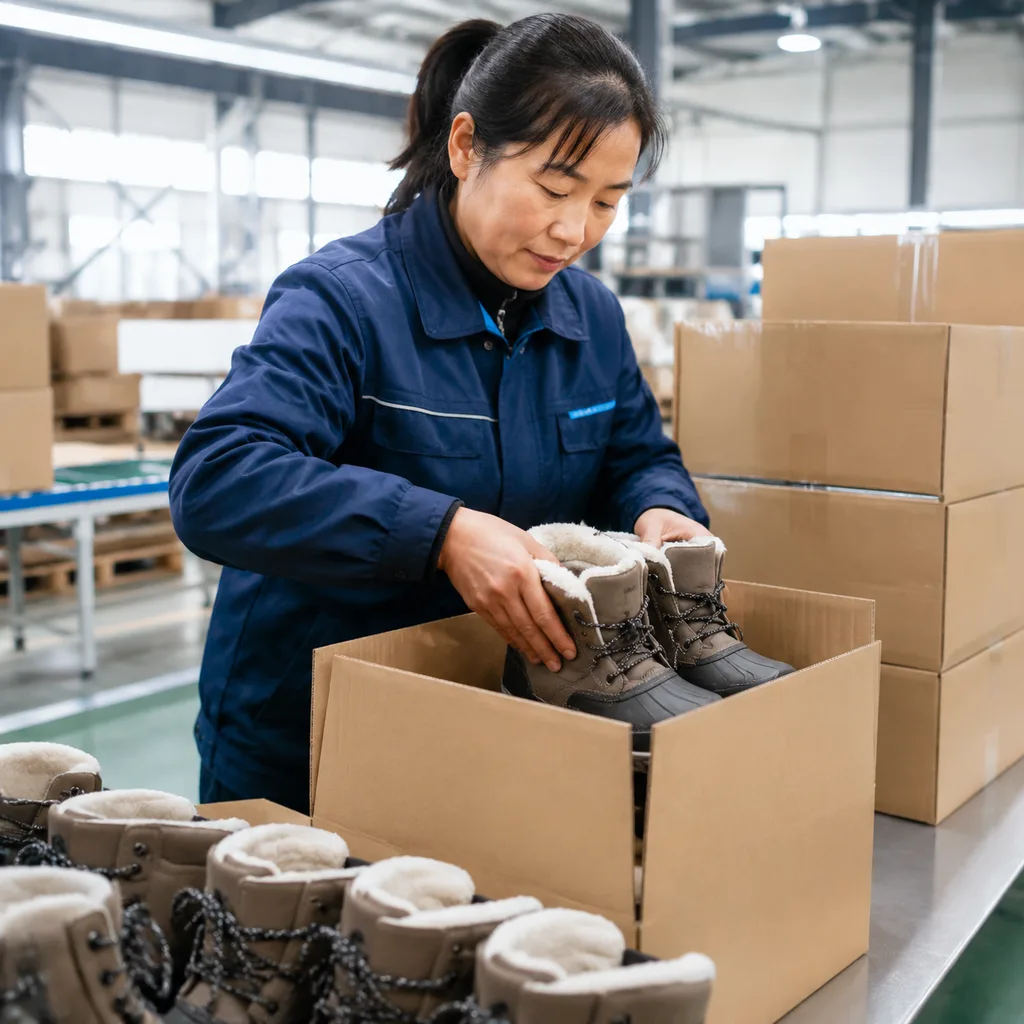
The confirmation sample should include the actual boot materials, colors, labels, hang tags, box, size sticker, tissue, inserts, and packing method wherever practical. Approving only the boot leaves packaging and compliance information to late-stage email decisions. Photograph or record placements and keep one controlled sample for final inspection comparison.
Plan for repeat orders and line extensions
Ask which components are stable enough to repeat and which are seasonal or subject to minimums. Keep a brand specification pack with current logo files, color references, label dimensions, packaging layouts, and approved supplier details. When adding colors or adjacent styles, reuse a controlled design language and component set to protect consistency and reduce avoidable MOQ.
Decision framework
Buyer checklist
- Confirm the base model fits channel and price
- Prioritize visible brand touchpoints
- Approve boot and packaging as one unit
- Record artwork, colors, and placement tolerances
- Maintain a repeat-order brand specification pack
Continue the specification
Move from research to a controlled brief.
Frequently asked questions
Questions buyers ask next
What can be customized on private label snow boots?
Common options include colors, upper materials, linings, labels, patches, insole print, hang tags, boxes, and carton marks. Available changes depend on the selected base model and order quantity.
Is private label faster than full OEM development?
Usually, because it starts from an existing platform. Timing still depends on material availability, artwork approval, samples, order size, and the production calendar.