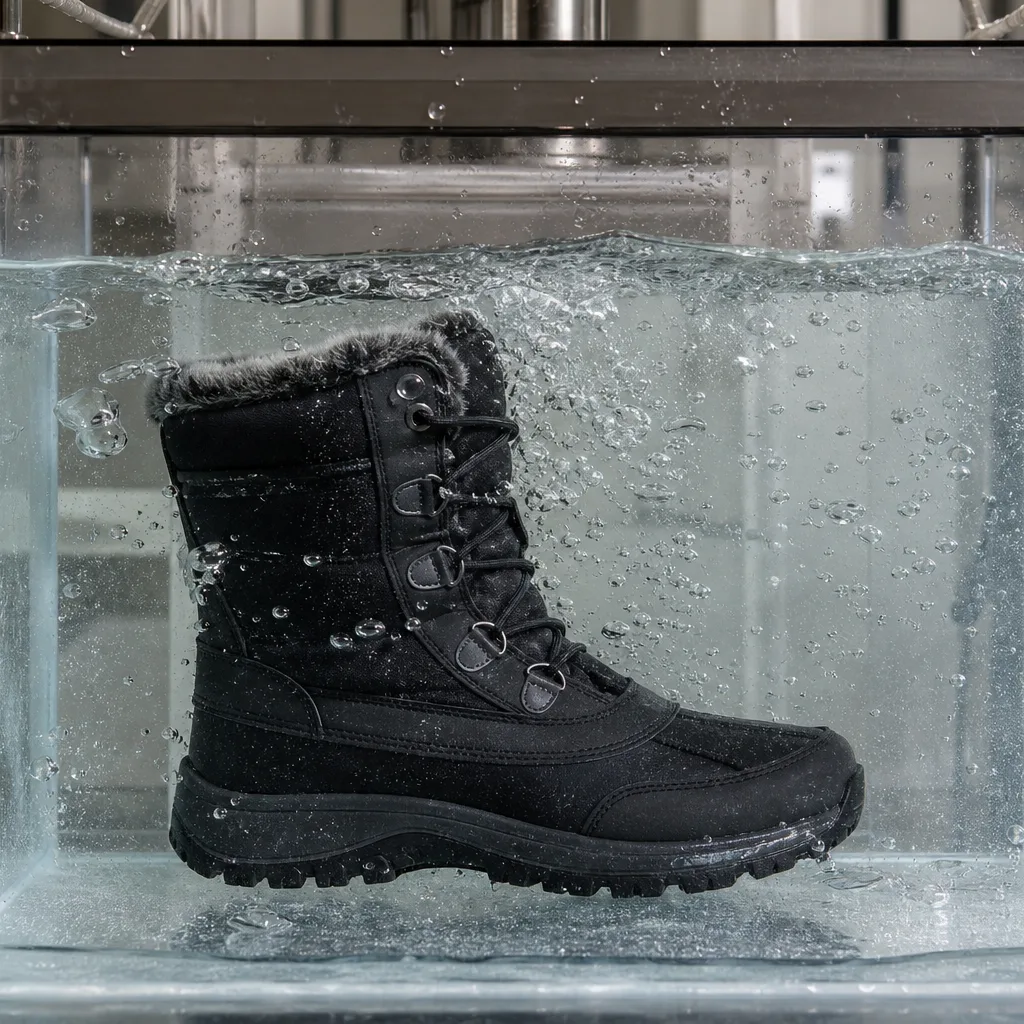
This guide is written for product teams, importers, wholesalers, and brand operators. Use it to structure supplier conversations and document decisions before samples or bulk production move forward.
Define what the waterproof claim covers
Clarify intended conditions, exposure duration, water height, shaft limitations, and whether the claim applies to the full boot or only a lower shell. Avoid treating terms such as waterproof, water-resistant, and weather-ready as interchangeable. Marketing language should follow verified construction and appropriate testing, not lead it. Qualified compliance and testing partners can help define a defensible claim for the target market.
Map every water entry path
Review upper material, membrane or coating, seams, tongue gusset, collar, eyelets, zipper, sole attachment, and any decorative perforation. A strong material cannot compensate for an open construction detail. Mark the intended waterproof boundary on the technical drawing and control it in the approved sample so production teams and inspectors evaluate the same zone.
Specify the test and sample condition
Agree the method, duration, flex state, water level, pass criteria, and sample conditioning with a qualified laboratory or inspection provider. A static material result does not prove a finished boot. If production verification is required, define the frequency and whether tests are destructive. Record any claim limitations in product copy, labels, and buyer documents.
Build waterproof checkpoints into production
Inspect seam treatment, membrane handling, gusset position, needle damage, adhesive application, and sole attachment before the boot is fully closed. Train inspectors with defect examples and isolate failed units. Final random testing can confirm output, but in-line controls reduce the risk of discovering a systemic issue after all pairs are packed.
Decision framework
Buyer checklist
- Define the exact waterproof boundary and claim
- Review every opening and seam path
- Approve an appropriate finished-boot test plan
- Add waterproof controls before final assembly
- Align marketing copy with verified evidence
Continue the specification
Move from research to a controlled brief.
Frequently asked questions
Questions buyers ask next
Does a waterproof membrane make the whole snow boot waterproof?
Not by itself. Seams, tongue construction, openings, sole attachment, and workmanship also determine whether the finished boot meets the intended claim.
Can buyers rely on a material supplier test report?
A material report is useful evidence for that component, but finished footwear performance should be evaluated using an appropriate method and product sample.