This guide is written for product teams, importers, wholesalers, and brand operators. Use it to structure supplier conversations and document decisions before samples or bulk production move forward.
Choose the use profile and weight target
A city boot, driveway utility boot, winter hiking style, and work-oriented boot need different balances of weight, shaft support, outsole geometry, closure, and upper protection. Set an intended use profile and an acceptable sample weight range. Excess structure can make a casual style tiring, while a lightweight fashion build may not support demanding outdoor use.
Define fit around socks and movement
Specify the fitting sock, toe allowance, width, instep, heel hold, and ankle movement. Insulation and thick linings reduce internal volume, so a last used for an unlined shoe cannot be assumed to fit the same way. Review flex at the forefoot and collar contact during walking, not only standing measurements.
Evaluate outsole design as a system
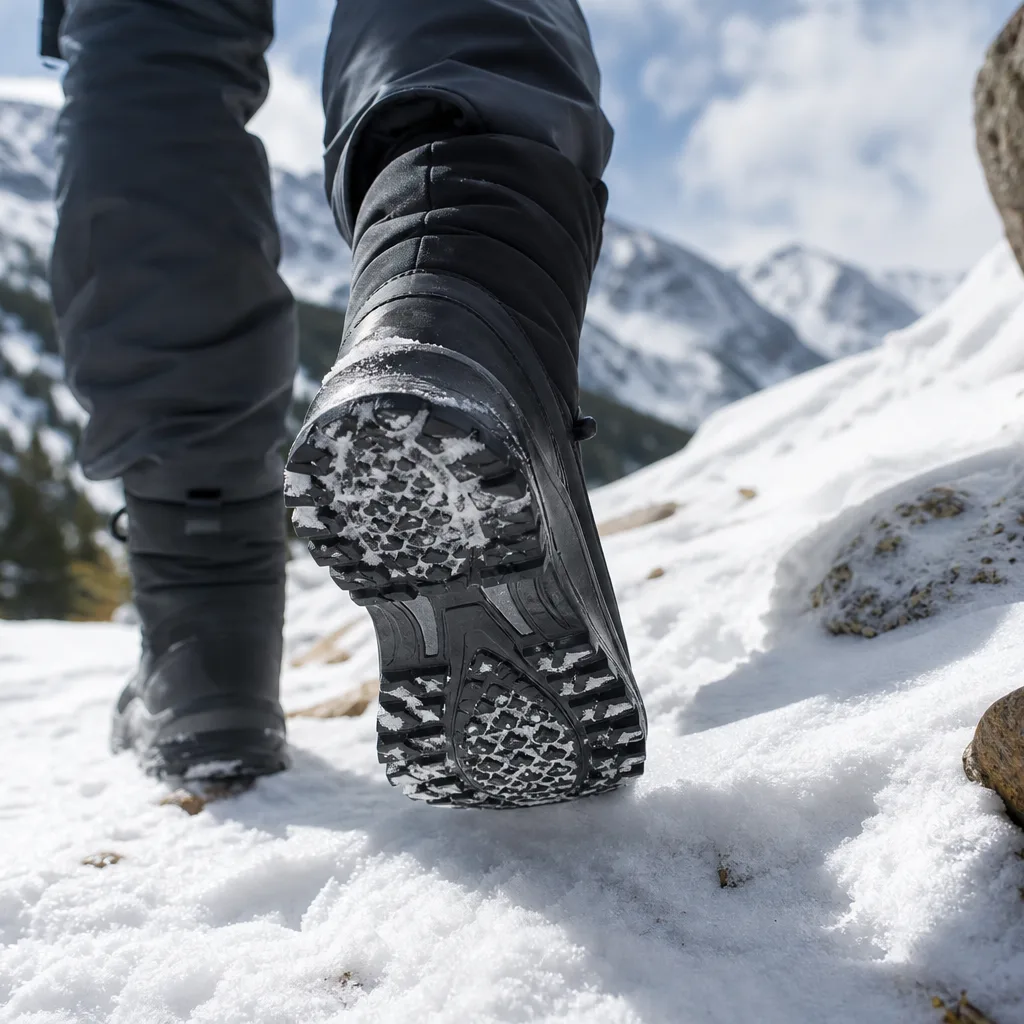
Compound, lug shape, lug depth, contact area, flex pattern, and sole attachment all influence the result. A visually rugged outsole is not automatically suitable for every surface. Align traction expectations with intended conditions and agree appropriate testing with qualified partners. Also review mud and snow release, edge stability, and indoor transition for the target consumer.
Control size ratios and carton planning
Men’s size curves can create large cartons and uneven inventory if ratios are not planned early. Use historical demand where available, confirm regional size conversion, and check outsole or last availability across the full run. Pack ratios should support warehouse picking and channel allocation. Review carton dimensions and weights before the order is locked.
Decision framework
Buyer checklist
- Define city, utility, hiking, or work use
- Set fit sock and internal-volume expectations
- Review outsole geometry and attachment
- Confirm the full size run before approval
- Model pack ratios and carton handling
Continue the specification
Move from research to a controlled brief.
Frequently asked questions
Questions buyers ask next
What makes a men’s snow boot suitable for wholesale?
It should have a clear use case, stable construction, repeatable sizing, channel-appropriate materials, manageable SKU complexity, and packaging that fits distribution needs.
Should every men’s snow boot use a heavy outsole?
No. Outsole weight and geometry should match the intended use. Casual and travel styles may prioritize flexibility and lower weight, while utility styles may need more structure.