This guide is written for product teams, importers, wholesalers, and brand operators. Use it to structure supplier conversations and document decisions before samples or bulk production move forward.
Start with the job hazard and environment
Document surface, temperature range, moisture, exposure duration, mobility, indoor transitions, chemicals if relevant, and required protective features. A warehouse freezer, construction site, delivery route, and general outdoor utility role do not share one ideal boot. Required safety claims and standards vary by market and application, so involve qualified compliance and testing specialists at the brief stage.
Balance protection with wearable fit
Protective components, insulation, thick socks, and robust outsoles add bulk and weight. Define fitting socks, toe space, width, instep, heel hold, ankle support, and flex. If a protective toe or plate is required, approve fit using the actual component. Workers may wear boots for long shifts, making pressure points and entry problems operational issues rather than minor comfort preferences.
Specify traction and sole attachment
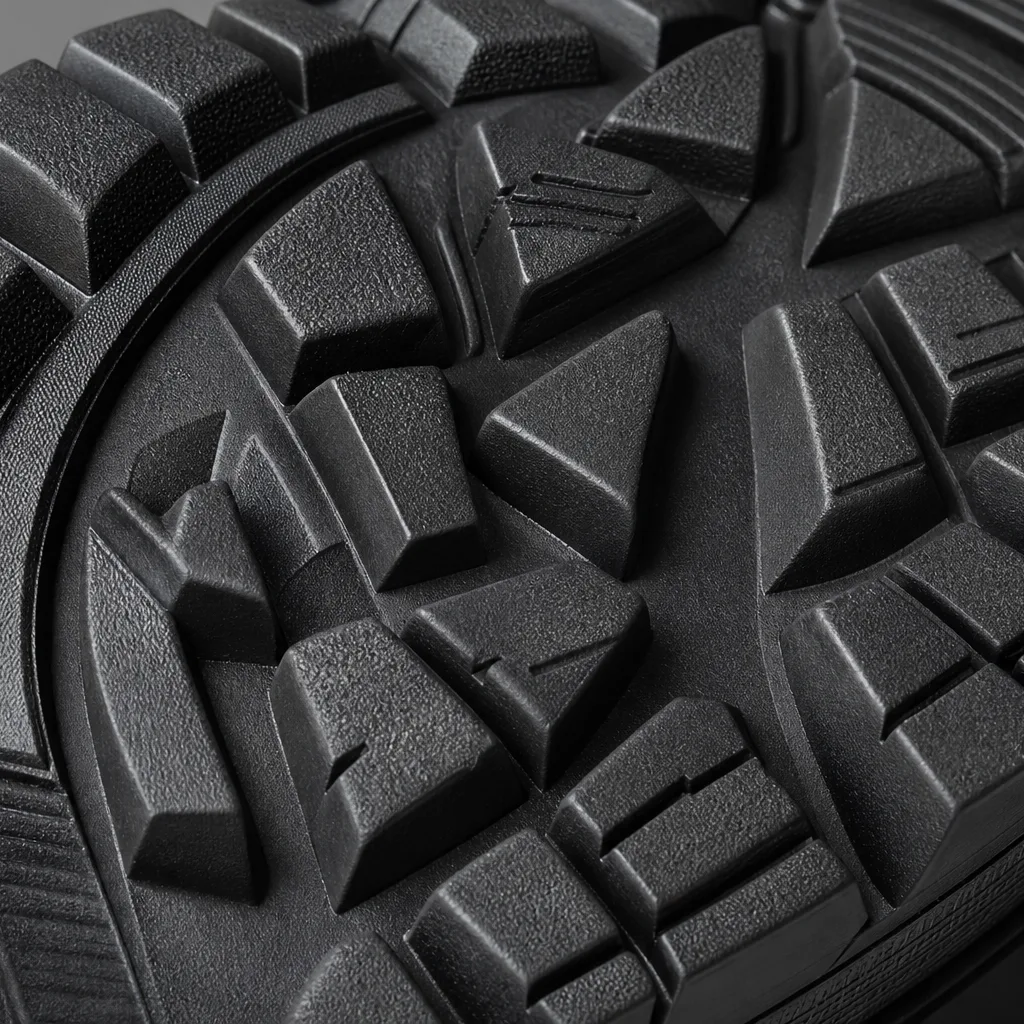
Match compound and tread geometry to the target surface and contamination risk, then select appropriate laboratory and field evaluations. Review sole bonding, sidewall protection, flex zones, lug release, and wear expectations. Claims such as slip resistance require a defined method and scope; a rugged visual pattern alone is not evidence. Keep test conditions and results connected to the exact production construction.
Build traceability into the program
Control component suppliers, sizes, production lots, markings, test samples, inspection records, and approved changes. If a certified or regulated claim is involved, confirm current obligations with qualified parties and do not substitute materials without formal review. Packaging and labels should preserve model, size, lot, and required user information through distribution.
Decision framework
Buyer checklist
- Document job hazards and target environment
- Confirm current standards with qualified specialists
- Fit with actual protective components and socks
- Define traction test method and claim scope
- Maintain component and production-lot traceability
Continue the specification
Move from research to a controlled brief.
Frequently asked questions
Questions buyers ask next
Can a general snow boot be sold as a safety work boot?
Only if it meets the applicable requirements and the intended claims are supported. Product naming and marketing should not imply protection that has not been properly specified and verified.
What information should a workwear buyer send in an RFQ?
Include job environment, surface, temperature context, required protection, target standards, size range, quantities, branding, packaging, test scope, and delivery date.