This guide is written for product teams, importers, wholesalers, and brand operators. Use it to structure supplier conversations and document decisions before samples or bulk production move forward.
TPR can support flexible, cost-controlled programs
Thermoplastic rubber can be molded efficiently and tuned for different hardness, appearance, and flex targets. It is common in fashion and general winter footwear. Performance varies by formulation and geometry, so buyers should approve the exact production compound. Review cold-condition behavior, abrasion, flex, and bonding rather than assuming every TPR outsole behaves alike.
Rubber can support robust traction and wear goals
Rubber formulations are widely used where abrasion, grip, and a durable outsole story matter. Rubber can add weight and may have different tooling, processing, or cost implications. As with TPR, compound selection and tread design are decisive. Natural, synthetic, and blended formulations should not be treated as one uniform category.
Tread geometry changes the real result
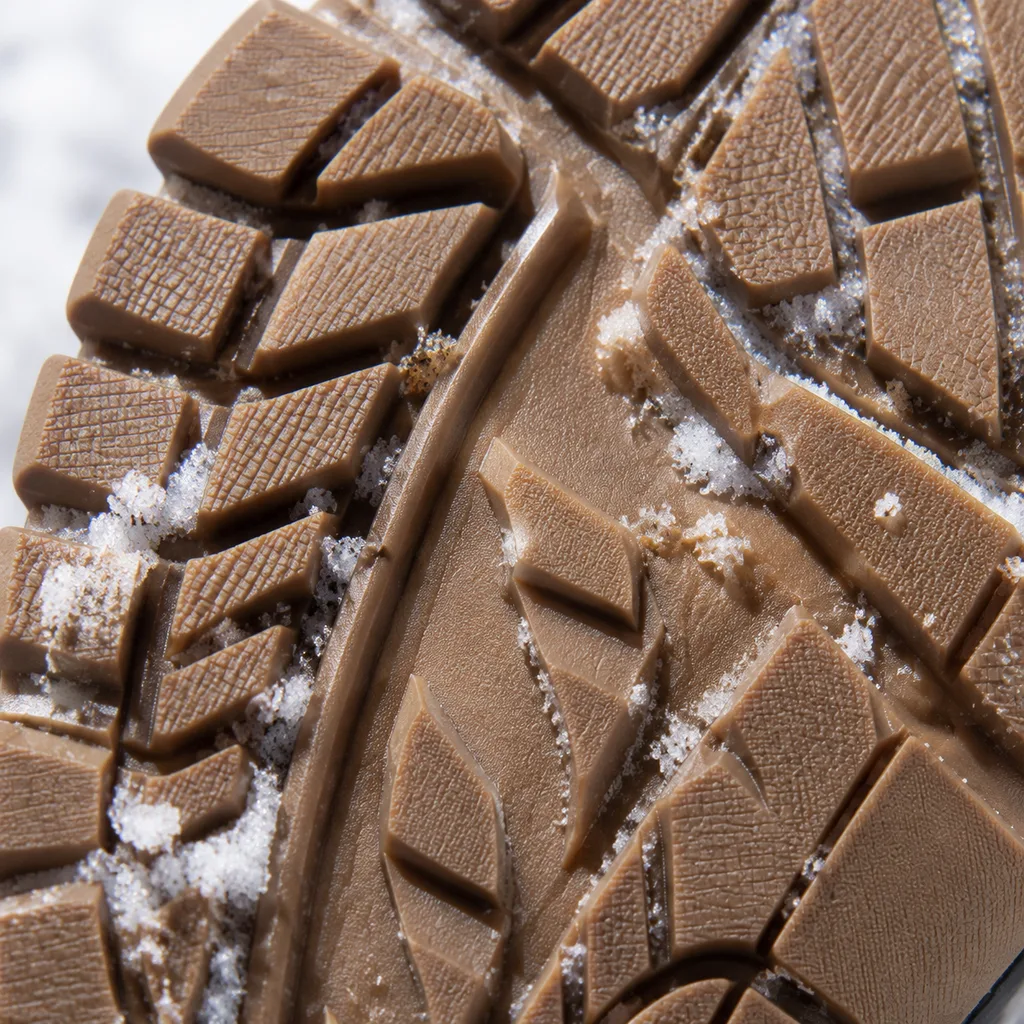
Lug orientation, depth, edge count, contact area, channels, heel braking, toe flex, and snow release influence how an outsole interacts with a surface. A deep pattern can still clog, feel unstable indoors, or add unnecessary weight. Use the intended consumer and surface profile to guide geometry, then evaluate with appropriate methods and field context.
Compare complete prototypes
Mount candidate outsoles on the intended last and upper because weight distribution, flex, sidewall height, and bonding affect the finished boot. Agree the test scope and conditioning with qualified partners. Check outsole color consistency, mold finish, flash, dimensions, and attachment during production. Material choice should follow evidence from the complete construction.
Decision framework
Buyer checklist
- Approve the exact compound and hardness range
- Review cold flex and abrasion needs
- Evaluate lug geometry by target surface
- Compare complete boot weight and flex
- Control mold finish, dimensions, and bonding
Continue the specification
Move from research to a controlled brief.
Frequently asked questions
Questions buyers ask next
Is rubber always better than TPR for snow boots?
No. Exact formulation, tread, construction, weight, cost, and intended use matter more than a simple material label.
Which outsole is lighter, TPR or rubber?
Weight depends on formulation and geometry. A material category alone cannot predict the finished sole or boot weight.