This guide is written for product teams, importers, wholesalers, and brand operators. Use it to structure supplier conversations and document decisions before samples or bulk production move forward.
Synthetic leather adds structure and a controlled face
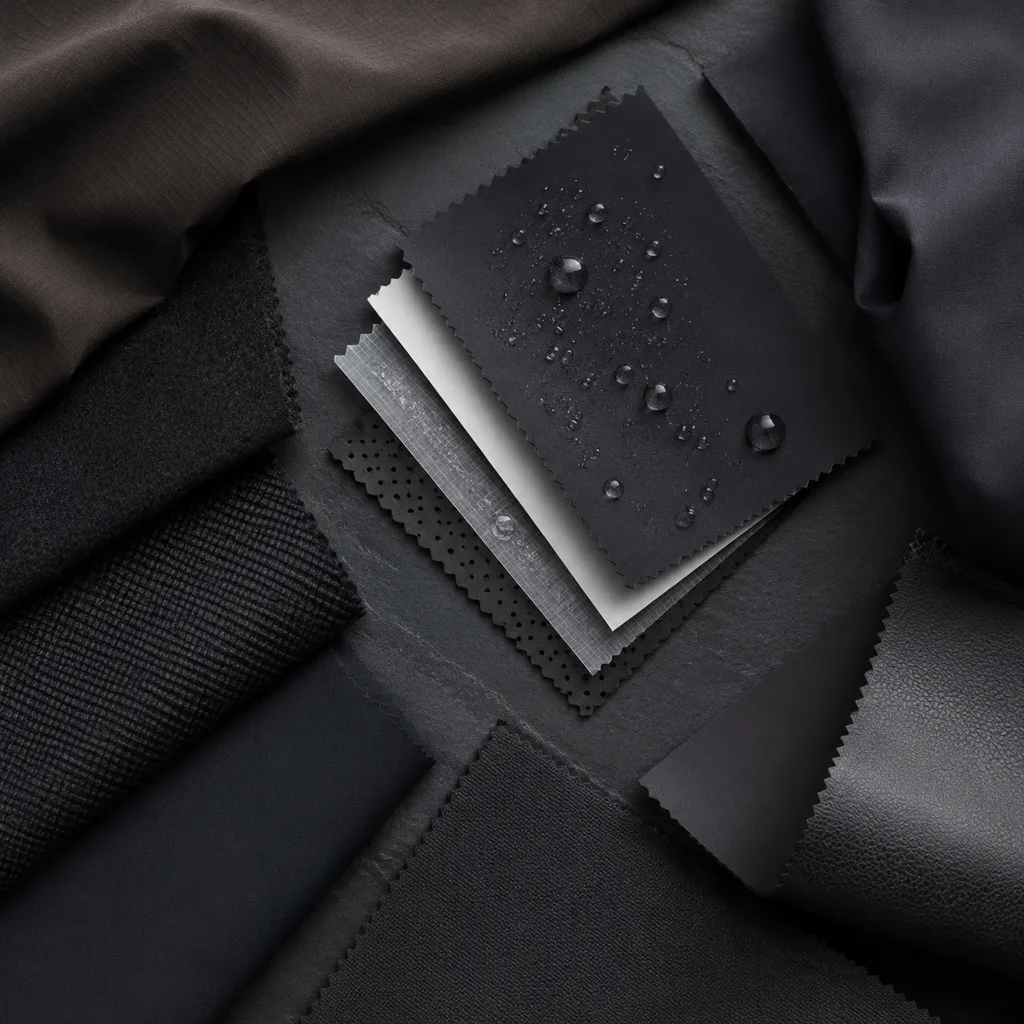
Synthetic leather can create smooth panels, reinforcement, clean branding, and a more structured silhouette. Backing, coating, thickness, flex, hydrolysis behavior, cold behavior, and surface durability vary by grade. Approve the exact material and test scope. Creasing and seam appearance should be reviewed on the finished boot, not predicted from a flat swatch.
Textile supports lighter and softer constructions
Woven and knit textiles can reduce weight, support quilting or print, and create flexible shaft constructions. Coatings or laminations may add weather resistance, while reinforcement is often needed in abrasion and shape-control zones. Record weave or knit, face, backing, weight, finish, and color standard. Stretch and fraying can affect pattern and stitching consistency.
Mixed uppers place materials where they work best
A common approach uses textile for shaft volume and flexibility, with synthetic leather overlays around toe, heel, eye stay, or lower splash zones. The transitions need compatible thickness, flex, seam allowance, adhesives, and weather treatment. Use the material map to explain each panel’s job and remove layers that add cost without function or a clear design role.
Compare sourcing stability and production control
Check minimums, color matching, lot variation, replacement lead time, cutting yield, defect standards, and storage. Some surface variation is visible only after lasting or flexing. Approve a finished reference and define allowable shade or texture variation. Any substitution should trigger review of appearance, fit, weather construction, and relevant test evidence.
Decision framework
Buyer checklist
- Approve exact face, backing, finish, and thickness
- Map reinforcement and weather zones
- Check seam compatibility in mixed uppers
- Review material after lasting and flexing
- Control lot variation and substitutions
Continue the specification
Move from research to a controlled brief.
Frequently asked questions
Questions buyers ask next
Is synthetic leather waterproof?
Some synthetic materials resist water, but seams, backing, openings, treatment, and full construction determine finished-boot performance.
Can textile snow boots be durable?
Yes, when the textile grade, reinforcements, pattern, seams, finishes, and intended use are aligned and appropriately evaluated.