This guide is written for product teams, importers, wholesalers, and brand operators. Use it to structure supplier conversations and document decisions before samples or bulk production move forward.
Upper materials set structure and weather behavior
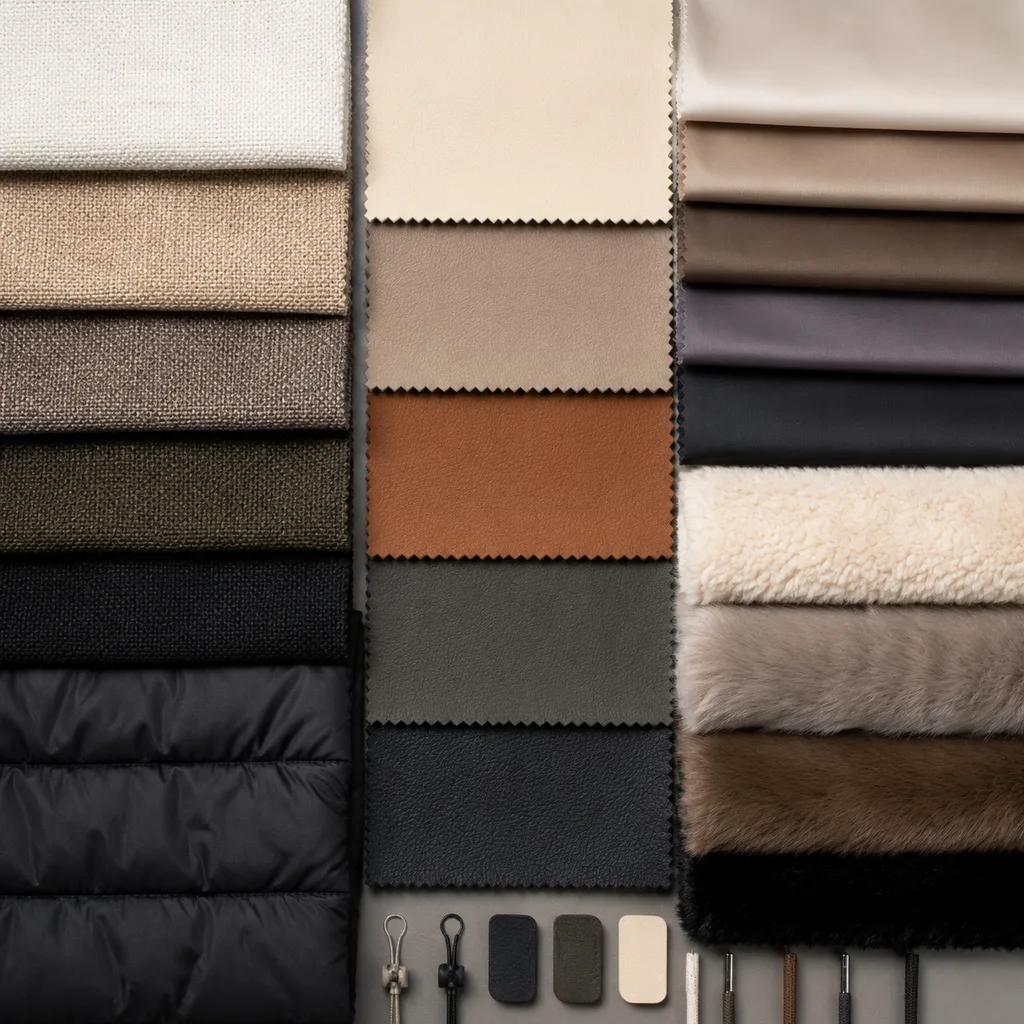
Textiles can reduce weight and support color or quilting, while synthetic leather adds structure and a smoother visual. Rubber shells protect lower zones, and overlays reinforce wear areas. Specify face, backing, thickness, finish, color reference, and intended treatment. The pattern and seams determine how those materials perform together, so swatches should be approved within a finished sample.
Linings and insulation shape comfort and fit
Faux fur, fleece, mesh, textile, and synthetic insulation each affect hand feel, moisture, bulk, entry, and internal volume. Map coverage rather than naming one general lining. Include footbed construction and fitting sock in the review. A visually warm collar does not prove the toe box uses the same material or that the boot meets a thermal claim.
Waterproof layers depend on details
Coatings, membranes, seam treatment, gussets, closures, and sole attachment create the water-protection system. Mark the intended boundary and avoid adding decorative needle holes or openings inside it without review. Choose a suitable finished-boot verification plan and add process controls before treated areas become hidden.
Outsole systems balance grip, weight, and durability
TPR, rubber, EVA, and multi-part soles offer different combinations of weight, flexibility, abrasion, cold behavior, appearance, and cost. Compound works with tread geometry and attachment; material name alone does not define traction. Review the outsole on the intended last and upper, then confirm fit, flex, bonding, and test scope.
Hardware, adhesives, and packaging still matter
Eyelets, hooks, zippers, pullers, webbing, thread, adhesives, logos, and boxes can become failure or consistency points. Include them in the bill of materials and approval sample. Ask how lots are identified and substitutions controlled. A complete specification protects repeat orders better than a list focused only on the most visible materials.
Decision framework
Buyer checklist
- Approve exact material faces and backings
- Map lining, insulation, and waterproof coverage
- Review outsole compound with tread and attachment
- Include hardware, adhesive, logos, and packaging
- Control substitutions through written approval
Continue the specification
Move from research to a controlled brief.
Frequently asked questions
Questions buyers ask next
What are snow boots usually made from?
Common constructions combine textile or synthetic upper materials, lining and optional insulation, a waterproof layer or lower shell, footbed components, and TPR, rubber, EVA, or mixed outsoles.
Which snow boot material is best?
There is no single best material. The right combination depends on use, claim, fit, weight, durability, appearance, cost, supply stability, and manufacturing process.