This guide is written for product teams, importers, wholesalers, and brand operators. Use it to structure supplier conversations and document decisions before samples or bulk production move forward.
EVA is often used to reduce weight and add cushion
Expanded EVA can create a lighter midsole or outsole component with cushioning and shape flexibility. Density, compression, cold behavior, and abrasion vary. Exposed EVA wearing surfaces need careful evaluation for the intended terrain. Buyers should approve density or hardness targets, dimensions, color, compression behavior, and the way EVA interfaces with other sole parts.
TPR commonly provides a molded wearing surface
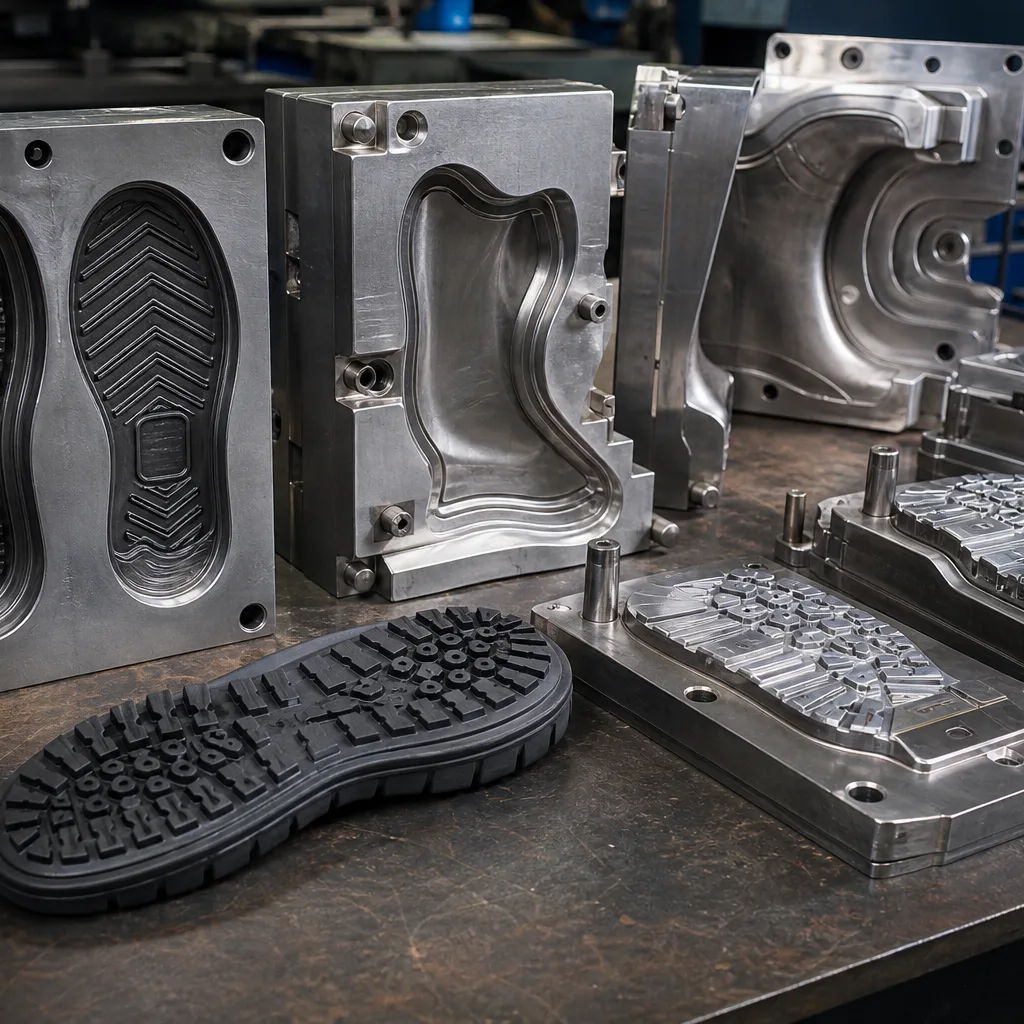
TPR can provide tread detail, flex, abrasion performance, and a broad range of visual finishes. It may be used as a full outsole or as pods and inserts attached to a lighter base. Compound and geometry determine results. Review low-temperature flexibility, surface grip, wear, molding quality, and attachment to the midsole or upper.
Combined soles can balance priorities
An EVA midsole with TPR contact pieces can reduce weight while keeping more durable tread in key zones. The design must manage bonding area, edge lift, flex, and wear transition between materials. More pieces also create more tooling and assembly controls. Use the simplest construction that meets the product brief and can be repeated at the target volume.
Evaluate production and lifecycle tradeoffs
Compare tooling, color minimums, dimensional consistency, scrap, attachment process, repair potential, packaging compression, and expected use. Test the complete sole under relevant conditioning and record exact materials. If a density or compound changes, review fit, height, flex, weight, and evidence again rather than assuming the appearance is equivalent.
Decision framework
Buyer checklist
- Set weight and cushioning targets
- Approve EVA density and TPR compound
- Inspect bonding between multi-part soles
- Test complete boot flex and wear
- Control material changes by written approval
Continue the specification
Move from research to a controlled brief.
Frequently asked questions
Questions buyers ask next
Can EVA be used as a snow boot outsole?
It can be used in some constructions, but exposed wear, traction, cold behavior, and durability must match the intended use. Many designs add a TPR or rubber wearing surface.
Why combine EVA and TPR?
The combination can use EVA for lower weight and cushioning, with TPR in contact zones for tread detail and wear performance.