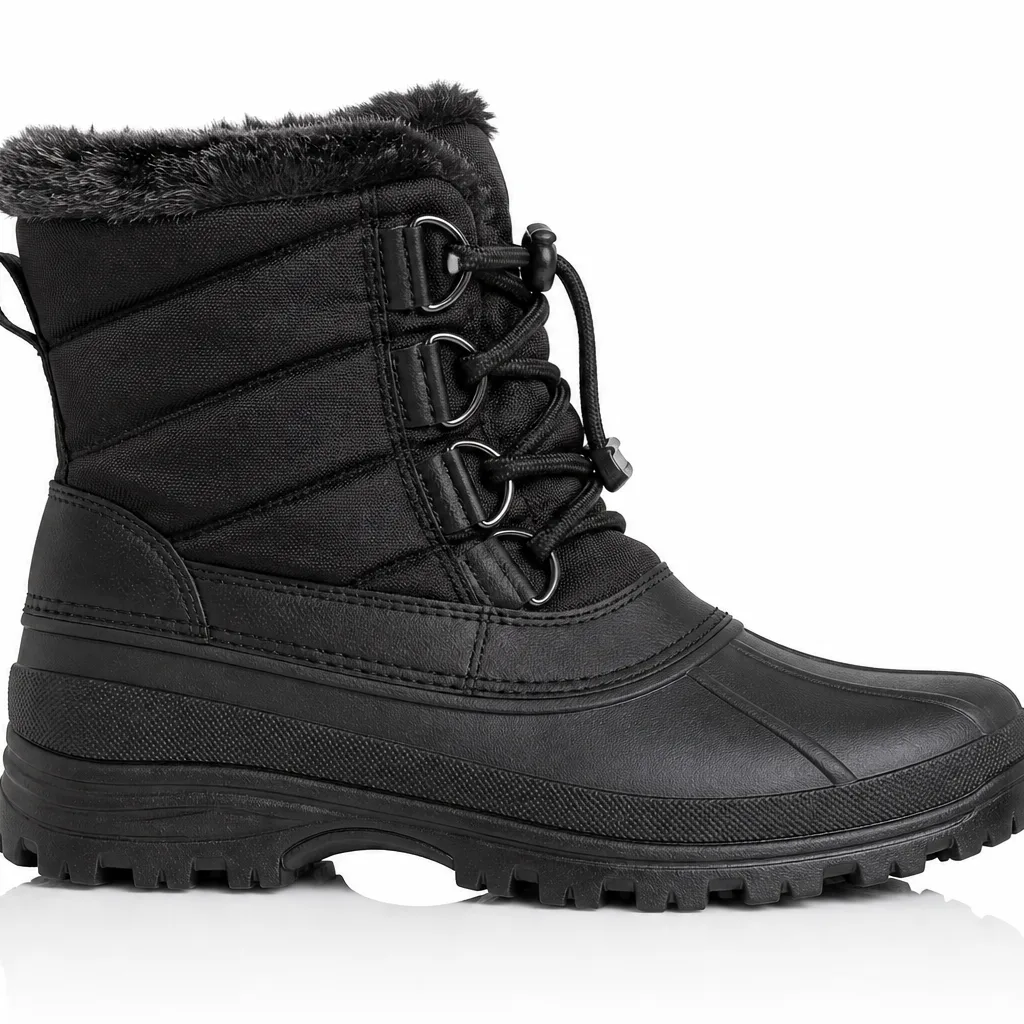
This guide is written for product teams, importers, wholesalers, and brand operators. Use it to structure supplier conversations and document decisions before samples or bulk production move forward.
Upper materials and waterproof construction
Changing textiles, synthetic leather, reinforcements, membranes, seam treatments, or gussets can reshape both appearance and performance. Define the intended water exposure and flex zones before selecting materials. New combinations should be sampled and tested as a construction, not approved from isolated swatches.
Insulation and lining package
Faux fur, fleece, textile linings, foams, and synthetic insulation affect warmth, bulk, drying, fit, and cost. Select the package around climate, consumer use, sock assumption, and target retail position. Recheck internal dimensions because a thicker lining can reduce usable fit volume.
Color, trims, branding, and packaging
Color blocking, laces, webbing, labels, patches, hardware, insoles, hangtags, boxes, and tissue create a recognizable branded system without changing the base platform. Control color standards and placement drawings. Small components can still create minimums and long-lead risks when they are fully custom.
Outsole design and tooling
A custom tread, sidewall, logo, compound, or mold can create stronger differentiation but adds design, tooling, grading, test, and ownership decisions. Start with traction zones, flex, weight, durability, and target surfaces. Compare modification of an existing platform with fully new tooling.
Fit, last, and size grading
Fit customization may involve a different last, toe volume, instep, heel hold, shaft opening, removable footbed, or grade rules. These changes influence tooling and every upper pattern. Approve fit on representative sizes and document measurement points before extending the range.
Decision framework
Buyer checklist
- Specify upper zones, waterproof method, flex needs, and test plan
- Approve lining thickness together with fit and moisture requirements
- Build one color and branding placement board with minimums
- Define tooling scope, ownership, size coverage, and validation tests
- Approve representative fit sizes before full grading and molds
Continue the specification
Move from research to a controlled brief.
Frequently asked questions
Questions buyers ask next
What should buyers prioritize first from this list?
Begin with upper construction and fit because they drive performance, pattern engineering, and later component decisions. Branding can progress in parallel once the base architecture is stable.
Does every snow boot program need all five items?
A program can combine all five, but every added custom element increases coordination and may affect minimums or timing. Stage customization so high-risk construction and fit decisions close before decorative details.