This guide is written for product teams, importers, wholesalers, and brand operators. Use it to structure supplier conversations and document decisions before samples or bulk production move forward.
PU synthetic leather
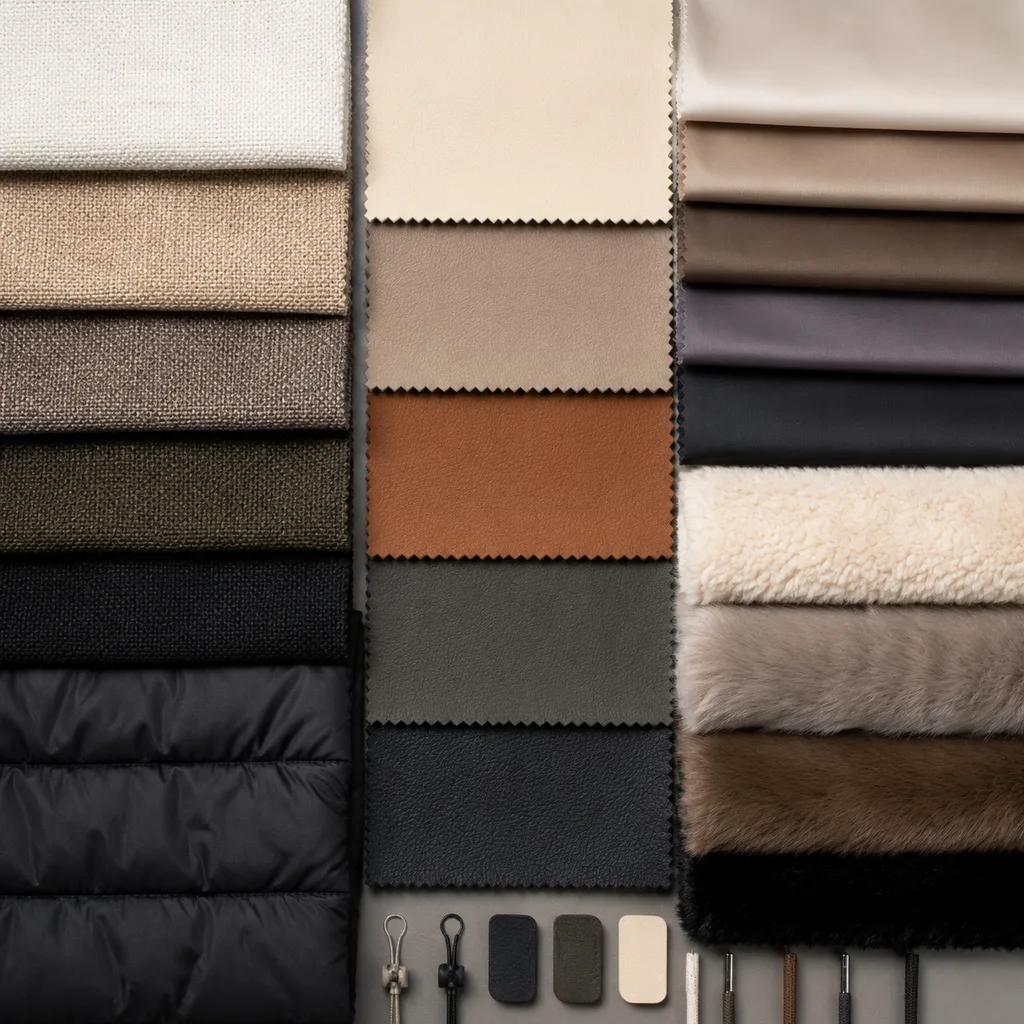
PU synthetic leather can provide structure, easy cleaning, embossing options, and broad color control. Performance varies by base cloth, coating chemistry, thickness, grain, and cold-flex behavior. Test the exact production material and manage needle holes, edge finishing, and hydrolysis or aging requirements as relevant.
Woven nylon or polyester textile
Woven textiles can reduce weight and support quilting, printing, color blocking, and flexible shafts. Fiber, denier, weave, backing, coating, abrasion, snagging, and water treatment all matter. Reinforce only the zones that need support so the boot retains its intended flexibility.
Coated waterproof textile
A coated textile can provide a direct surface barrier and distinctive technical appearance. Review coating flexibility, crease marks, bonding, abrasion, seam treatment, and cold response. Heat processes and adhesives should be trialed because they can change the coating surface or peel strength.
Leather or suede systems
Leather and suede can support premium, outdoor, or heritage positioning, but natural variation, thickness, finish, water treatment, color, care, and sourcing require control. Define whether the material is decorative, water-resistant, or part of a tested construction. Plan shade ranges and cutting rules.
Rubber, TPU, or film reinforcements
Molded or welded reinforcements can protect toe, heel, mudguard, and flex-adjacent zones while adding visual structure. Check compatibility, edge lift, stiffness, weight, and attachment to the base upper. More coverage is not automatically better when it restricts flex or traps moisture.
Decision framework
Buyer checklist
- Approve exact base, coating, thickness, finish, and cold-flex evidence
- Specify fiber, weave, backing, finish, abrasion, and reinforcement zones
- Validate coating with actual seams, welding, bonding, and cold flex
- Approve grade, thickness, finish, shade range, treatment, and claims
- Place reinforcements by wear map and validate attachment and flex
Continue the specification
Move from research to a controlled brief.
Frequently asked questions
Questions buyers ask next
What should buyers prioritize first from this list?
Define the water, abrasion, support, and appearance needs by upper zone before choosing material. Many successful boots combine a lightweight textile with structured or molded protection rather than using one material everywhere.
Does every snow boot program need all five items?
Upper materials should be designed as a compatible system. Control transitions, seams, coatings, adhesives, and flex so mixed materials age consistently and do not create new water or delamination risks.