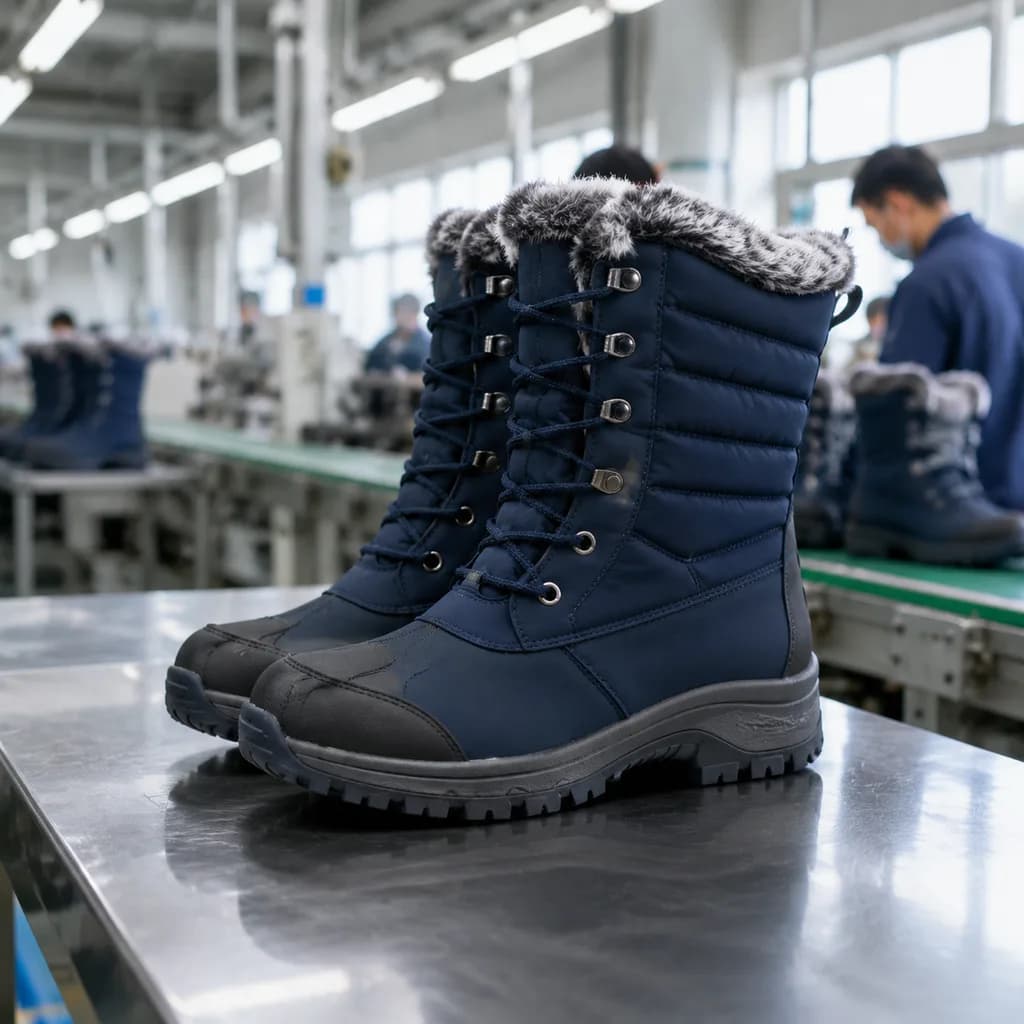
Define fit, construction, materials, branding, quality expectations and open questions before requesting wholesale winter boot pricing.
“Please send wholesale winter boot pricing” leaves the product itself undefined. The request does not identify whether the buyer is looking for an existing product, a private-label direction or a boot developed to the buyer’s specification. It also leaves open the fit basis, construction, materials, branding and quality requirements that shape the discussion.
SnowBootWorks describes its OEM manufacturing direction as building winter boots to the buyer’s specification. Within that scope, the buyer’s construction, materials and quality standards drive product decisions. A stronger opening inquiry therefore explains what is already fixed, what is preferred and what still requires supplier input.
Start With the Fields That Shape the Request
A buyer does not need to settle every detail before making contact. The first brief should instead make the current product definition easy to review. The following fields provide a practical starting point.
- Requested sourcing route
- Existing wholesale product, private-label direction, OEM development or route to be confirmed.
- Intended wearer and channel
- The consumer group, relevant fit priorities and intended retail or distribution channel.
- Expected use
- A plain-language description of the intended cold-weather use and the main product objectives.
- Sizing and fit
- The target sizing system, requested size scope and any available fit reference.
- Product direction
- Category, boot height, entry or closure preference, silhouette and visual priorities.
- Construction and materials
- Known requirements, preferred or restricted materials and unresolved technical questions.
- Branding and packaging
- Logo status, proposed placements, color requirements, artwork status and packaging direction.
- Quality requirements
- Buyer-defined standards, documentation needs and any proposed product claims that require review.
- Destination market
- The intended market, included so the parties can identify relevant product, labeling, documentation and commercial questions.
- Requested next step
- A request to identify which development, sampling or quotation options may apply after review.
This template is an editorial scoping tool. It helps organize the inquiry but does not establish route availability or confirm a project-specific next step.
Choose the Commercial Route to Be Reviewed
“Wholesale” can refer to different sourcing expectations. Naming the intended route helps the supplier understand the request, even when the buyer needs confirmation that the route is relevant.
| Route under consideration | Include in the inquiry | Question to ask |
|---|---|---|
| Existing wholesale product | Target category, wearer, channel, sizing needs and acceptable product direction | Is a relevant product and commercial route available? |
| Private-label direction | Branding positions, artwork status, packaging direction and proposed product changes | Which private-label, development or quotation options may apply? |
| OEM development | Fit reference, construction intent, materials, quality standards and design priorities | What further information is needed to review the development direction? |
The table describes buyer-side inquiry routes. SnowBootWorks would need to review the defined project before confirming which route, if any, applies.
Describe the Wearer, Channel and Use
Who is expected to wear the boot, where will it be sold and what is the intended use? Answers to those questions give context to later decisions about fit, styling and materials.
SnowBootWorks identifies outdoor retail brands as one audience for winter footwear programs. Its industry page frames that context around comfort, weather protection and shelf appeal.
For the buyer’s brief, those terms should be treated as planning objectives unless a measurable requirement has already been defined. As an editorial recommendation, describe the expected use in plain language, then list any performance requirement separately rather than relying on broad words such as “warm,” “waterproof” or “durable.”
- Identify the wearer. State the intended consumer group and any known fit priorities.
- Name the channel. Record the relevant retail, wholesale, catalog or private-label context.
- Describe the use. Explain the cold-weather purpose and mark unresolved performance questions for discussion.
Keep Product Direction Focused
A supplier should not have to guess why a reference was included. For a clearer review, buyers should label each image or sample with the single detail it is meant to communicate, such as silhouette, upper treatment, sole profile, closure or color placement.
The SnowBootWorks product overview presents clean urban, quilted and plush cold-weather directions within its fit-led women’s winter boot platforms. Those descriptions can help a buyer communicate a women’s retail or private-label direction. They do not establish the available direction for another footwear category or project.
- Name one primary category and visual direction.
- State the preferred boot height and entry or closure approach.
- Separate required brand elements from negotiable preferences.
- Label the purpose of every attached reference.
- Record any feature that should not be carried into the proposed product.
Make the Fit Basis Visible
For its fit-led women’s winter boot platforms, SnowBootWorks identifies the target sizing system and fit reference as decisions to make first. This statement is specific to that documented women’s product direction.
As a buyer-side recommendation, include the same two fields whenever they are relevant to the inquiry: name the target sizing system and identify the available fit reference. If either decision is still open, say so directly. Questions about grading, tolerances, approval stages or fit-related sampling should remain questions until the defined project has been reviewed.
Separate Requirements From Questions
A useful brief distinguishes firm instructions from objectives that still need interpretation. This is particularly important for construction, materials and quality standards because SnowBootWorks places those buyer-defined inputs at the center of its documented OEM direction.
| State as a requirement when defined | Leave as a supplier question when unresolved |
|---|---|
| Required construction or construction objective | Which construction direction may be relevant to the proposed boot? |
| Preferred or restricted materials | Which material options should be considered? |
| Insulation requirement or general insulation direction | What information is needed to review the insulation objective? |
| Waterproof construction intent | How should the intended claim and supporting requirements be defined? |
| Logo position and fixed brand elements | Which branding applications may be relevant? |
| Buyer-defined quality standards | What information is needed to review those standards? |
| Confirmed packaging instructions | Which packaging decisions remain open? |
Where a requirement is measurable, the buyer should include the available definition or documentation. Where it is not yet defined, the brief should identify the objective and ask what information is required for further review.
Use References to Control Interpretation
The SnowBootWorks example program page presents a waterproof private-label project format in which a brand brief moves from reference samples toward an export-ready, branded production run. It is presented as an example format rather than evidence of a completed customer engagement.
Reference samples are not documented as a requirement for every project. When images, files or samples are available, the buyer can organize them into a compact review folder containing:
- Product images labeled with the relevant design detail
- Photographs or a description of an available reference sample
- Material preferences and buyer-defined restrictions
- Logo files and proposed placement information
- Packaging direction and artwork status
- A list separating fixed requirements from open preferences
The written brief should explain the limits of each reference. If an image is included only for its sole profile, record that next to the image. If a construction or material detail should not be followed, state that limitation in the same place.
Request the Appropriate Next Step
Before contacting an OEM winter boot manufacturer or wholesale snow boots supplier, review the brief for ambiguous terms and missing decisions. Keep confirmed requirements, preferences and questions visibly separate so the supplier can see the current state of the product definition.
Share that definition through the SnowBootWorks project inquiry and ask which development, sampling or quotation options may apply after review. The answer should be based on the submitted footwear definition rather than assumptions attached to a general search for wholesale winter boots or private label winter boots.
Evidence layer
Evidence checklist: Wholesale Winter Boots: Build a Quote-Ready Brief
OEM, ODM, and private label are not just marketing labels. The practical difference is who owns the starting design, how much the construction changes, and which decisions must be approved before bulk production. Put the decision in writing: reference style, required changes, branding locations, packaging scope, tooling assumptions, and the point at which a sample becomes the production reference. For this guide, map each supplier response to “Start With the Fields That Shape the Request” so a claim is supported by a written specification, sample reference, controlled document, or a clearly marked open question.
A strong brief also records what is out of scope. That prevents a fast sample discussion from silently becoming a new mold, a new size run, or a new compliance requirement. Use the same approval language in the quote, sample comments, and purchase documentation. Cross-check the response against “Choose the Commercial Route to Be Reviewed” and keep every unresolved point visible in the approval record.
- Design ownership and permitted adaptations — scoped to wholesale winter boots
- Branding, packaging, and tooling boundaries — cross-checked against “Start With the Fields That Shape the Request”
- Sample approval gates before bulk commitment — with open risks from “Choose the Commercial Route to Be Reviewed” recorded
Decision framework
Buyer checklist
- Replace a bare pricing request with a current product definition covering route, wearer, channel, use, fit and design direction.
- Distinguish fixed construction, material, branding and quality requirements from questions that still need supplier input.
- Keep SnowBootWorks' documented women's platform language within its specific fit-led women's winter boot scope.
- Label every reference with the product detail it is intended to communicate.
- Ask which development, sampling or quotation options may apply only after the project definition has been reviewed.
Sources and verification
Evidence used for this guide.
Continue the specification