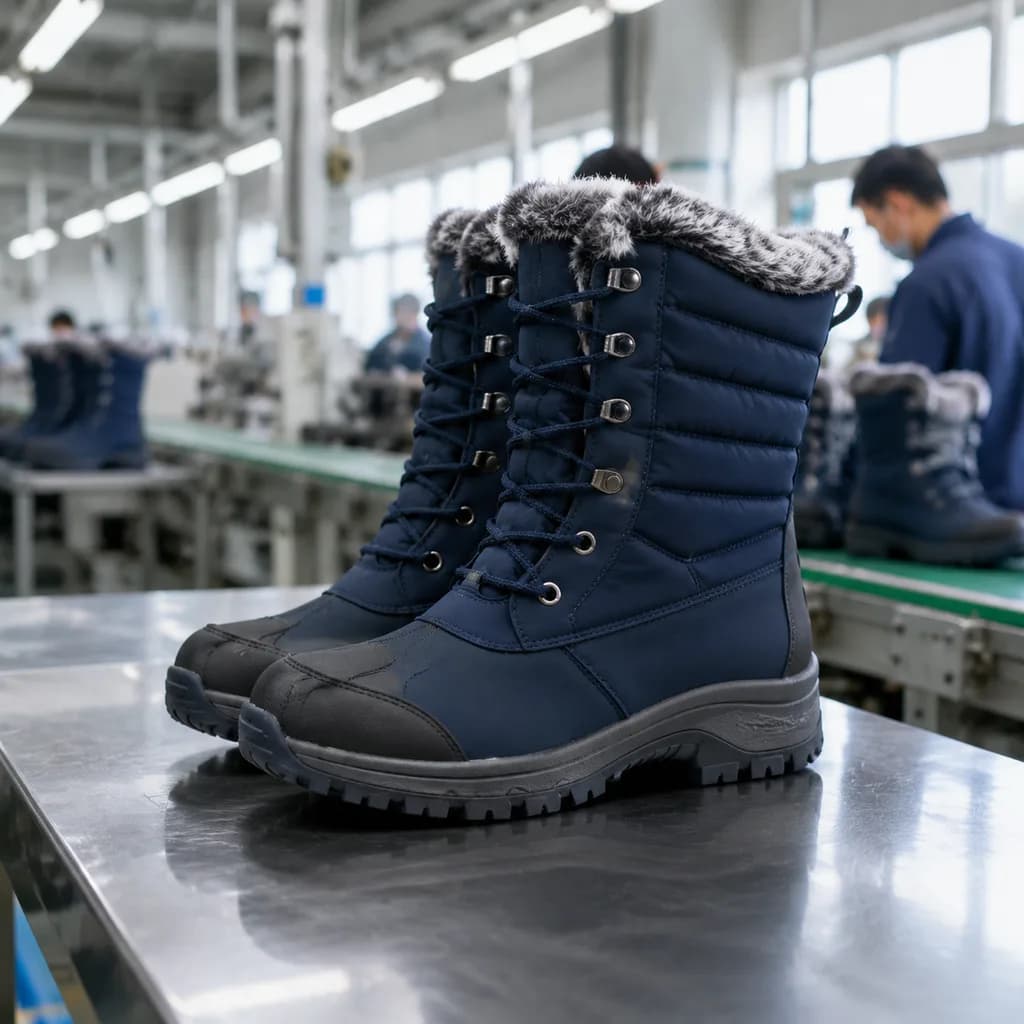
Prepare a clearer wholesale snow boot quotation request by separating confirmed specifications, acceptable alternatives, and open supplier questions.
A request for wholesale snow boots can reach the quotation stage while important product decisions are still unsettled. The problem is not simply missing information. It is often unclear which details are mandatory, which can change, and which require a supplier response.
A decision register makes those distinctions visible. It gives each requirement, preference, and question a defined status before the buyer sends the brief. SnowBootWorks describes its OEM manufacturing scope as building winter boots to the buyer's specification, with the buyer's construction, materials, and quality standards driving decisions. A useful inquiry should therefore present the current specification without disguising open issues as settled requirements.
Three lanes for the product brief
The buyer's register can use three lanes: confirmed requirement, acceptable alternative, and open supplier question. This is an editorial framework for organizing the inquiry, not a statement that every subject entered in the register is a documented SnowBootWorks service.
| Decision lane | What belongs there | Drafting approach |
|---|---|---|
| Confirmed requirement | An approved specification, standard, or reference that should govern the proposed product. | State it directly and identify the related document, sample, or specification where relevant. |
| Acceptable alternative | An option the buyer is prepared to review within defined limits. | Name the permitted choice and the requirement that must remain unchanged. |
| Open supplier question | A point that remains unresolved and needs a response before the brief or quotation basis can be completed. | Ask the question directly instead of inserting an assumed material, process, term, or outcome. |
The register can cover intended use, wearer, silhouette, construction, components, quality standards, fit, sizing, branding, packaging, references, and commercial questions. Its purpose is not to make a long wish list. It is to prevent information with different levels of authority from being blended into one specification.
What must be defined before components
Material names are easier to evaluate when the product direction is already bounded. For the buyer, the practical drafting order is to define the boot first: intended wearer, expected use, silhouette, range position, visual direction, and the limits of any requested performance language. Components can then be recorded against that definition.
- Describe the product direction. Name the category, wearer, intended use, silhouette, and relevant visual reference.
- Mark construction boundaries. Separate approved requirements from construction directions that remain available for review.
- Add decided component inputs. Record the upper, lining, insulation direction, outsole, trims, and finishes only as far as the buyer has defined them.
- Identify buyer standards. Place applicable quality or performance requirements in their own entries rather than relying on broad descriptions such as warm, waterproof, or winter-ready.
- Expose the gaps. Turn every unresolved point needed for development or quotation review into a direct question.
This order is consistent with the documented OEM scope in which the buyer's construction, materials, and quality standards guide the specification. It does not mean every component must be approved before contact. A partial definition can still be useful when it clearly distinguishes decisions from requests for input.
From waterproof wording to upper inputs
The word waterproof does not by itself identify the requested upper construction. The SnowBootWorks materials page lists coated nylon, water-resistant fabric, and a technical textile shell as waterproof textile upper directions. These descriptions apply to the upper and should remain separate from requirements for the assembled boot.
The source describes the synthetic fabric used in this direction as typically nylon or polyester. It also describes the fabric as finished with a durable water-repellent coating. In a separate construction detail, the fabric is described as often backed by a waterproof membrane or laminate.
- Upper direction
- Record coated nylon, water-resistant fabric, or a technical textile shell when the buyer has selected that direction or is willing to review it.
- Fiber choice
- State nylon or polyester as confirmed only when the choice has been made. Otherwise, list the permitted alternatives or ask which option is proposed.
- Surface finish
- Specify whether a durable water-repellent finish belongs in the requested upper definition.
- Backing construction
- Record a membrane or laminate as a requirement when already decided, or ask what backing is proposed.
- Complete-product requirement
- Document any buyer-required standard, test method, test stage, and acceptance criterion separately from the upper description.
Consider one hypothetical entry: the confirmed lane requires a textile-shell appearance, the alternative lane permits nylon or polyester for review, and the open lane asks which backing construction is proposed. Although all three entries concern the upper, they do not represent the same type of decision.
The cited material description does not establish a temperature rating, waterproof result, or other outcome for an assembled boot. Those subjects need their own buyer requirements or direct questions.
A range-specific fit reference
Fit language also needs a defined scope. The SnowBootWorks product catalog presents women's snow boot platforms for women's retail and private-label winter collections. For that documented product direction, buyers are told to decide the target sizing system and fit reference first.
A brief for this range should name the sizing system rather than provide an unexplained sequence of sizes. The fit reference should also be assigned a clear role. It may be a confirmed requirement, a reference with permitted variation, or an unresolved selection for which the buyer requests applicable development options.
That source is specific to the women's platform direction. It does not establish an identical fit-development process for men's, children's, occupational, or other winter footwear categories.
References need assigned authority
A sample, image, or technical file can communicate useful direction, but the buyer should state exactly what each reference controls. One may show shape, another may indicate fit intent, and another may identify material or trim placement. Written notes can distinguish the attributes to follow from those that remain open.
SnowBootWorks publishes a private-label project example in which a waterproof winter boot brief moves from reference samples toward an export-ready branded production run. The page presents this as an example project format. It does not establish a completed customer engagement or guarantee that a new inquiry will follow the same progression.
Where a reference and a written requirement could conflict, the buyer should identify which has priority. For example, an approved specification or named standard may govern even when a reference sample differs. This hierarchy is a buyer-side drafting recommendation; it is not presented as a documented factory procedure.
Questions belong inside the handoff
The final wholesale snow boot quotation request should allow the recipient to understand the current product definition without reconstructing it from disconnected messages. A compact handoff can do that when every item has a decision lane.
- State the intended wearer, use, category, silhouette, range position, and visual direction.
- List confirmed construction, component, branding, and quality requirements.
- Name the target sizing system and the range-specific fit reference when decided.
- Attach references with notes explaining the purpose and authority of each one.
- Record acceptable alternatives together with the boundaries they must preserve.
- List unresolved questions about materials, construction, sampling, testing, quotation basis, timing, order quantities, packaging, and logistics.
- Ask which development, sampling, or quotation options may apply to the definition provided.
Sampling routes, testing arrangements, timing, order quantities, packaging, logistics, and quotation terms remain inquiry topics unless the buyer already has separate documentation for them. Phrases such as standard packaging, normal MOQ, or typical winter outsole leave the decision owner and required outcome unclear. Each should be replaced by a confirmed requirement, a bounded alternative, or a question.
The quote-ready version
A quote-ready brief does not need to resolve every technical and commercial issue. It needs to show the difference between what the buyer has approved, what the buyer is prepared to consider, and what still needs an answer.
Send the decision register and its supporting references through the quotation request. Share the current winter footwear definition, preserve unresolved topics as questions, and ask which development, sampling, or quotation options may apply to the project.
Evidence layer
Evidence checklist: Wholesale Snow Boots: Build a Quote-Ready Brief
OEM, ODM, and private label are not just marketing labels. The practical difference is who owns the starting design, how much the construction changes, and which decisions must be approved before bulk production. Put the decision in writing: reference style, required changes, branding locations, packaging scope, tooling assumptions, and the point at which a sample becomes the production reference. For this guide, map each supplier response to “Three lanes for the product brief” so a claim is supported by a written specification, sample reference, controlled document, or a clearly marked open question.
A strong brief also records what is out of scope. That prevents a fast sample discussion from silently becoming a new mold, a new size run, or a new compliance requirement. Use the same approval language in the quote, sample comments, and purchase documentation. Cross-check the response against “What must be defined before components” and keep every unresolved point visible in the approval record.
- Design ownership and permitted adaptations — scoped to wholesale snow boots
- Branding, packaging, and tooling boundaries — cross-checked against “Three lanes for the product brief”
- Sample approval gates before bulk commitment — with open risks from “What must be defined before components” recorded
Decision framework
Buyer checklist
- Assign each product decision to a confirmed-requirement, acceptable-alternative, or open-question lane.
- Define the wearer, intended use, silhouette, construction boundaries, and buyer standards before finalizing component inputs.
- Keep textile-upper materials and construction details separate from complete-boot requirements.
- Apply the documented sizing and fit guidance only to the stated women's platform direction.
- Present sampling, testing, quotation, timing, order quantity, packaging, and logistics topics as questions unless the buyer has separate documentation.
Sources and verification
Evidence used for this guide.
Continue the specification