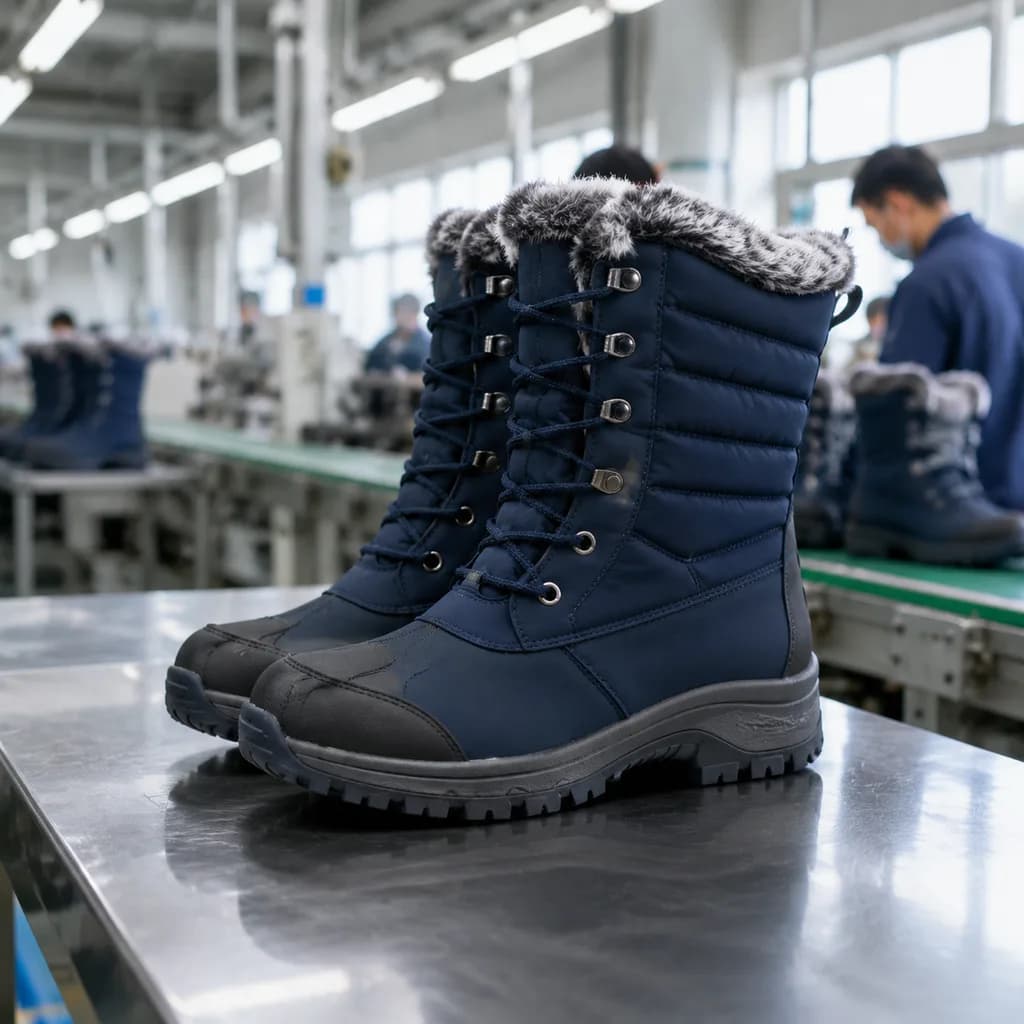
Set wholesale winter boot sample approval standards that separate fixed specifications, references, review criteria and unresolved supplier questions.
A buyer's wholesale winter boot sample approval standards should define the decision expected from a development sample. The review is not simply whether the boot looks acceptable. It is whether identified parts of the sample reflect the current specification closely enough to accept, revise or leave unresolved.
SnowBootWorks describes developing custom snow boots to a buyer's own specification, with construction, materials and approval standards driving decisions. The framework in this article is editorial procurement guidance for buyers. It is not presented as a documented SnowBootWorks review service or supplier commitment.
Define the decision boundary
Before requesting a sample, buyers should write down what the review is intended to decide. The scope may include the entire current specification, or it may be limited to selected points such as fit direction, construction details, material selection, color, closure arrangement or branding placement.
Each criterion should lead to one recorded status:
- Accept
The observed condition reflects the written requirement closely enough for the current buyer decision.
- Revise
The requirement is clear, but the observed condition needs a specified change.
- Unresolved
The buyer cannot decide because a specification, supplier answer, reference or internal decision is still missing.
This status belongs to the individual criterion, not automatically to the whole sample. A buyer may accept a branding position while leaving a material question unresolved. Separate decisions also prevent sample comments from becoming a substitute for broader supplier evaluation.
Build a buyer-controlled decision map
For a consistent review, the editorial recommendation is to divide the current footwear definition into four information types. Each type serves a different purpose and should remain identifiable throughout sampling.
| Information type | Buyer record | Role in the review |
|---|---|---|
| Fixed requirements | Approved specifications the buyer expects the sample to reflect, including any named construction, material, color, artwork, branding or fit requirements. | Review the sample against the written requirement rather than introducing a new preference during evaluation. |
| Reference inputs | Physical samples, photographs, drawings, artwork, color references or other identified files used to communicate direction. | State which feature each reference controls and whether that feature should be matched, adapted or excluded. |
| Evaluation criteria | Observable questions that a designated reviewer can answer from the sample and controlling references. | Assign an individual acceptance, revision or unresolved status to each criterion. |
| Open questions | Topics awaiting buyer decisions or project-specific supplier clarification. | Keep these topics out of the confirmed specification until an answer has been received and accepted. |
Questions about development, sampling, quotation or commercial terms belong in the open section until project-specific information is available. Including a question in a brief does not turn it into a confirmed service, price, schedule or production condition.
Set fit direction before styling review
For women's retail and private-label winter collections, the SnowBootWorks product catalog tells buyers to decide the target sizing system and fit reference first. The excerpt does not define fit tolerances, grading rules, test methods or approval outcomes. Buyers therefore need to write their own review criteria and identify any points that require supplier discussion.
- Name the target sizing system. Record the intended system or market instead of relying on an unqualified size label.
- Identify the fit reference. Use a stable sample code, file name or other identifier. State whether it controls overall fit direction or only a specified feature.
- Define the comparison. Record what the reviewer will compare and which reference governs that decision. Leave unconfirmed tolerances or grading requirements as open questions.
- Separate fit from appearance. Give silhouette, color, material and visible construction their own criteria so a favorable visual impression does not decide the fit status.
This structure helps the buyer preserve the distinction between a fit reference and a styling reference. One object may be used for both, but its role should be written separately for each review point.
Assign every reference a specific job
A reference boot, photograph or drawing communicates direction, but its presence alone does not say what the buyer wants retained. The useful instruction is the annotation attached to the reference.
- Reference identity
Name the sample, image or file so reviewers are working from the same input.
- Controlled feature
Identify the exact feature the buyer wants to compare, such as fit direction, closure position, silhouette, trim treatment or branding location.
- Required treatment
State whether the feature should be matched, adapted or excluded. When references conflict, identify which one controls each feature.
- Review question
Describe the observation the reviewer must make before assigning a status.
One documented SnowBootWorks case study describes a private-label waterproof winter boot program moving from reference samples to an export-ready branded production run. That statement applies to the program described on the page. It does not define the workflow, timing or result for another project.
The buyer-level lesson is limited but useful: a reference sample can be part of a development record, while the written brief still needs to identify what the reference means. Instructions such as use for fit direction only or exclude outsole design are more actionable than an unmarked reference.
Turn broad goals into review questions
SnowBootWorks identifies comfort, weather protection and shelf appeal as considerations for winter footwear programs serving outdoor retail brands. The source supplies no review methods, thresholds or finished-product performance findings. Buyers can use the three considerations as planning categories, then define project-specific questions beneath each one.
- Comfort: identify the fit reference, reviewer and comparison points. Buyer-authored questions may address entry, removal, pressure areas, heel movement, forefoot space or closure adjustment under the stated review conditions.
- Weather protection: record the intended construction and the sample details selected for inspection. Keep any required evidence, method or threshold in a separate specification or open question. The waterproof snow boot specification guide provides additional definition topics for projects considering waterproof construction.
- Shelf appeal: replace a general reaction with visible criteria. Buyers may compare the silhouette with approved drawings, color with the named reference, and artwork or trim placement with identified files.
Review language should indicate what must be observed. A direction such as confirm logo position against artwork file B gives the reviewer a defined comparison. A broad phrase such as improve shelf appeal does not identify the feature to revise.
Close the review with a status ledger
After inspection, buyers should record accepted points, requested revisions and unanswered questions in separate rows. The following format is an editorial recommendation for maintaining that distinction.
| Status | Record | Buyer action |
|---|---|---|
| Accepted | Name the criterion, controlling reference and observed condition that was accepted. | Retain the decision unless a later change affects the accepted point. |
| Revision required | Describe the mismatch, expected condition and controlling marked reference. | Review the changed point again and identify any related criteria affected by the revision. |
| Unresolved | Write the open question and identify the information or decision still needed. | Leave the criterion open until the buyer has enough information to assign a status. |
The record should also identify the sample, specification version, artwork version and reference set used for the decision. When instructions change, a dated entry can distinguish the current direction from superseded feedback. This avoids marking the whole sample approved while individual requirements remain open.
Carry the record into the inquiry
A useful custom winter boot development brief should preserve the same distinctions. Buyers should send the current definition rather than combining fixed specifications, unmarked inspiration and unanswered questions in one list.
The inquiry handoff can include:
- the intended product and use context;
- the target sizing system and identified fit reference;
- fixed construction, material, color and branding requirements;
- annotated references and the feature controlled by each one;
- the buyer's proposed sample evaluation criteria;
- questions that require discussion before they can become confirmed requirements.
This record can function as a winter boot sample approval checklist when every item has a status and a controlling requirement or reference. It should show the decision already made, the change still requested and the questions that remain open.
SnowBootWorks states that it develops custom snow boots to a buyer's own specification, with construction, materials and approval standards driving decisions. Buyers can share the current winter footwear definition and ask which development, sampling or quotation options may apply to the project. The applicable options remain subject to the project-specific response.
Evidence layer
Evidence checklist: Buyer Review Plan: Wholesale Winter Boot Sample Approval Standards
OEM, ODM, and private label are not just marketing labels. The practical difference is who owns the starting design, how much the construction changes, and which decisions must be approved before bulk production. Put the decision in writing: reference style, required changes, branding locations, packaging scope, tooling assumptions, and the point at which a sample becomes the production reference. For this guide, map each supplier response to “Define the decision boundary” so a claim is supported by a written specification, sample reference, controlled document, or a clearly marked open question.
A strong brief also records what is out of scope. That prevents a fast sample discussion from silently becoming a new mold, a new size run, or a new compliance requirement. Use the same approval language in the quote, sample comments, and purchase documentation. Cross-check the response against “Build a buyer-controlled decision map” and keep every unresolved point visible in the approval record.
- Design ownership and permitted adaptations — scoped to wholesale winter boot sample approval standards
- Branding, packaging, and tooling boundaries — cross-checked against “Define the decision boundary”
- Sample approval gates before bulk commitment — with open risks from “Build a buyer-controlled decision map” recorded
Decision framework
Buyer checklist
- Define the decision expected from each sample criterion before requesting development.
- Keep fixed requirements, reference inputs, evaluation criteria and open questions distinguishable.
- Name the target sizing system and fit reference before using appearance as an approval signal.
- Record accepted points, requested revisions and unresolved questions as separate decisions.
Sources and verification
Evidence used for this guide.
Continue the specification