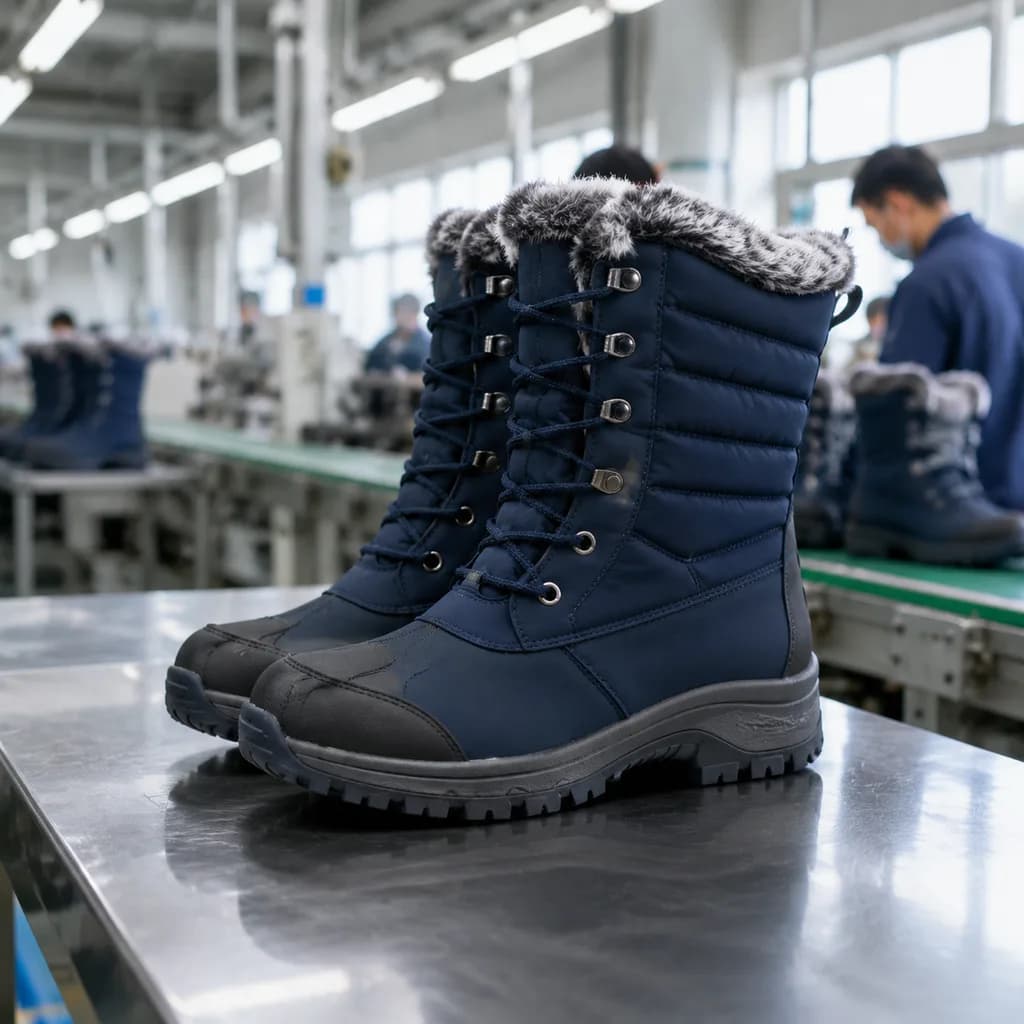
Name shell, DWR, and optional membrane for a waterproof textile upper before OEM quotes so construction, materials, and approval standards stay on one path.
A waterproof textile upper for custom snow boots has to be named before factories cost or sample the program. When the RFQ only says waterproof, each OEM reply can invent a different shell, surface finish, and backing path. Construction, materials, and approval standards then diverge even though every bidder answered the same line item.
The practical response is a decide-first gate. Lock the documented upper layers early. When private-label work or women's platforms apply, fold those parallel decisions into the same briefing window. Send one packet before development or quotation talk. The language below stays inside first-party materials and program terms, not lab ratings or unstated construction physics. Where steps describe buyer prep rather than a published factory checklist, treat them as editorial guidance for the buyer.
Why vague waterproof RFQs produce non-comparable OEM replies
A single word like waterproof does not tell a factory which shell fabric, surface treatment, or membrane approach to cost, sample, or hold to an approval standard. Without that stack, the same RFQ can produce coated-only constructions next to membrane-backed ones. Approval criteria then fail to match because each supplier priced a different upper reading of the same RFQ line.
The buyer who leaves the upper undefined authorizes parallel, non-comparable paths. Freezing the textile upper early is how construction, materials, and approval standards drive one decision chain rather than several interpretations of waterproof. Custom snow boots waterproof construction work only becomes comparable once that gate is closed.
Layers that define a waterproof textile upper stack
Materials documentation describes a waterproof textile upper as a coated nylon upper, a water-resistant fabric upper, or a technical textile shell. In substance that is a woven or laminated synthetic fabric upper, typically nylon or polyester, finished with a durable water-repellent (DWR) coating and often backed by a waterproof membrane or laminate. The same source positions the stack as the lightweight, flexible direction for everyday snow boots that need to stay supple in the cold.
Those labels are the named options for a buyer brief. Answer each layer in plain language before quote work starts:
- Shell: coated nylon, water-resistant technical textile, or another named woven or laminated synthetic (typically nylon or polyester)
- Surface finish: DWR required, preferred, or still open
- Backing: membrane or laminate required, not required, or open with a dated decision
- Use direction: lightweight flexible everyday upper that stays supple in the cold, or another direction still under evaluation
Keep hydrostatic head, breathability figures, and finished-boot ratings out of the brief when they are not on the materials page. Staying inside the documented stack is what lets every supplier price and sample the same upper path.
Which stack decisions freeze construction and approval standards
On OEM manufacturing capabilities, custom snow boots are developed to the buyer's own specification, with construction, materials, and approval standards driving every decision. Naming the shell, DWR, and membrane or laminate choice is what lets those three drivers attach to one upper path instead of several competing readings of waterproof.
Buyer prep for the RFQ or tech pack:
- Write the upper stack into the RFQ or tech pack using the documented shell, DWR, and membrane or laminate terms.
- State any construction expectations the buyer will hold, without inventing lab numbers or unstated factory methods.
- Define approval standards in the buyer's own terms so sample review matches the chosen stack.
- Only then open development, sampling, or quotation discussion so replies address one path.
Leaving the membrane decision open while asking for firm samples is a common failure mode. Two factories may both answer waterproof textile while one quotes a DWR-coated shell and another quotes a laminate-backed system. Approval then becomes an argument about which boot was intended. An OEM snow boot materials specification that freezes the stack first avoids that split.
Starting from a reference sample when the BOM is incomplete
Not every private-label program begins with a complete upper bill of materials. Program framing for a waterproof snow boot private label program shows how a brand brief can move from reference samples to an export-ready, branded production run. That path helps when the buyer has a physical reference or competitive sample that already shows the waterproof textile behavior they want, even if shell and membrane names are not yet written as a BOM.
Reference-sample entry does not remove the need to name the upper. It changes the order of work:
- State that the work is a waterproof private label snow boot brief anchored on reference samples.
- As optional self-notes only, not as documented program fields, record which sample traits matter most for the upper versus traits that may change for branding or cost.
- Translate those notes into the documented stack language: coated or water-resistant technical textile shell, DWR, optional membrane or laminate.
- Carry the brand brief forward toward an export-ready production run only after construction, materials, and approval standards match the chosen stack.
Observe first, freeze the stack, then run development against shared standards so the private-label path stays comparable across sample rounds.
Fit baseline for women's platforms in the same briefing window
Upper hand and cold-weather flexibility are easy to over-brief while fit stays vague. For women's retail and private-label winter collections, product documentation lists a decide-first pair: target sizing system and fit reference. Fit-led women's winter boot platforms span clean urban, quilted, and plush cold-weather directions, but the first buyer decision listed is still the sizing system and fit reference, not the style story alone.
When the waterproof textile upper is the lightweight, supple everyday direction, put the fit reference in the same briefing window as the upper stack so sampling does not produce a waterproof shell on an unapproved fit baseline. Keep this gate limited to target sizing system and fit reference. Do not expand it into last codes, grade rules, or size-run tables the catalog does not publish. Once those two fields are filled, ask which development options apply to the collection.
Pre-quote fields for comparable waterproof custom programs
A single packet sent before development, sampling, or quotation keeps replies aligned. The fields below are optional buyer guidance, not a published service menu. They combine the upper stack, OEM decision drivers, private-label reference-sample entry, and the women's fit gate so one packet can support comparable work.
- Program type: OEM custom specification or private-label waterproof path from brand brief and reference samples
- Upper shell: coated nylon, water-resistant fabric, or technical textile shell (woven or laminated synthetic, typically nylon or polyester)
- DWR finish: required, preferred, or open
- Membrane or laminate: required, not required, or open with a clear decision date
- Use direction: lightweight flexible everyday snow boot upper that stays supple in the cold, or another direction still under evaluation
- Construction notes the buyer will hold against the chosen stack
- Approval standards the buyer will apply on samples
- For women's collections: target sizing system and fit reference
- Reference samples attached or described, if that is the entry path
- Open questions: which development, sampling, or quotation information applies to this project
Share the current winter footwear definition with the manufacturer through a quote request and ask which development, sampling, or quotation options may apply once the packet is complete. That keeps inquiry topics separate from any claim of a fixed service promise. Materials and capability pages remain the right places to cross-check stack language and the construction-materials-approval rule before the first sample round.
Buyers who freeze the waterproof textile upper stack early make supplier replies address one construction path. The packet above is enough to start that alignment without waiting for a full process map or a late materials change after samples already exist.
Evidence layer
Evidence checklist: Waterproof Textile Upper for Custom Snow Boots RFQ Alignment
Waterproof, water-resistant, and weather-ready are not interchangeable briefs. Start with the exposure your buyer expects, then identify the upper, membrane or coating, seam treatment, gusset, closure, and outsole details that support the claim. The specification should say what is being protected and how the finished boot will be reviewed; it should not rely on a single material name as a shortcut for performance. For this guide, map each supplier response to “Why vague waterproof RFQs produce non-comparable OEM replies” so a claim is supported by a written specification, sample reference, controlled document, or a clearly marked open question.
Keep marketing language aligned with the approved construction and the test method agreed for the program. If the target market has a required labeling or claim convention, confirm it with the importer or compliance specialist before publishing the claim. Cross-check the response against “Layers that define a waterproof textile upper stack” and keep every unresolved point visible in the approval record.
- Exposure scenario and claim wording — scoped to waterproof textile upper for custom snow boots
- Seam, gusset, closure, and upper interfaces — cross-checked against “Why vague waterproof RFQs produce non-comparable OEM replies”
- Agreed review method and claim documentation — with open risks from “Layers that define a waterproof textile upper stack” recorded
Decision framework
Buyer checklist
- A vague waterproof claim leaves construction, materials, and approval standards undefined, so OEM quotes and samples become non-comparable.
- Name the textile upper stack before development: shell (coated nylon or water-resistant technical textile), DWR, and optional membrane or laminate.
- Reference-sample private-label entry still requires translating observed traits into that same stack language.
- For women's collections, put target sizing system and fit reference in the same briefing window as the upper stack.
- Send one pre-quote packet and ask which development, sampling, or quotation information applies to the project.
Sources and verification
Evidence used for this guide.
Continue the specification
Move from research to a controlled brief.
Frequently asked questions
Questions buyers ask next
What should a buyer name first for a waterproof textile upper?
Name the shell (coated nylon, water-resistant fabric, or technical textile), whether a DWR finish is required, and whether a waterproof membrane or laminate is required, optional, or still open. Materials language frames this stack as a woven or laminated synthetic upper, typically nylon or polyester, and as the lightweight flexible everyday direction.
Can a private-label waterproof program start from reference samples instead of a full upper BOM?
Yes as an entry path: program framing shows a brand brief moving from reference samples to an export-ready branded production run. The buyer still needs to convert sample notes into named shell, DWR, and membrane or laminate decisions so construction and approval standards can lock.
What fit decision belongs in the same window as the upper brief for women's programs?
For women's retail and private-label winter collections, decide first on the target sizing system and fit reference. Brief those fields with the upper stack so a flexible waterproof textile upper is not sampled on an unapproved fit baseline.