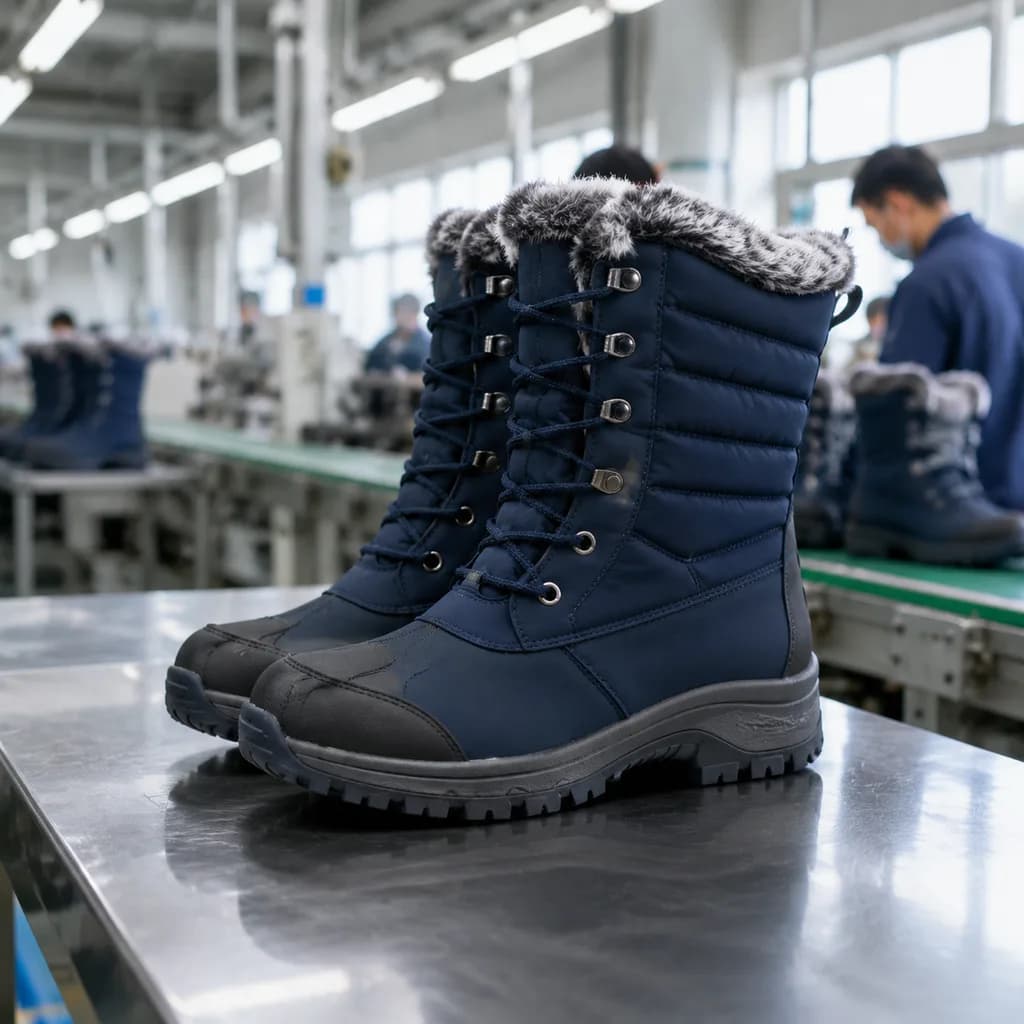
Treat waterproof upper for custom snow boots as a material package. Lock fabric, DWR, membrane intent, and approval standards before OEM quotes diverge.
Many winter footwear RFQs open with one word: waterproof. On a retail line sheet that word can feel complete. For a waterproof upper for custom snow boots, it is not. The textile shell, surface finish, and membrane or laminate expectation remain open until the buyer names them. When the brief stops at a marketing claim, OEM replies diverge on coated nylon, technical textile shells, DWR finish, and membrane choices, even when every supplier answers in good faith.
SnowBootWorks frames custom snow boot OEM work as development to the buyer’s own specification, with construction, materials, and approval standards driving each decision. That model only works when the waterproof textile upper is written as a package, not as an adjective. The sections below treat upper readiness as a pre-quote procurement task, stay inside the material scope on the materials page, and place reference samples inside the documented private-label waterproof program path.
Why “waterproof” is not a custom snow boot upper brief
A retail claim and a manufacturing brief are different documents. “Waterproof” on a line sheet may describe a finished-boot story a brand wants to tell. On an OEM inquiry, the same word can mean a water-resistant fabric only, a DWR-finished shell without a membrane, or a laminated construction with a membrane behind the face fabric. Those options are not interchangeable packages. Each changes how the upper is specified and how later construction choices are planned.
When buyers leave the upper package open, each supplier may quote a different stack and still describe a waterproof direction. Quotes then look comparable on paper while they describe different material systems. For product developers and importers, an editorial recommendation is to treat upper language as incomplete until base fabric direction, finish intent, membrane or laminate expectation, and the approval standard that will govern construction are all named. That discipline is what makes custom snow boot OEM waterproof construction requests auditable across factories.
What a waterproof textile upper package actually includes
The materials page on SnowBootWorks documents a waterproof textile upper as a woven or laminated synthetic fabric upper, typically nylon or polyester, finished with a durable water-repellent (DWR) coating and often backed by a waterproof membrane or laminate. Related labels on that page include coated nylon upper, water-resistant fabric upper, and technical textile shell. The same source positions this stack as the lightweight, flexible direction for everyday snow boots that need to stay supple in the cold. That is material scope, not a finished-boot lab rating or certification claim.
| Package element | What buyers should decide | Why it matters before quote |
|---|---|---|
| Face fabric direction | Coated nylon, broader technical textile shell, or another water-resistant synthetic fabric upper | Sets the shell identity suppliers will price and sample against |
| Construction of the textile | Woven versus laminated synthetic upper (typically nylon or polyester) | Changes how the shell is built and how later construction choices are planned |
| Surface finish | DWR coating intent: yes, no, or to be confirmed with a reference | Defines water-shedding behavior at the face, separate from any membrane |
| Membrane or laminate | Expected, optional, or not required for this program | Alters the stack and how “waterproof” is built into the shell |
| Program role | Lightweight everyday snow boot upper versus a heavier alternative path | Keeps the brief aligned with the documented everyday, supple-in-cold direction |
Buyers following this editorial recommendation keep the textile package separate from insulation, outsole, or branding decisions in the RFQ. That keeps the waterproof textile upper snow boots decision self-contained so material quotes stay comparable. Teams comparing coated nylon upper snow boots options against broader technical shells should record the face fabric choice in the same language suppliers will use on the quote. For more material context, see the materials overview.
Buyer decisions that must sit in the OEM specification
OEM manufacturing for custom snow boots is described as development to the buyer’s own specification, with construction, materials, and approval standards driving every decision. That places four upper-related lock-ins on the buyer before sampling begins.
- Base fabric direction. State whether the program wants a coated nylon upper, a technical textile shell, or another water-resistant fabric upper in nylon or polyester. If a commercial fabric name exists, attach it; if not, describe weave or laminate preference and weight class in buyer language.
- Water-resistant finish intent. Say whether DWR is required on the face fabric, whether it is preferred but open, or whether a sample will set the finish standard. Finish is not the same decision as membrane selection.
- Membrane or laminate expectation. Record whether a waterproof membrane or laminate is expected behind the shell, is optional, or is out of scope. “Often backed” on a materials page is not a default for your line; the buyer must choose.
- Approval standard for construction and materials. Name who signs off, what physical or visual reference will govern, and which document freezes the upper package. Without that standard, construction choices drift between prototype rounds.
These four points turn a slogan into a waterproof upper package that factories can price and sample against. Capability detail for how OEM programs are framed is available on the capabilities page.
Where reference samples fit a private-label waterproof program
Case-study material on SnowBootWorks describes a private label waterproof winter boot program as a path that moves a brand brief from reference samples to an export-ready, branded production run. That sequence matters for upper specification. An editorial recommendation for private-label teams is to treat reference samples as the physical check that confirms a written package once fabric, DWR, and membrane intent are already stated, not as a substitute for that written language.
In practice, a buyer who arrives with only a retail waterproof claim forces the sample stage to invent the upper stack. A buyer who arrives with a defined textile package can use the sample to confirm shell hand, cold flexibility, and construction details against a known target. The private-label overview keeps responsibility with the brand brief: samples validate and refine; they do not replace the need to decide construction, materials, and approval standards first. Program context is summarized on the case studies page.
If a brand already owns a commercial boot that feels right, attach that boot as a reference after the upper package is written, not instead of writing it. Call out which attributes of the sample are mandatory (for example, shell hand and DWR behavior) and which are only directional. That keeps the private-label waterproof path from turning a single sample into an undefined material free-for-all.
Pre-quote checklist for waterproof upper readiness
Use the list below as an editorial readiness check before you open development, sampling, or quotation discussion. It is not a factory form; it is a buyer-side filter so the waterproof textile upper is complete enough to compare replies.
- Upper package named as coated nylon, technical textile shell, or another water-resistant fabric upper (typically nylon or polyester).
- Woven versus laminated construction preference stated, or explicitly left open with a reason.
- DWR finish intent recorded as required, preferred, or sample-defined.
- Waterproof membrane or laminate marked expected, optional, or not required.
- Program role confirmed as the lightweight everyday direction that should stay supple in the cold, if that is the commercial target.
- Approval standard named: who signs, what reference governs, and which document freezes materials and construction.
- Reference sample plan noted only after the written package exists, including which attributes the sample must prove.
- Insulation, outsole, branding, and packing kept out of the upper paragraph so quotes do not mix unrelated variables.
When every item above is either decided or consciously deferred, the RFQ is ready for an OEM conversation. When items remain blank, expect divergence even among careful suppliers.
Share your waterproof upper definition next
If the current winter footwear brief still uses “waterproof” as a single claim, rewrite the upper package first. Name the textile direction, finish intent, membrane or laminate expectation, and the approval standard that will govern construction and materials. Then share that definition with the factory team and ask which development, sampling, or quotation options may apply to the project. That sequence keeps custom snow boot OEM waterproof construction decisions comparable and keeps private-label waterproof programs on a path from reference samples to an export-ready branded run without inventing unstated performance claims.
Start the conversation with your current upper definition on the request a quote page when the package is ready to discuss.
Evidence layer
Evidence checklist: Spec Waterproof Upper for Custom Snow Boots Before Quotes
Waterproof, water-resistant, and weather-ready are not interchangeable briefs. Start with the exposure your buyer expects, then identify the upper, membrane or coating, seam treatment, gusset, closure, and outsole details that support the claim. The specification should say what is being protected and how the finished boot will be reviewed; it should not rely on a single material name as a shortcut for performance. For this guide, map each supplier response to “Why “waterproof” is not a custom snow boot upper brief” so a claim is supported by a written specification, sample reference, controlled document, or a clearly marked open question.
Keep marketing language aligned with the approved construction and the test method agreed for the program. If the target market has a required labeling or claim convention, confirm it with the importer or compliance specialist before publishing the claim. Cross-check the response against “What a waterproof textile upper package actually includes” and keep every unresolved point visible in the approval record.
- Exposure scenario and claim wording — scoped to waterproof upper for custom snow boots
- Seam, gusset, closure, and upper interfaces — cross-checked against “Why “waterproof” is not a custom snow boot upper brief”
- Agreed review method and claim documentation — with open risks from “What a waterproof textile upper package actually includes” recorded
Decision framework
Buyer checklist
- Treat “waterproof” as incomplete until fabric direction, DWR intent, membrane or laminate expectation, and approval standards are written.
- Document the textile upper package separately from insulation, outsole, and branding so OEM quotes stay comparable.
- Use reference samples to confirm a written package inside a private-label waterproof path, not to invent the upper stack after the fact.
- Share the finished upper definition and ask which development, sampling, or quotation options may apply before comparing factory replies.
Sources and verification
Evidence used for this guide.
Continue the specification
Move from research to a controlled brief.
Frequently asked questions
Questions buyers ask next
What should a buyer write instead of only “waterproof” on a custom snow boot RFQ?
Name the textile direction (for example coated nylon or technical textile shell), DWR finish intent, whether a membrane or laminate is expected, and the approval standard that will govern construction and materials.
Does a waterproof textile upper always include a membrane?
No. Documented material language describes a DWR-finished synthetic upper that is often backed by a waterproof membrane or laminate. Buyers should state whether that backing is expected, optional, or out of scope for their program.
Where do reference samples fit if the upper package is already written?
In the private-label waterproof program path, samples sit after the brand brief defines the package and are used to move toward an export-ready branded production run, not to replace written material decisions.