This guide is written for product teams, importers, wholesalers, and brand operators. Use it to structure supplier conversations and document decisions before samples or bulk production move forward.
Synthetic fiber batting
Synthetic batting can add warmth at controlled weights while remaining flexible across upper panels. Specify fiber type, weight, loft, quilting or attachment, compression, and moisture behavior. The finished warmth result depends on coverage, fit, lining, footbed, and construction, so do not approve the batting in isolation.
Closed-cell or open-cell foam packages
Foams can add thermal separation, shape, padding, and fit support. Density, thickness, recovery, moisture behavior, and cold response vary widely. Use foam by zone and avoid excessive stacking that makes the boot stiff or reduces internal space. Confirm bonding does not damage adjacent materials.
High-pile faux fur as a warmth layer
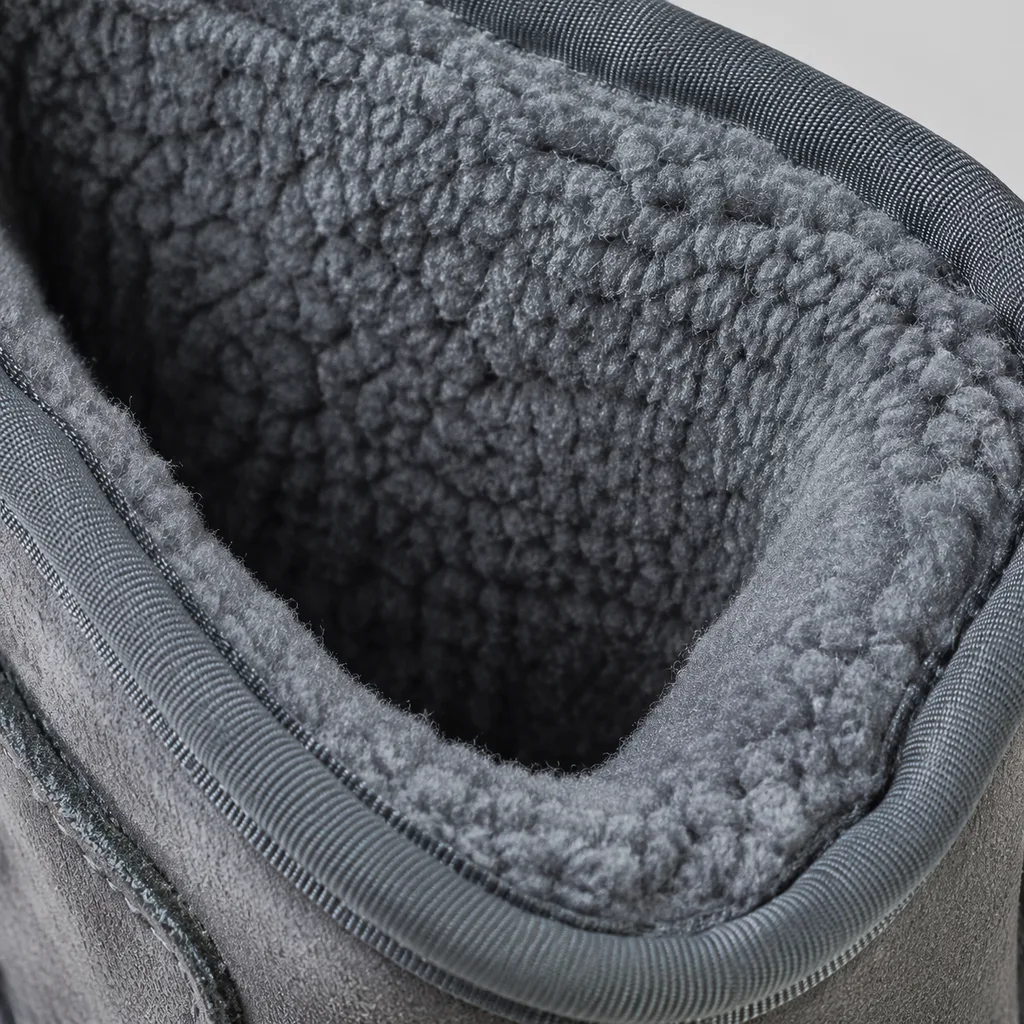
Dense faux fur combines lining appearance with trapped air and soft contact. It can also compress, shed, retain moisture, and alter sizing. Control pile orientation and avoid using visual plushness as the only warmth claim. Review fit after repeated compression and wear.
Felt or wool-blend insulating layers
Felt systems can provide structured thermal layers in uppers, footbeds, or bottom assemblies. Material composition, thickness, density, moisture uptake, compression, and labeling need review. Use the layer where it adds value without creating hard edges or excessive bottom bulk.
Zoned multilayer insulation
A zoned system combines different materials around the foot, shaft, collar, and bottom based on exposure and fit needs. It can reduce unnecessary bulk while preserving warmth where it matters. The added complexity requires a clear pattern map, component identity, and production inspection points.
Decision framework
Buyer checklist
- Control batting weight, loft, coverage, attachment, and compression
- Specify foam type, density, thickness, zones, recovery, and bonding
- Assess final fit, pile recovery, moisture, shedding, and coverage
- Approve felt composition, density, thickness, moisture, and compression
- Create an insulation-zone map with materials, thicknesses, and checks
Continue the specification
Move from research to a controlled brief.
Frequently asked questions
Questions buyers ask next
What should buyers prioritize first from this list?
Define climate, exposure duration, activity, and sock assumption before selecting insulation. A high-loft option is not automatically better when active use, drying, or fit volume is more important.
Does every snow boot program need all five items?
Most winter boots use a package rather than one material. Combine insulation, lining, footbed, and outsole thoughtfully, then validate the assembled boot instead of adding nominal layers without a system target.