This guide is written for product teams, importers, wholesalers, and brand operators. Use it to structure supplier conversations and document decisions before samples or bulk production move forward.
Compare visual and tactile positioning
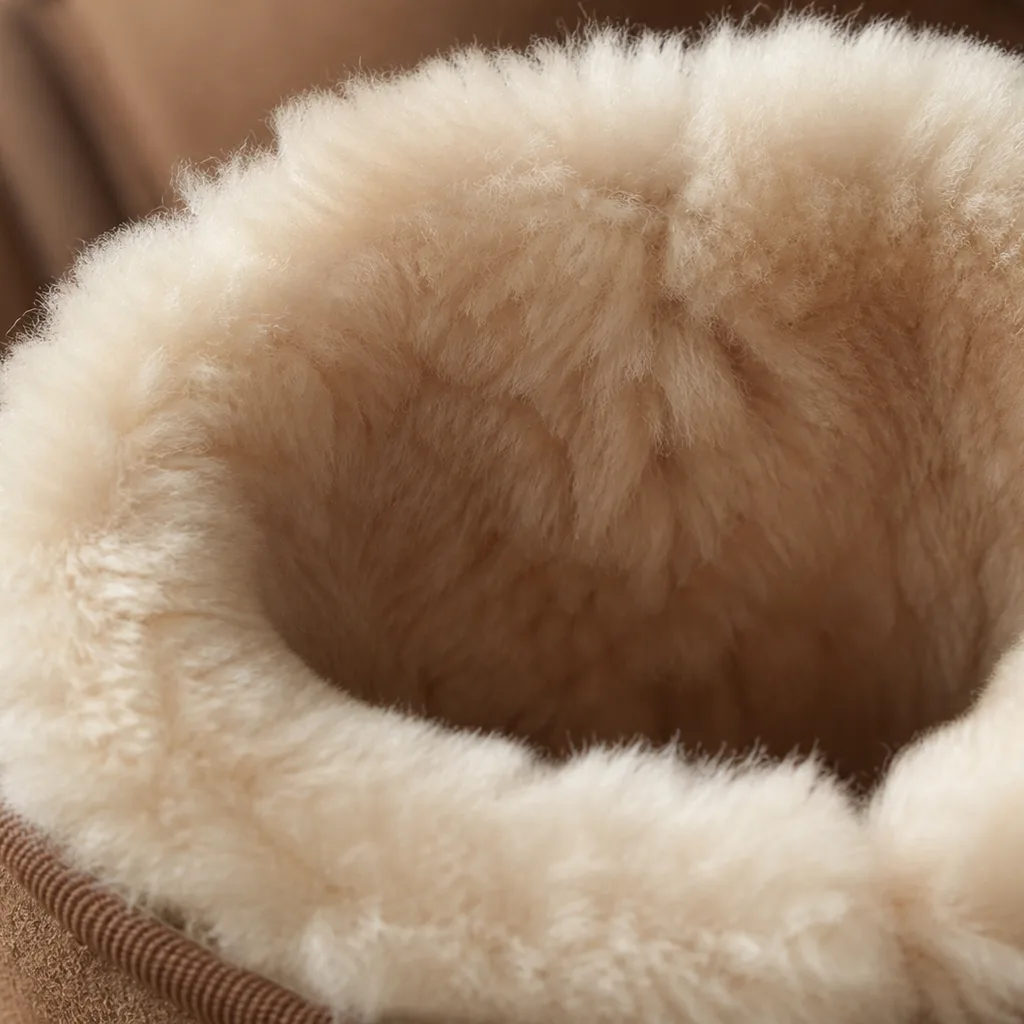
Faux fur creates a plush collar and strong winter cue, while fleece typically gives a cleaner, more uniform interior. Either can be full lining or used only in selected zones. Choose based on brand language, consumer expectation, and price tier, then specify coverage precisely. A collar photo does not show what material is inside the toe or underfoot.
Measure the fit impact
Long pile and dense backing can consume more internal volume than fleece and may compress over time. Fleece can still vary in thickness and stretch. Develop and fit samples using final production materials, intended socks, and the approved footbed. Check heel hold, instep, toe room, entry, and seam pressure after the lining has been worn and flexed.
Review moisture, care, and durability
Fiber, density, backing, finishes, and construction influence moisture movement, drying, pilling, shedding, and appearance after use. Do not infer care instructions from the category name. Confirm guidance for the complete upper-lining combination and support claims with appropriate evidence. Review how the material behaves around zipper tapes, hook-and-loop, and high-friction heel zones.
Control sourcing and lot consistency
Approve physical references for shade, pile or surface, density, backing, thickness, stretch, and hand feel. Record supplier codes and acceptable tolerances. During receiving, separate lots and check visible collar material especially carefully because variation is immediately noticeable. Use packing methods that limit crushing and confirm recovery after the carton is opened.
Decision framework
Buyer checklist
- Define lining coverage and visible zones
- Fit with final material and intended socks
- Check shedding, pilling, and heel wear
- Approve shade, density, backing, and stretch
- Test recovery after production packing
Continue the specification
Move from research to a controlled brief.
Frequently asked questions
Questions buyers ask next
Is faux fur or fleece better for snow boots?
Neither is universally better. Faux fur offers a plush visual and feel, while fleece can reduce bulk and look more technical. Fit, insulation, moisture, durability, and use context decide suitability.
Can a boot use faux fur at the collar and fleece inside?
Yes. Mixed lining zones can balance appearance, cost, and bulk if coverage is documented and seams or transitions remain comfortable.