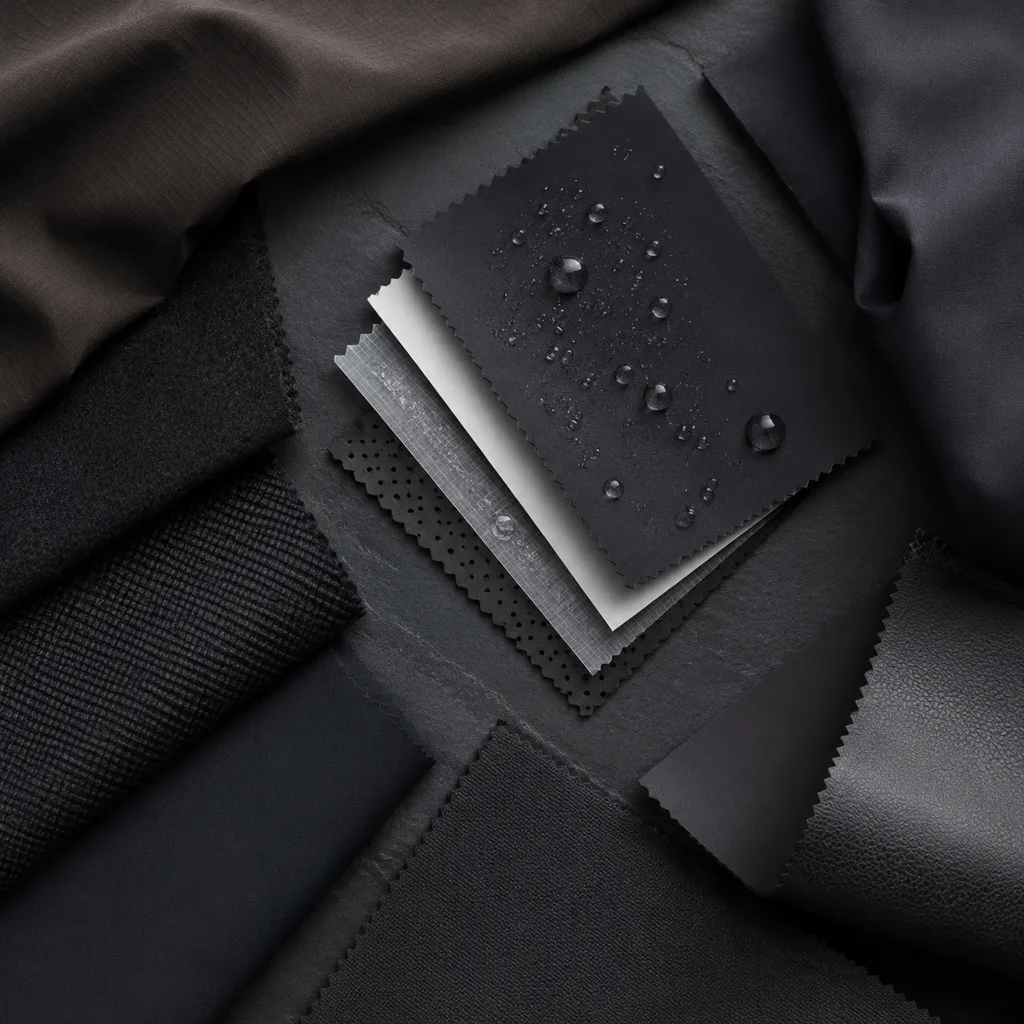
This guide is written for product teams, importers, wholesalers, and brand operators. Use it to structure supplier conversations and document decisions before samples or bulk production move forward.
Specify the exact grade and construction
Synthetic insulation may be supplied as sheet, batting, quilted assembly, or integrated lining. Record the manufacturer or approved source, product code, nominal weight or thickness, backing, and coverage. If an alternative is proposed, compare measurable properties and sample performance before approval. Generic wording such as warm padding is not enough for repeat production.
Balance loft with pattern and fit
Insulation needs room to maintain loft but also has to fit inside seams, toe boxes, collars, and lasting margins. Excess bulk can create pressure or inconsistent stitching, while heavy compression may reduce the intended effect. Pattern allowances and internal measurements should be developed using the final insulation, not a thin temporary substitute.
Review moisture and drying behavior
Feet generate moisture even in cold weather. Consider lining wicking, membrane breathability, insulation behavior when damp, removable footbeds, and drying guidance as one system. Any moisture-management claim should be supported appropriately. During development, inspect for bunching, cold spots at seams, and slow-drying zones created by layered construction.
Control receiving and application
Incoming insulation can be difficult to identify visually. Use supplier labels, lot records, weight or thickness checks, and protected storage. On the line, verify panel coverage, orientation, quilting, attachment, and overlap before the upper is closed. Keep a cut reference with the approved sample so inspectors know what belongs inside the boot.
Decision framework
Buyer checklist
- Record source, code, weight, backing, and coverage
- Develop patterns using final insulation
- Review moisture as a full-system issue
- Protect loft during storage and assembly
- Keep a cut material reference for QC
Continue the specification
Move from research to a controlled brief.
Frequently asked questions
Questions buyers ask next
Can synthetic insulation replace faux fur lining?
They serve different roles. Synthetic insulation can provide low-visibility thermal structure, while faux fur also changes feel and appearance. They may be used separately or together if fit and bulk are controlled.
How is insulation checked in finished boots?
Some checks are best performed before closure because coverage becomes hidden. Production records, cut references, weight checks, and controlled destructive checks can support verification.