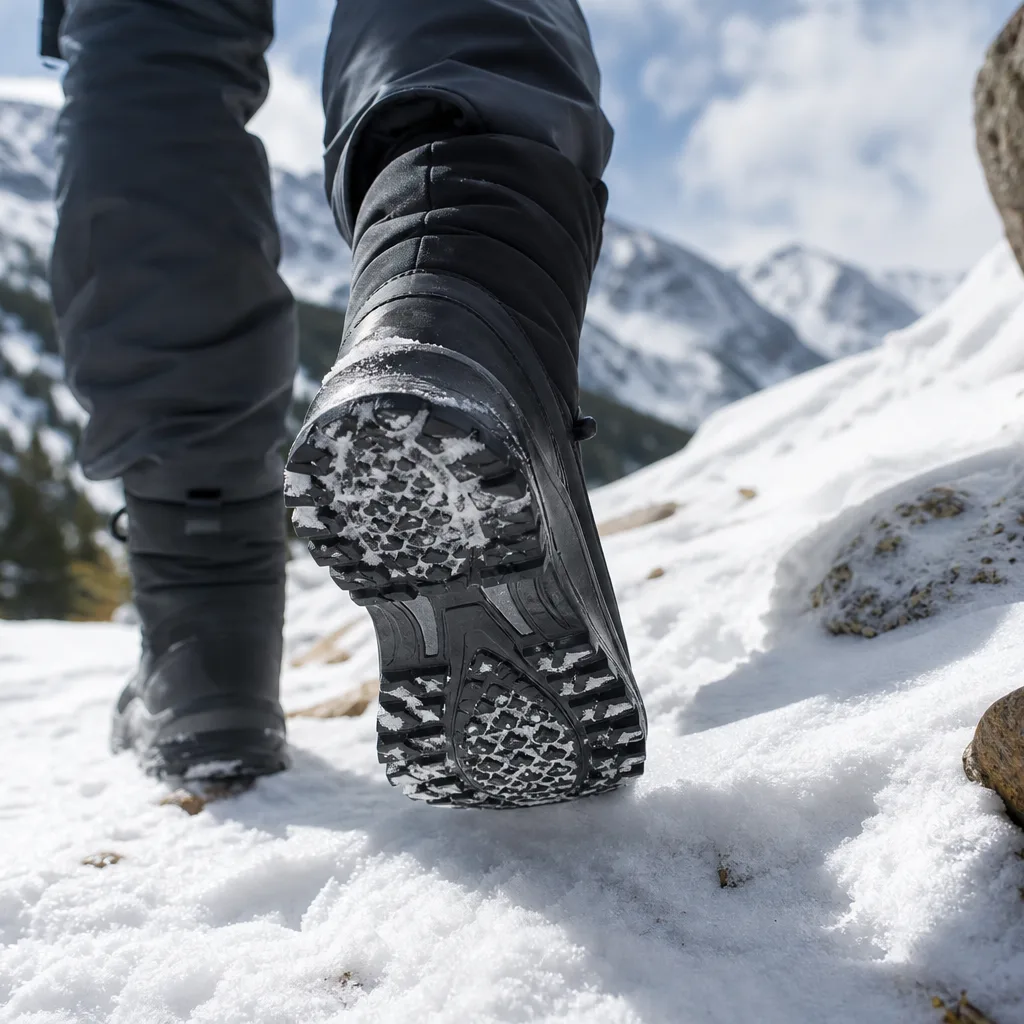
This guide is written for product teams, importers, wholesalers, and brand operators. Use it to structure supplier conversations and document decisions before samples or bulk production move forward.
Wicking or lower-absorption lining
A suitable lining can move moisture away from the foot or limit how much the interior holds. Compare fiber, knit, finish, abrasion, drying time, and hand feel. Wicking claims should be supported by relevant material evidence and checked inside the full boot construction.
Breathable barrier and upper package
Where breathability is a program requirement, the membrane, outer material, adhesives, foams, and finishes must all support the intended path. A breathable membrane behind a heavily coated or fully bonded upper may not deliver the expected result. Test the complete stack under relevant conditions.
Removable, quick-drying footbed
A removable footbed can improve drying access and make inspection or replacement easier. Control fit, edge shape, surface friction, compression, odor, and movement inside the boot. The footbed should return to the correct position without bunching or changing heel hold.
Collar and closure balance
A tightly sealed collar can reduce snow entry but also trap heat and moisture. Define the tradeoff by activity and climate. Adjustable openings can support different use conditions, provided they remain comfortable, secure, and easy to operate with winter clothing.
Construction designed for drying access
Avoid internal pockets, excessive absorbent padding, and inaccessible layers that remain wet after use. Consider removable components, openable closures, material placement, and care instructions. Drying design should not compromise waterproof seams or invite unsafe heating methods.
Decision framework
Buyer checklist
- Verify lining moisture behavior, drying, abrasion, and claim support
- Review vapor path through every layer, coating, and adhesive
- Test removal, drying, replacement, compression, and in-boot stability
- Balance snow-entry protection with heat and moisture release
- Map wet zones and confirm realistic air and access paths for drying
Continue the specification
Move from research to a controlled brief.
Frequently asked questions
Questions buyers ask next
What should buyers prioritize first from this list?
Start by defining activity level and water exposure because breathability, sealing, and drying requirements can conflict. Then select a lining and footbed system that supports the expected use cycle.
Does every snow boot program need all five items?
No single feature solves moisture. The best result comes from coordinating lining, barrier, closure, insulation, and drying access while keeping external water protection aligned with the product claim.