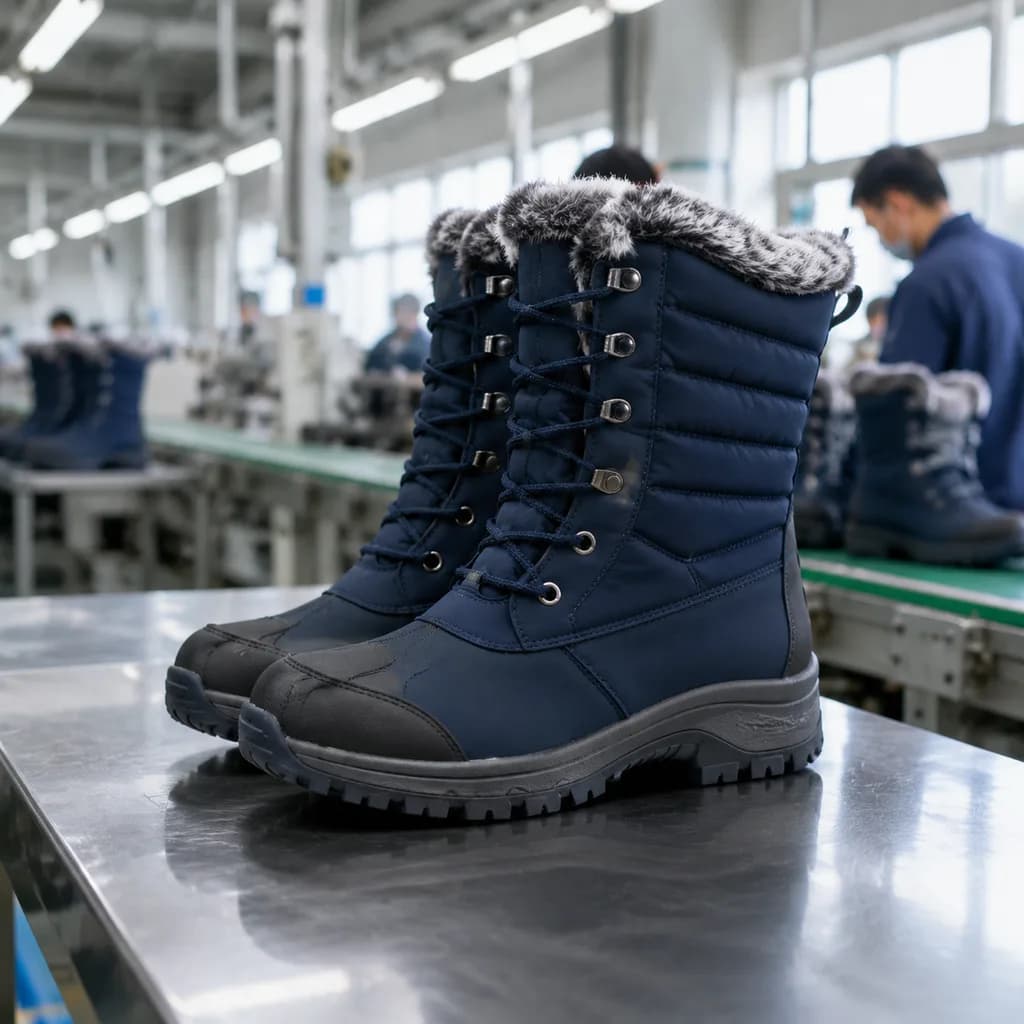
Separate collection direction, buyer-fit context, and product requirements before a private-label winter boot sourcing inquiry.
A sourcing inquiry can arrive with a clear collection mood and still leave the product hard to discuss. Labels such as clean urban, quilted, or plush identify a direction in a range, but they do not show which choices have already been made for a proposed boot. A private label winter boot product definition gives those choices a place before the buyer asks which development, sampling, or quotation options may apply.
The structure below is buyer guidance, not a required SnowBootWorks submission format. Its purpose is to keep information already decided separate from information the buyer wants to discuss. That distinction lets a product developer or sourcing team read the current definition without treating a range description as a complete product brief.
Three Inputs, Three Jobs
The SnowBootWorks product catalog calls its offerings fit-led women's winter boot platforms and names clean urban, quilted, and plush as cold-weather directions. In its buyer-fit wording, the same catalog identifies women's retail and private-label winter collections. Separately, the capabilities page says custom snow boots are developed to the buyer's own specification, with construction, materials, and approval standards driving every decision.
Three parts of a buyer-side product definition
| Input | Job in the inquiry | Question for the buyer | Source boundary |
|---|---|---|---|
| Collection direction | Places the proposed style within the current range. | What collection wording describes the style today? | The product catalog names clean urban, quilted, and plush as cold-weather directions. |
| Buyer-fit context | States the collection context when it applies to the project. | Does the project sit within women's retail or a private-label winter collection? | The product catalog identifies women's retail and private-label winter collections as buyer fit. |
| Product-definition requirements | Holds the decisions and open points for the proposed boot. | Which requirements are decided, and which need discussion? | The product catalog says to decide the target sizing system and fit reference first. The capabilities page identifies construction, materials, and approval standards as decision drivers. |
Use all three sections even when the definition is incomplete. For the buyer, an item marked as unresolved is more useful than an assumed answer. It keeps a collection term in its proper place while making the next sourcing question visible.
Direction Is a Range Signal
Clean urban, quilted, and plush can help describe where a style belongs in a cold-weather collection. For the buyer, the recommendation is to use that wording only for range direction. It should not stand in for construction, materials, a sizing decision, a fit reference, or an approval standard.
Record the wording currently used by the collection team, then state whether that direction is decided or still under review. When more than one direction is being considered, retain the alternatives rather than choosing one merely to make the inquiry look complete. That gives the recipient a clear account of the current collection intent.
Fit Context Cannot Fill a Fit Reference
Women's retail and private-label winter collections describe buyer-fit context in the product catalog. Those labels are separate from the target sizing system and fit reference that the catalog directs buyers to decide first. A collection audience therefore cannot answer either fit prompt by itself.
For the buyer, keep two distinct lines under product-definition requirements: one for the target sizing system and one for the fit reference. Mark each line as decided or unresolved. This avoids a broad statement about the collection being read as a decision about how the proposed boot should be sized or what reference should guide fit discussion.
Requirements Need a Visible Status
The capabilities page names construction, materials, and approval standards as decision drivers for custom snow boots developed to the buyer's own specification. It does not supply a universal material choice, construction detail, or approval outcome for a new inquiry. The buyer should therefore state only the present position on each category.
- Construction
- Record the current construction decision when one has been made, or identify construction as unresolved.
- Materials
- List only the material information already included in the buyer's specification, or identify the category as unresolved.
- Approval standards
- State the approval standards already defined by the buyer, or identify this part of the definition as unresolved.
This is a practical way to organize private label snow boot requirements before a conversation. It prevents a missing decision from being mistaken for an agreed one while leaving room to ask what information is needed for the project under review.
Weather Intent Is Not a Product Result
The industries page identifies outdoor retail brands as buyer fit and describes winter footwear programs that balance comfort, weather protection, and shelf appeal. A separate case-study overview describes a private label waterproof winter boot program as showing how a brand brief moves from reference samples to an export-ready, branded production run.
These statements have different scope. One describes outdoor-retail program positioning. The other describes a single program overview. Neither supplies a weather-related requirement or result for another buyer's proposed boot. For the buyer, state weather intent on its own line, distinguish known requirements from open questions, and ask what project information is needed to assess the inquiry.
Do not use the case-study term waterproof as a substitute for a requirement in a new product definition. A proposed boot should be described only by information the buyer has decided to provide or by questions the buyer wants to raise.
A Readable Inquiry
A winter boot sourcing inquiry is easier to review when it separates present information from unanswered points. Before using the quote-request route, organize the current definition in the following order:
- Collection direction: the range wording in use, such as clean urban, quilted, or plush where relevant.
- Buyer-fit context: the applicable collection context, including women's retail or a private-label winter collection only when it accurately describes the project.
- Fit inputs: the target sizing system and fit reference, each identified as decided or unresolved.
- Product-definition requirements: the current position on construction, materials, and approval standards.
- Weather intent: known project requirements and open questions, recorded separately from collection direction.
- Next-step question: ask which development, sampling, or quotation options may apply to the project.
This order does not require every question to be answered in advance. Its value is in showing what is known, what remains open, and which question belongs to the buyer rather than being implied by a collection description.
Share What Is Decided, Flag What Is Not
Use the quote-request route to share the current winter footwear definition, including its unresolved points. A concise custom snow boot product brief can state the collection direction, buyer-fit context, and current requirements, then ask which development, sampling, or quotation options may apply.
Do not fill an unknown field with an assumption. Naming an open decision gives the discussion a defined starting point and keeps the proposed boot tied to the information the buyer can actually confirm.
Evidence layer
Evidence checklist: Private Label Winter Boot Product Definition: Three Inputs
OEM, ODM, and private label are not just marketing labels. The practical difference is who owns the starting design, how much the construction changes, and which decisions must be approved before bulk production. Put the decision in writing: reference style, required changes, branding locations, packaging scope, tooling assumptions, and the point at which a sample becomes the production reference. For this guide, map each supplier response to “Three Inputs, Three Jobs” so a claim is supported by a written specification, sample reference, controlled document, or a clearly marked open question.
A strong brief also records what is out of scope. That prevents a fast sample discussion from silently becoming a new mold, a new size run, or a new compliance requirement. Use the same approval language in the quote, sample comments, and purchase documentation. Cross-check the response against “Direction Is a Range Signal” and keep every unresolved point visible in the approval record.
- Design ownership and permitted adaptations — scoped to private label winter boot product definition
- Branding, packaging, and tooling boundaries — cross-checked against “Three Inputs, Three Jobs”
- Sample approval gates before bulk commitment — with open risks from “Direction Is a Range Signal” recorded
Decision framework
Buyer checklist
- Keep collection direction, buyer-fit context, and product-definition requirements in separate parts of the inquiry.
- Treat target sizing system and fit reference as separate buyer decisions, then state the current position on construction, materials, and approval standards.
- Share known requirements and unresolved questions, then ask which development, sampling, or quotation options may apply.
Sources and verification
Evidence used for this guide.
Continue the specification