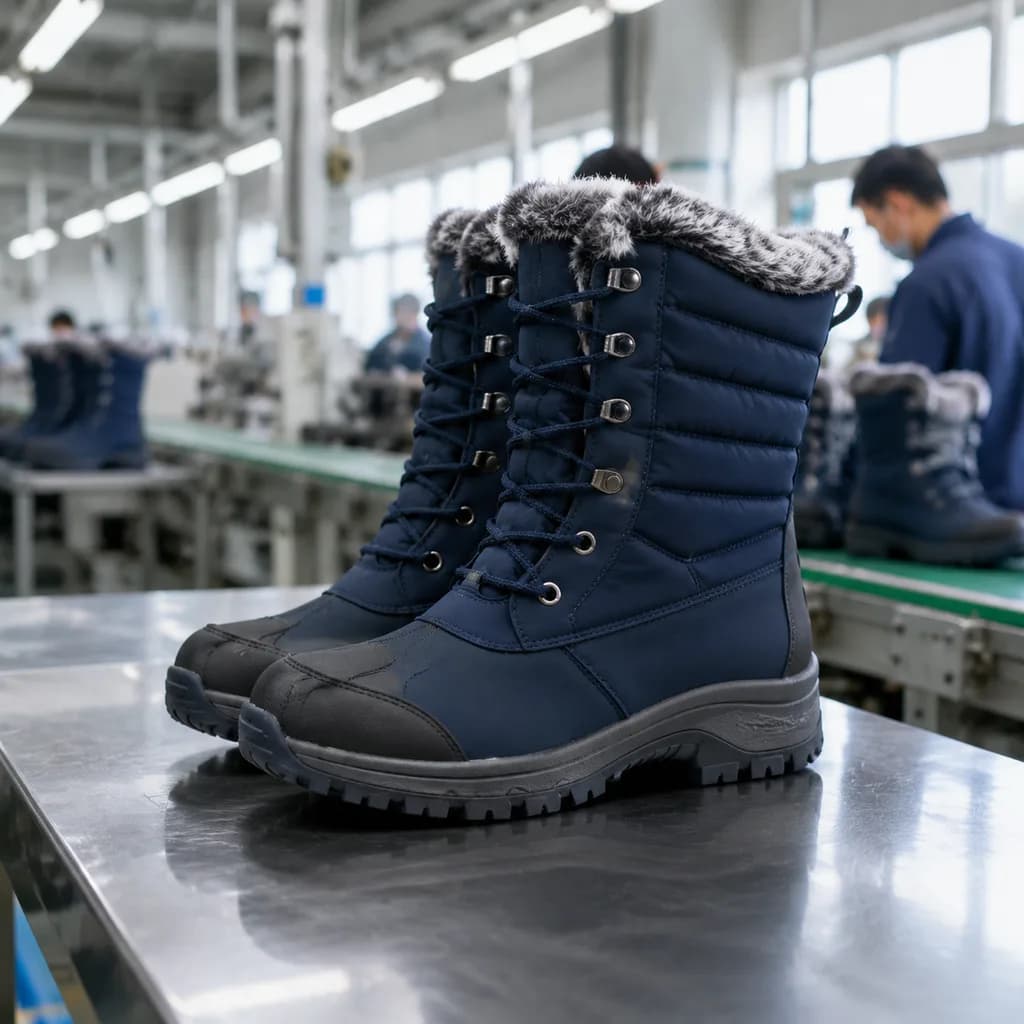
Lock construction, materials, and approval standards before sampling private label snow boots wholesale so reference samples support an export-ready branded run.
Private label snow boots wholesale programs often stall because sampling or quotation starts while construction, materials, and approval standards are still unwritten in the brand brief. Off-brief snow boot reference samples, open visual review, and a compressed or restarted path to an export-ready branded run follow that gap more often than a missing price sheet does.
Treat the buy as a pre-sample decision sequence. Lock construction, materials direction (including a waterproof textile upper path when the brief needs it), and approval standards early so the program can move from reference samples toward production without redefining itself midstream. When women's retail or private-label winter collections are in scope, target sizing system and fit reference belong in the same early lock—before assortment styling expands.
Why private-label wholesale snow boot programs stall at sampling
The practical failure mode is sampling against an incomplete brief. When construction type, upper materials, and the rules for accepting or rejecting a sample stay vague, every prototype becomes a negotiation about intent rather than a controlled gate against a written standard. Teams then spend cycles explaining what the sample was supposed to prove while seasonal windows for private label waterproof snow boots close.
OEM-style custom development treats construction, materials, and approval standards as primary decision drivers, not footnotes after a wholesale unit conversation. Forcing those drivers early does not invent a factory process; it keeps the brand brief from floating while samples accumulate. Editorial recommendation for procurement: refuse a pure visual sample pass when the brief still lacks construction and materials language, even if the calendar feels tight.
Construction decisions the brand brief must force first
On the manufacturer capability side, custom snow boots are developed to the buyer's own specification, with construction, materials, and approval standards driving every decision. That is the ceiling of the claim: those three fields steer OEM work. They are not optional styling notes added after a quote request.
Before anyone builds an OEM snow boot specification packet for sampling, editorial recommendation is to lock construction choices in writing so later materials and approval language have a structure to attach to. Useful buyer locks include:
- Boot architecture the brand intends to own, stated as a construction brief rather than a mood board alone.
- How the upper, mid, and bottom are expected to work together for the end use, so materials later attach to a structure instead of floating as fabric swatches.
- Which sample points will be pass/fail for construction versus which points remain aesthetic preference.
Those locks keep a later waterproof textile upper choice from fighting an incompatible shell plan. They also give approval standards something concrete to measure. If construction is still open when samples arrive, the team is reviewing looks, not validating a program. Teams can read the OEM manufacturing capability page for how construction, materials, and approval standards are framed as decision drivers.
Waterproof textile upper as a materials direction, not a finished claim
Materials language for a waterproof textile upper describes a woven or laminated synthetic fabric upper, typically nylon or polyester, finished with a durable water-repellent (DWR) coating and often backed by a waterproof membrane or laminate. Coated nylon upper, water-resistant fabric upper, and technical textile shell sit inside that same materials direction. It is the lightweight, flexible direction for everyday snow boots that need to stay supple in the cold.
That excerpt is a materials direction buyers can specify. It is not a finished-boot waterproof test result, a certification number, or a guarantee of field performance for a completed pair. When a brief calls for private label waterproof snow boots, write the upper direction in materials terms first: coated nylon or technical textile shell, DWR finish, membrane or laminate intent if required. Keep finished-boot claims out of the early brief unless the brand already holds its own test protocol and will own that language separately.
Procurement teams that need deeper material detail can review the materials overview alongside the construction locks above so the upper choice and the boot architecture stay aligned. Separating materials direction from unproven finished-boot claims reduces sample churn: the sample is judged against the textile and membrane intent you wrote, not against marketing adjectives added after the fact.
Approval standards that make reference samples decisive
Approval standards are the third driver on the custom development capability line. Without them, reference samples become open visual review. With them, sample acceptance is a controlled gate against the brand brief, which supports movement from reference samples toward an export-ready branded production run rather than endless restyling.
A practical approval checklist for private-label sampling, framed as buyer editorial discipline rather than a promised factory workflow:
- Written construction pass/fail points that match the brief (not only photos).
- Materials direction for the upper and any membrane or laminate intent, stated as specification language.
- Fit and size system references when women's private-label collections are in play (covered below).
- Brand identity elements that must appear on the accepted sample (logo placement intent, labeling fields the brand owns), without inventing undocumented packing or logistics steps.
- A single decision record: accept, accept with listed changes, or reject with the brief clause that failed.
Reference samples become decisive only when the brief already names what "good" means. If the team cannot point to a construction, materials, or fit clause, the sample review is still discovery, not approval. Capability and private-label program language both point buyers back to that brief-driven path; neither fills in undocumented QC stage lists or commercial volumes.
Private-label waterproof path: brand brief to export-ready branded run
The documented private-label waterproof winter boot program overview shows how a brand brief moves from reference samples to an export-ready, branded production run. That is the full path language available: brief, reference samples, export-ready branded production. It does not publish intermediate factory checkpoints, order quantities, named customers, or logistics metrics.
Use that path as a planning frame, not as a multi-step customer case. The buyer's job is to make the brief complete enough that reference samples can be judged, and that an accepted sample can carry branding into a production run without reopening construction and materials midstream. When those locks hold, private label snow boots wholesale work stays on the brief-to-production line instead of looping through redefinition.
Teams that want the program framing in context can read the program overview together with the capability language above. Treat any extra process steps, lead times, or volume assumptions as outside the published boundary unless the brand's own commercial agreement later defines them.
Decide sizing system and fit reference when women's private-label is in scope
For women's retail and private-label winter collections, the products catalog frames target sizing system and fit reference as decide-first items. Fit-led women's winter boot platforms may span clean urban, quilted, and plush cold-weather directions, but assortment styling is not the first lock. Sizing system and fit reference are.
Keep that scope hard. Do not broaden the same rule into undocumented all-gender or kids systems from this evidence alone. If the program is a women's private-label winter collection, write the target sizing system and the fit reference before expanding colorways or upper fashion details. Doing so keeps snow boot reference samples comparable across rounds and keeps quotation conversations attached to a known last and size map rather than to a vague "women's winter boot" label.
Review the products buyer-fit guidance when women's private-label is active, then fold those two fields into the same approval standards that govern construction and materials. A sample that looks right but fails the stated fit reference is still a reject under a controlled brief.
What to share for development, sampling, or quotation options
When the pre-sample locks are in place, the conversion step is practical: share the current winter footwear definition and ask which development, sampling, or quotation options may apply to the project. That invitation is a buyer request, not a documented promise of every commercial field. MOQ, packing, and timing details belong only where a later commercial exchange defines them; they are not filled from this article.
A request packet that stays inside evidence and editorial discipline usually includes:
- Construction intent and the pass/fail points that will govern samples.
- Materials direction for the upper, including waterproof textile upper language if that is the path (coated nylon or technical textile shell, DWR, membrane or laminate intent as required).
- Approval standards: how reference samples will be accepted, revised, or rejected against the brief.
- For women's private-label winter collections: target sizing system and fit reference decided first.
- Brand identity elements the production run must carry once a sample is export-ready and branded.
- A clear question on which development, sampling, or quotation options apply to this brief, rather than a demand for invented unit economics.
That packet keeps private label snow boots wholesale work on a specification path. Construction, materials, and approval standards drive OEM-style decisions; the private-label waterproof program overview keeps the arc from brand brief through reference samples to an export-ready branded production run; women's programs lock sizing and fit before styling sprawls. From there, use the request a quote path to share the brief and ask which options fit the project, without treating undocumented commercial quantities as facts.
Evidence layer
Evidence checklist: Private Label Snow Boots Wholesale: Lock Specs First
OEM, ODM, and private label are not just marketing labels. The practical difference is who owns the starting design, how much the construction changes, and which decisions must be approved before bulk production. Put the decision in writing: reference style, required changes, branding locations, packaging scope, tooling assumptions, and the point at which a sample becomes the production reference. For this guide, map each supplier response to “Why private-label wholesale snow boot programs stall at sampling” so a claim is supported by a written specification, sample reference, controlled document, or a clearly marked open question.
A strong brief also records what is out of scope. That prevents a fast sample discussion from silently becoming a new mold, a new size run, or a new compliance requirement. Use the same approval language in the quote, sample comments, and purchase documentation. Cross-check the response against “Construction decisions the brand brief must force first” and keep every unresolved point visible in the approval record.
- Design ownership and permitted adaptations — scoped to private label snow boots wholesale
- Branding, packaging, and tooling boundaries — cross-checked against “Why private-label wholesale snow boot programs stall at sampling”
- Sample approval gates before bulk commitment — with open risks from “Construction decisions the brand brief must force first” recorded
Decision framework
Buyer checklist
- Lock construction, materials direction, and approval standards before sampling so private label snow boots wholesale work does not stall on off-brief reference samples.
- Specify a waterproof textile upper as materials language (coated nylon or technical textile shell, DWR, optional membrane or laminate), not as a finished-boot test claim.
- Use the private-label path as brand brief to reference samples to export-ready branded production, without inventing undocumented process stages or volumes.
- When women's private-label winter collections are in scope, decide target sizing system and fit reference before assortment styling expands.
- Share the winter footwear definition and ask which development, sampling, or quotation options may apply rather than assuming commercial quantities not in evidence.
Sources and verification
Evidence used for this guide.
Continue the specification
Move from research to a controlled brief.
Frequently asked questions
Questions buyers ask next
What should be locked before sampling private label snow boots wholesale?
Construction intent with pass/fail points, materials direction for the upper, and approval standards that define accept, revise, or reject. For women's private-label winter collections, also lock target sizing system and fit reference first.
How should a waterproof textile upper appear in an OEM snow boot specification?
As materials direction: woven or laminated synthetic fabric (typically nylon or polyester) with DWR and often a waterproof membrane or laminate, described as the lightweight flexible everyday snow-boot upper path. Do not treat that materials language as a finished-boot waterproof test result.
What path does the private-label waterproof program overview describe?
A brand brief moving from reference samples to an export-ready, branded production run. Intermediate factory checkpoints, quantities, and logistics metrics are not part of that published overview.