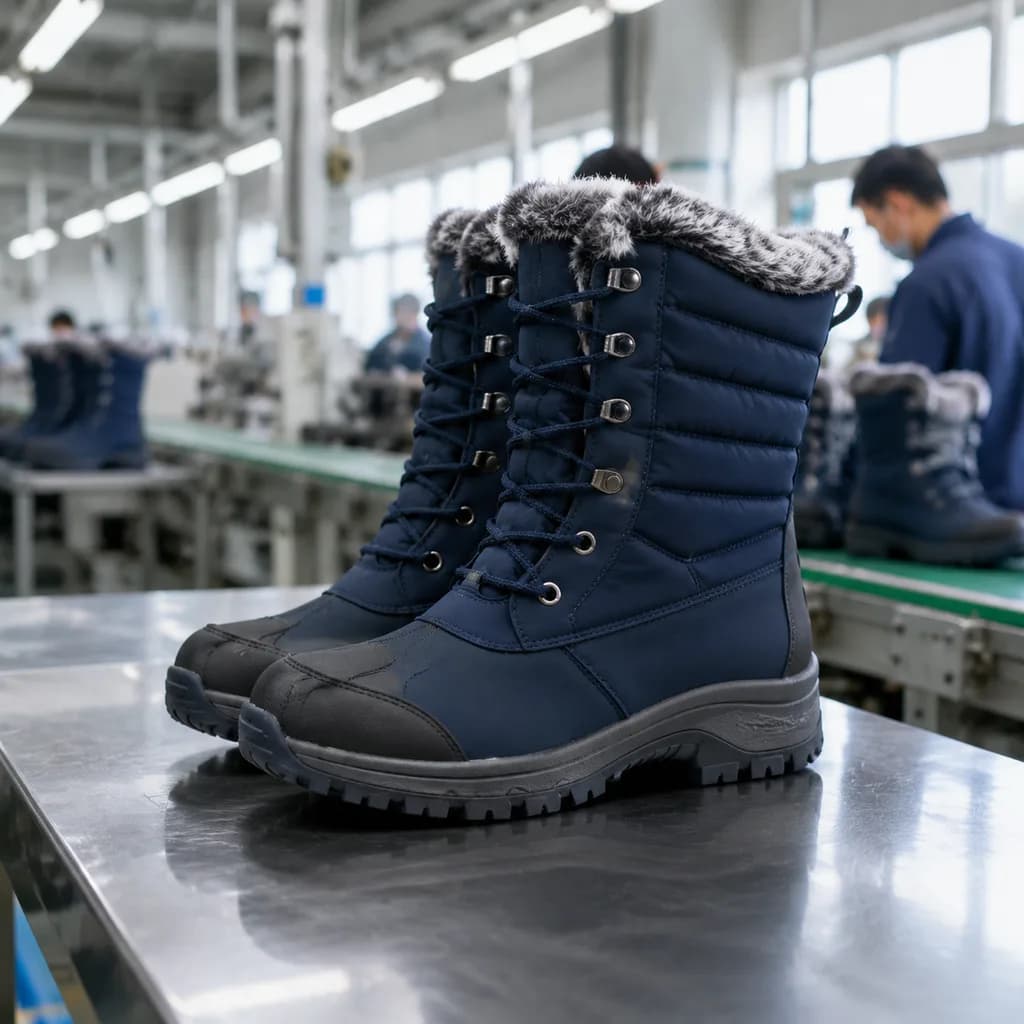
Record fixed construction, material direction, fit reference, branding, and buyer-owned acceptance criteria so private-label snow boot samples and production quotes stay comparable.
A winter footwear brand can already own a physical reference boot and still struggle to get comparable production quotations. The missing piece is often not another photo set. It is a private label snow boot sample approval checklist that states what the next sample must match, what remains negotiable, and what the buyer will treat as acceptance criteria.
Reference samples establish direction. They do not, by themselves, define acceptance. Without written construction intent, material direction, fit reference, brand application, and buyer-owned criteria, comments scatter across emails and photos that different teams read differently. That is when two quotations look similar on paper while describing different products.
Why a liked reference still needs a written approval record
Direction and acceptance are different jobs. SnowBootWorks describes OEM custom snow boot manufacturing as developing boots to the buyer's own specification, with construction, materials, and approval standards driving every decision. That manufacturing scope appears on the site's manufacturing capabilities page. Even when the factory path is still under discussion, the approval record should stay buyer-owned first.
One program overview describes a private label waterproof winter boot program as a path from reference samples to an export-ready, branded production run. Read that overview as a single program description, not as a universal process guarantee for every inquiry. It shows that reference samples can sit at the start of a branded program. It does not prove that every brief will follow the same route or commercial terms. Review related program overviews for framing context only.
Product direction that should be written first
Before stitch lines or outsole graphics dominate the review, write who the boot is for and how it will be sized. Catalog guidance for women's retail and private-label winter collections tells buyers to decide first on the target sizing system and fit reference when reviewing a product brief. Fit-led women's winter boot platforms on the product catalog span clean urban, quilted, and plush cold-weather directions. Those are documented catalog examples, not evidence that every project receives a particular fit process.
- Intended wearer and retail channel, such as a women's retail collection, outdoor wholesale line, or catalog assortment
- Target sizing system the brand sells against, such as US, EU, or UK
- Fit reference: a last, an existing size run, or a physical sample the team agrees is the fit baseline
- Seasonal and climate direction stated as commercial intent, not as a finished-boot performance claim
- Brand role on the sample: logos, hangtags, packaging, and care labeling that must appear before approval
Lock these items early so a team does not approve a silhouette and later discover that sizing language, fit baseline, or brand application were never written down. Keep the custom snow boot approval brief as the buyer-owned place where those choices live.
Fixed construction, reference-only looks, and open questions
Visual resemblance is not construction control. For boots developed to the buyer's specification, construction, materials, and approval standards are the decision drivers. Sort the reference boot into three groups in your own notes before debating surface details.
- Fixed for this program. Elements the brand will not change without a formal revision. Examples often include shaft height band, closure type, sole construction family, and any non-negotiable brand construction rules.
- Reference only. Look, proportion, or surface finish that guides development but may change once materials and tooling are confirmed.
- Open for supplier discussion. Details where the buyer wants options, cost alternatives, or manufacturing input before locking the brief.
Write the list in buyer language. If a construction choice is fixed, say so. If a photo is only a mood reference, say that too. Ambiguity here is what makes quotations hard to compare later.
How precise should upper material language be?
Material notes should name a category and the construction questions that category raises, not only a color or hand feel. On the SnowBootWorks materials page, a waterproof textile upper is described as a woven or laminated synthetic fabric upper, typically nylon or polyester, finished with a durable water-repellent (DWR) coating and often backed by a waterproof membrane or laminate. Related labels on that page include coated nylon upper, water-resistant fabric upper, and technical textile shell. The same description positions the direction as lightweight and flexible for everyday snow boots that need to stay supple in the cold.
Keep the boundary clear: that language is a material direction, not a finished-boot waterproof performance result. "Often backed by" a membrane or laminate is not the same as always including one. Coated nylon, a water-resistant fabric, or a technical textile shell also does not automatically make an entire boot waterproof.
- Intended upper category, with waterproof textile upper listed only when that is the real direction under review
- Whether a membrane or laminate is required, preferred, optional, or still open
- Surface finish expectations for DWR, hand, grain, or texture
- Insulation, lining, and outsole directions as separate line items, not assumed from the upper name
- Any restricted substances, labeling, or testing the brand requires, stated as buyer requirements rather than as supplier certifications already in hand
Accept, revise, or clarify: converting feedback into criteria
Verbal or scattered feedback is hard to enforce later. Convert sample review into accept, revise, or clarify entries against the same structure used for the brief.
- Appearance: silhouette, color, hardware, stitch visibility, and any surface defects the brand will reject
- Materials: upper category confirmation, lining and insulation direction, and sole compound or tread family if already specified
- Construction: seams, attachments, shaft and collar build, and any fixed construction rules from the brief
- Fit reference: whether the sample is accepted against the agreed last or size reference, or whether a fit revision is required
- Branding: logo placement, method, color, and any secondary marks
- Labeling and packaging: care labels, size labels, hangtags, polybags, cartons, or retail packaging notes the brand owns
- Buyer-specified testing or compliance: standards, markets, or lab work the brand requires, recorded as the buyer's requirement set rather than as services already documented for every project
For each line, note the decision: accepted as-is, accepted with a defined revision, rejected, or parked until evidence is supplied. If the team needs a photo, measurement, or material confirmation, write that request into the same record so the next sample or quotation can answer it. That is how a snow boot reference sample checklist becomes enforceable instead of decorative.
Approved specifications versus open quotation questions
A strong brief separates what is already decided from what still needs a project-specific answer. The supplied SnowBootWorks materials document manufacturing scope around custom development to specification and show one private-label program path from reference samples. They do not publish commercial terms, sample counts, minimums, or lead times for a given project. Treat those commercial and logistics topics as inquiry items, not as locked product rules.
| Keep in the approved brief | Raise as project-specific questions |
|---|---|
| Wearer, retail direction, sizing system, and fit reference | Which development or sampling options apply to this brief |
| Fixed construction elements and open construction questions | Material alternatives and availability tradeoffs |
| Upper material category and membrane or laminate preference | Quotation inputs needed for a comparable production price |
| Brand application, labeling, and packaging requirements | Lead times, minimums, packing methods, and export arrangements |
| Buyer-owned acceptance criteria and required evidence | Testing, compliance, or documentation pathways for target markets |
A buyer may ask which sampling, MOQ, packing, or quotation information applies to the project. Those questions are legitimate. They are not published service promises. Keeping them outside the locked specification prevents a quotation from rewriting the product definition by accident. The same separation helps when private label winter boot sampling is still at the option stage rather than the approved-spec stage.
Share a winter footwear definition ready for supplier response
When the record is ready, a supplier should be able to quote against a known product definition rather than a mood board. Share the current winter footwear definition: intended wearer and retail direction, sizing and fit reference, fixed construction choices, material direction with open questions clearly marked, brand and packaging rules, and the acceptance criteria the brand will use on the next sample.
Then ask which development, sampling, or quotation options may apply to that project. That sequence keeps ownership of the product definition with the brand while inviting a scoped commercial response. Use the request a quote path to send the brief.
Sample approval works best when the brand locks what it will defend later, leaves genuine manufacturing choices open for discussion, and keeps unconfirmed commercial terms out of the product definition until they are answered for the specific project.
Evidence layer
Evidence checklist: What Belongs on a Private Label Snow Boot Sample Approval Checklist
OEM, ODM, and private label are not just marketing labels. The practical difference is who owns the starting design, how much the construction changes, and which decisions must be approved before bulk production. Put the decision in writing: reference style, required changes, branding locations, packaging scope, tooling assumptions, and the point at which a sample becomes the production reference. For this guide, map each supplier response to “Why a liked reference still needs a written approval record” so a claim is supported by a written specification, sample reference, controlled document, or a clearly marked open question.
A strong brief also records what is out of scope. That prevents a fast sample discussion from silently becoming a new mold, a new size run, or a new compliance requirement. Use the same approval language in the quote, sample comments, and purchase documentation. Cross-check the response against “Product direction that should be written first” and keep every unresolved point visible in the approval record.
- Design ownership and permitted adaptations — scoped to private label snow boot sample approval checklist
- Branding, packaging, and tooling boundaries — cross-checked against “Why a liked reference still needs a written approval record”
- Sample approval gates before bulk commitment — with open risks from “Product direction that should be written first” recorded
Decision framework
Buyer checklist
- A reference sample sets direction; written acceptance criteria make later samples and quotations comparable.
- Write wearer, sizing system, and fit reference before surface details dominate the review.
- Sort fixed construction, reference-only visuals, and open supplier questions in buyer language.
- Name upper material category and membrane or laminate preference carefully, without treating material direction as finished-boot performance.
- Keep sampling, MOQ, lead time, testing, and export topics as project-specific questions outside the locked product definition.
Sources and verification
Evidence used for this guide.
Continue the specification
Move from research to a controlled brief.
Frequently asked questions
Questions buyers ask next
Is a reference sample enough to approve a private-label snow boot for quotation?
A reference sample can establish direction, but it is not an acceptance standard by itself. Buyers usually need a written record of construction intent, material direction, fit reference, brand application, and acceptance criteria before quotations can be compared on the same product definition.
What should stay locked in a custom snow boot approval brief?
Lock the intended wearer and retail direction, sizing system, fit reference, fixed construction choices, material category decisions the brand will defend, brand application rules, labeling or packaging requirements, and buyer-owned acceptance criteria. Leave unconfirmed commercial terms outside that locked set.
How should waterproof textile upper language be written in sample approval notes?
Name the upper category and state whether a membrane or laminate is required, preferred, optional, or still open. Source language describes a waterproof textile upper as typically nylon or polyester with a DWR finish and often backed by a membrane or laminate. That is material direction, not a finished-boot waterproof result, and it does not mean every coated or water-resistant shell makes the whole boot waterproof.