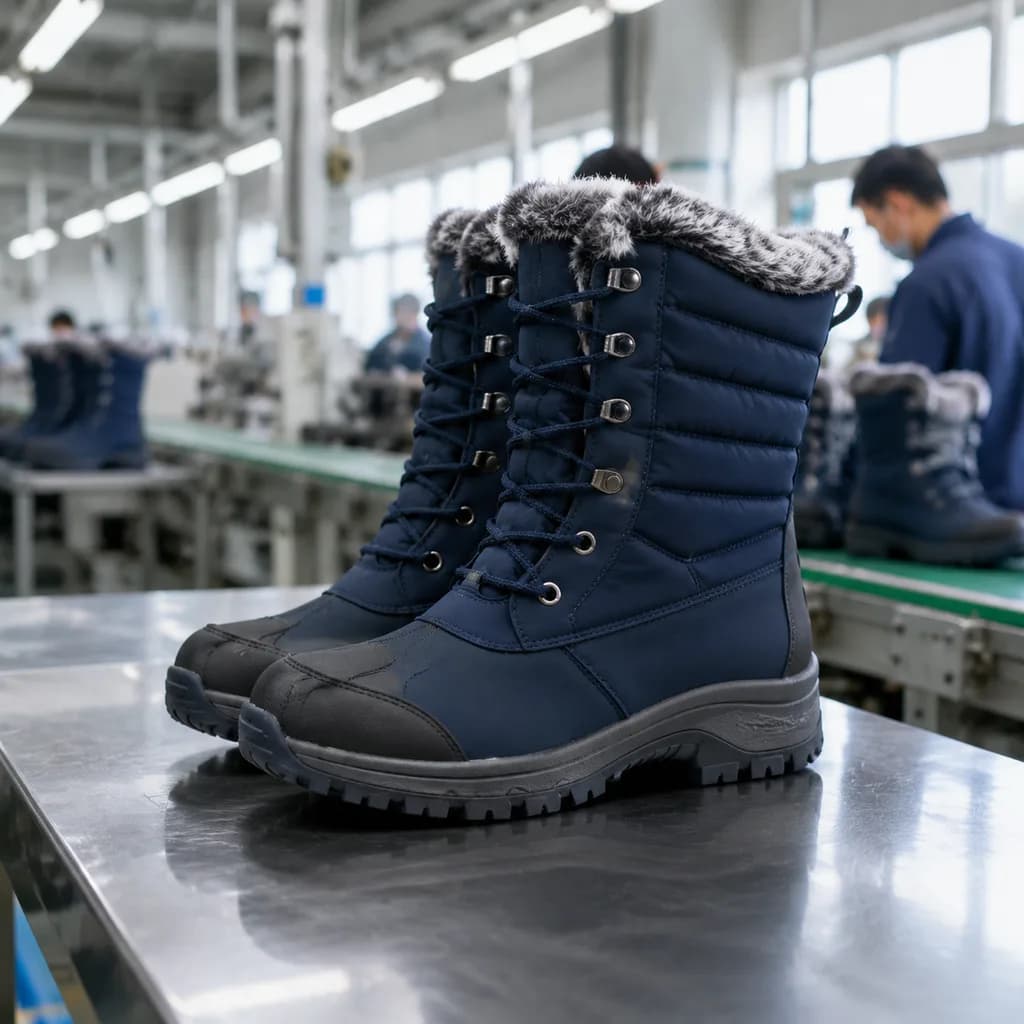
Set a custom women's snow boots fit reference and sizing system before materials so private-label samples stay comparable and quotes stay fair.
Private-label and wholesale buyers often sketch materials, waterproof language, and brand packaging for a women's winter line before they name a custom women's snow boots fit reference. The kickoff still looks complete. Comparability collapses when first samples land: construction is already in the quote, textile choices are priced, and reviewers do not share one sizing system for length, girth, or volume. Later rounds become fit rework instead of product refinement.
This guide treats the custom women's snow boots fit reference as the gate that should open the brief. Scope stays on documented product and capability language only: fit-led women's platforms, OEM development to the buyer's specification, waterproof textile upper as a material direction, and a private-label waterproof program shape from reference samples to an export-ready branded run.
When custom women's snow boot briefs fail at fit, not fashion
Fashion and waterproof storytelling are easy to brief. A target women's winter boot sizing system is harder, so teams defer it. Once deferred, early samples cannot be judged on equal terms. One reviewer scores against a retail last memory; another against a competitor pair on a desk; a third against comfort alone. Quotes based on those samples look finished until size runs and returns expose the gap.
On the documented women's product path, the buyer decides first on target sizing system and fit reference for retail and private-label winter collections. That decision is the condition that makes later material and construction choices reviewable. If fit is still open when a waterproof textile upper or outsole package is priced, the program already carries unpriced fit risk.
Do not treat "custom" as a materials menu until the fit gate is written into the brief. Style can still be ambitious. The measurement baseline cannot stay optional if you need fair sample comparison and a defensible private label women's snow boots package.
What fit reference must mean in a women's private-label brief
A usable fit reference is buyer-owned. It is the concrete standard against which sample length, girth, and volume will be accepted or rejected. The product catalog frames the decision as target sizing system plus fit reference for women's retail and private-label winter collections. It does not transfer ownership of your retail size story to the factory, and it does not publish last codes or grade rules on that page. Those details remain specification inputs you supply when OEM development begins.
For a brief that procurement, product development, and merchandising can share, capture at least the following:
- Named sizing system for the selling market (for example the system your DTC size chart already promises shoppers).
- Physical or documented fit reference reviewers will use, such as a current retail pair, a graded size run you already sell, or a written volume and length target tied to that system.
- Channel intent for the women's line, with a clear primary priority if more than one silhouette is under discussion.
- Who signs fit approval on first samples, and which size is the primary review size.
- What will not count as fit failure (color, logo placement, or packaging) so construction feedback does not hide sizing issues.
If those items are missing, sampling becomes a negotiation about whose foot is normal. That is costly for the brand and the manufacturing partner. Keep the factory out of ownership of your sizing standard: OEM work develops custom snow boots to your specification, with construction, materials, and approval standards driving decisions once you supply them.
Choose a fit-led platform direction before construction language
Open-ended custom snow boots requests often mix incompatible women's silhouettes in one RFQ. Documented fit-led women's winter boot platforms span three directions: clean urban, quilted, and plush cold-weather. Selecting one primary direction, or ranking them, constrains how construction language is written later. That choice belongs after sizing and fit reference, and before free-form build language.
The three directions are the only platform attributes documented on the product path. How each maps to channel merchandising and early-brief risk is buyer judgment for the brief, not factory program language:
| Documented platform direction | Buyer editorial filter (channel signal) | Buyer editorial filter (early-brief risk) |
|---|---|---|
| Clean urban | City retail and lighter daily winter assortments | Deep-cold bulk language fighting a slim silhouette brief |
| Quilted | Fashion-forward winter assortments that need quilted surface language | Treating quilt pattern as fit, or overlooking how quilting changes perceived volume |
| Plush cold-weather | Heavier cold-weather positioning with plush interior presence | Understating girth needs when reviewers still hold a slim urban reference |
Use the table as a channel filter, not as proof that every direction shares one universal last. Fit-led platforms help you stop writing one brief that tries to be all three. After the custom women's snow boots fit reference is locked, pick the direction that matches merchandising intent so construction language has a silhouette home.
Place waterproof textile upper after the fit gate
Waterproof textile upper is a documented material direction. It covers coated nylon upper, water-resistant fabric upper, and technical textile shell language. The materials page describes a woven or laminated synthetic fabric upper, typically nylon or polyester, finished with a durable water-repellent (DWR) coating and often backed by a waterproof membrane or laminate. It is positioned as the lightweight, flexible direction for everyday snow boots that need to stay supple in the cold. That description is material scope only. It is not a finished-boot waterproof rating, temperature grade, or lab claim.
Sequence the material choice after fit and platform direction:
- Confirm sizing system and the physical or documented fit reference for women's retail or private-label collections.
- Select the primary platform direction among clean urban, quilted, and plush cold-weather so upper flexibility and insulation bulk have a silhouette context.
- Specify textile upper intent only then: coated nylon, water-resistant fabric, technical textile shell language, DWR finish, and whether a membrane or laminate is part of the brief.
- Keep approval standards for construction and materials in the buyer's specification so OEM decisions stay tied to what you submit.
Placing waterproof textile upper snow boots language first often forces factories to price a soft, flexible shell against an unstated last volume. Fit then fights the upper rather than guiding it. Materials pages help you name the upper family; they do not replace the fit gate.
OEM specification ownership once fit is fixed
Once fit reference and platform direction are written, OEM development still runs on the buyer's specification. Construction, materials, and approval standards drive every decision. The factory is not freestanding owner of your women's winter boot sizing system. You supply the fit inputs; OEM work builds to those inputs under the approval standards you set.
Practically, fit reference becomes an input line in the specification package, equal in weight to outsole, insulation, and upper family. If the buyer withholds a clear reference, custom work collapses into iterative guessing. If the buyer supplies it, sample feedback can separate true construction defects from size-system mismatch. That separation keeps quote revisions honest when materials change later.
Do not read OEM-to-specification language as a promise that the manufacturer certifies your retail size chart. Consumer fit certification remains a brand and retail responsibility. Manufacturing follows the brief you authorize.
From fit-locked brief to export-ready private-label path
A private-label waterproof winter boot program overview shows how a brand brief moves from reference samples to an export-ready, branded production run. Treat that as process shape only, not as a measured case study with volumes, timelines, or outcomes. The useful link for buyers is sequence: reference samples become meaningful when the fit reference is already named; export-ready branding stabilizes after those samples are judged against that reference.
For private label women's snow boots, the fit-first brief feeds the program arc rather than sitting beside it. Reference samples test construction and materials against your sizing system. Branded production assumes that system still holds. Skipping the gate does not speed export readiness; it only moves fit disputes into later stages where tooling and packaging are already in motion.
When you review program overviews on the site, read them as path diagrams: brief, reference samples, branded run. Overlay your own sizing ownership on that path. The manufacturer path does not replace your need to decide first on target sizing system and fit reference for women's collections. Related pages for scope alignment include products, materials, capabilities, and case studies.
Handoff package for development, sampling, or quotation options
A tight handoff keeps the conversation on options that may apply to the project without turning every topic into a promised service line. Share the winter footwear definition you are pursuing, then ask which development, sampling, or quotation options map to that definition. Useful contents of the package include:
- Plain-language program intent: custom women's program, private-label or wholesale channel, and the fit reference decision already made.
- Target sizing system and how reviewers will use the fit reference on first samples.
- Ranked platform direction among clean urban, quilted, and plush cold-weather.
- Upper family intent only after fit, for example waterproof textile upper with DWR and optional membrane or laminate language.
- OEM note that construction, materials, and approval standards will drive decisions under your specification.
- Whether you want the path framed as a private-label waterproof program from reference samples toward an export-ready branded run.
Ask which sampling, packing, or quotation information applies to the project. Treat those questions as alignment work for the brief, not as documented guarantees unless a later commercial document states them. Keep the factory conversation inside the same scope you used to write the fit gate. Buyers who lock a custom women's snow boots fit reference before style, textile, and packaging reduce sample noise and keep quotes comparable—fit is not the whole program, only the gate that makes the rest reviewable.
Evidence layer
Evidence checklist: Custom Women's Snow Boots Fit Reference for Quote Fairness
OEM, ODM, and private label are not just marketing labels. The practical difference is who owns the starting design, how much the construction changes, and which decisions must be approved before bulk production. Put the decision in writing: reference style, required changes, branding locations, packaging scope, tooling assumptions, and the point at which a sample becomes the production reference. For this guide, map each supplier response to “When custom women's snow boot briefs fail at fit, not fashion” so a claim is supported by a written specification, sample reference, controlled document, or a clearly marked open question.
A strong brief also records what is out of scope. That prevents a fast sample discussion from silently becoming a new mold, a new size run, or a new compliance requirement. Use the same approval language in the quote, sample comments, and purchase documentation. Cross-check the response against “What fit reference must mean in a women's private-label brief” and keep every unresolved point visible in the approval record.
- Design ownership and permitted adaptations — scoped to custom women's snow boots fit reference
- Branding, packaging, and tooling boundaries — cross-checked against “When custom women's snow boot briefs fail at fit, not fashion”
- Sample approval gates before bulk commitment — with open risks from “What fit reference must mean in a women's private-label brief” recorded
Decision framework
Buyer checklist
- Write the custom women's snow boots fit reference and sizing system before materials, construction, or packaging language.
- Use clean urban, quilted, or plush cold-weather platform direction to stop incompatible silhouettes from sharing one RFQ.
- Specify waterproof textile upper only after fit and platform direction, treating it as material scope rather than a finished-boot test claim.
- Keep OEM development on buyer specification ownership; the factory follows construction, materials, and approval standards you supply.
- Hand off a fit-locked brief and ask which development, sampling, or quotation options apply to that winter footwear definition.
Sources and verification
Evidence used for this guide.
Continue the specification
Move from research to a controlled brief.
Frequently asked questions
Questions buyers ask next
Who owns the women's winter boot sizing system in a custom program?
The buyer owns the target sizing system and fit reference for retail or private-label women's collections. OEM development then builds to the specification the buyer supplies, with construction, materials, and approval standards driving decisions.
Should waterproof textile upper be briefed before fit?
No. Lock sizing system, fit reference, and primary platform direction first. Then name coated nylon or water-resistant fabric upper intent, DWR finish, and any membrane or laminate language as material scope for lightweight, flexible everyday snow boots.
What should a fit-locked handoff include before asking for options?
Include channel intent, target sizing system, the fit reference reviewers will use, ranked platform direction, upper family after fit, and whether the path should follow a private-label waterproof program shape from reference samples toward an export-ready branded run. Then ask which development, sampling, or quotation options apply.