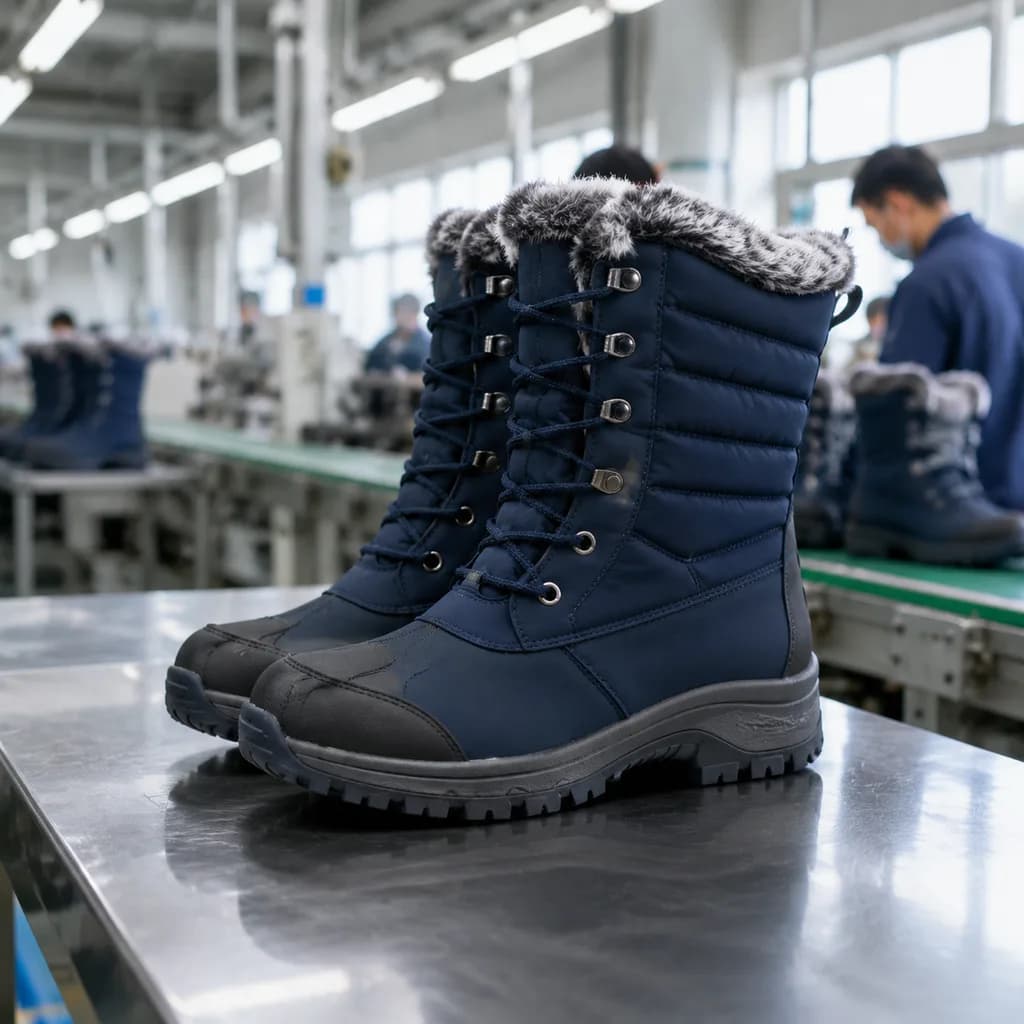
Prepare a custom winter boot fit brief by defining the sizing system, fit reference, product direction, approval basis and open questions.
A buyer may have a clear visual direction for custom winter boots and still lack a usable basis for discussing fit. A silhouette, material reference or merchandising description does not identify the sizing system, the intended fit reference or the standard the buyer expects to use when reviewing the product.
SnowBootWorks tells buyers considering its fit-led women's winter boot platforms to decide the target sizing system and fit reference first. Its capabilities page states that custom snow boots are developed to the buyer's specification, with construction, materials and approval standards driving decisions.
The framework below is buyer-side editorial guidance for preparing an inquiry. It does not describe SnowBootWorks fit tests, grading methods, tolerances or approval procedures. Use it to distinguish confirmed requirements from preferences and open questions before asking which development, sampling or quotation options may apply.
Classify the decisions before writing the brief
Begin by assigning a status to each fit input. This gives product development, merchandising and procurement a common view of what has been decided. It also reduces the risk that a preferred direction will appear in a quotation request as a fixed requirement.
- Fixed
- A requirement already included in the buyer's current product definition.
- Preferred
- The buyer's present direction, subject to further technical or commercial discussion.
- Unresolved
- A decision for which the buyer needs to ask what development, sampling or quotation options may apply.
Apply these editorial labels to the sizing system, proposed size labels, fit reference, relevant reference characteristics and approval expectations. Construction and material choices can use the same labels when they need to be considered alongside fit.
A custom winter boot fit brief should not hide uncertainty. An entry marked unresolved is more useful than a general statement such as “comfortable fit,” because it identifies the point that still requires discussion.
Identify the sizing system
The SnowBootWorks product catalog names the target sizing system as an initial buyer decision for the cited women's winter boot platforms. A snow boot sizing specification should therefore state the intended system directly instead of relying on a market name or an unstated assumption.
For the buyer, a practical sizing entry should record:
- the target sizing system;
- the size labels currently under consideration;
- the market or sales channel relevant to those labels;
- the portion of the proposed range that is currently defined;
- any conversion, labeling or grading questions that remain unresolved.
No sizing conversion or grading data is supplied in the available sources. Do not present labels from different systems as equivalent. When more than one labeling convention may be relevant, identify the primary sizing system and list the remaining conventions as questions.
Keep the sizing system separate from the way sizes may eventually be presented in a particular channel. The system establishes the basis for the fit discussion; the proposed labels describe how the buyer currently expects to communicate the range.
Assign a specific role to the fit reference
SnowBootWorks also names the fit reference as an initial decision for its fit-led women's winter boot platforms. The inquiry should identify the selected reference and explain what the buyer wants it to communicate.
We recommend recording the reference name or code, marked size, sizing system and current status. Add the reason for selecting it. A reference chosen for overall fit may serve a different purpose from one chosen to discuss foot entry, internal volume, the relationship to the shaft or another buyer-defined characteristic.
A concise reference record can include:
- the name, code or other identifier;
- the marked size and sizing system;
- the characteristic the buyer wants to discuss;
- features that are not intended to define the target;
- known differences between the reference and the proposed boot;
- questions to raise when discussing development or sampling options.
When photographs or visual references accompany the inquiry, buyer annotations should identify which features matter. This prevents a visual reference selected for silhouette or styling from being mistaken for a complete fit target.
Do not use merchandising language as fit data
SnowBootWorks describes its women's winter boot platforms as spanning clean urban, quilted and plush cold-weather directions. The catalog places those platforms within women's retail and private-label winter collections.
In a separate scope, the SnowBootWorks industries page describes outdoor retail brand programs as balancing comfort, weather protection and shelf appeal. Those attributes belong to the outdoor retail program description. They should not be combined with the women's platform directions and treated as a universal custom-boot specification.
Merchandising language remains useful when it identifies the intended wearer, category, channel or presentation. It cannot replace the sizing and reference fields needed for a fit-focused inquiry.
| Information group | Buyer entry | What it does not establish |
|---|---|---|
| Product direction | Intended wearer, category, channel and presentation | A sizing or fit criterion |
| Visual direction | Relevant silhouette, proportions and design references | An approved fit target |
| Fit basis | Named sizing system, identifiable reference and relevant characteristic | Equivalence between sizing systems |
| Approval basis | Buyer-defined expectations and open questions | An unconfirmed supplier procedure |
For example, “plush” is part of the direction described for the cited women's platforms. It does not name a sizing system or explain which characteristic of a fit reference the buyer intends to carry into the proposed product.
Connect fit questions to the product definition
SnowBootWorks states that custom snow boots are developed to the buyer's specification. The same capabilities excerpt says construction, materials and approval standards drive decisions.
That scope makes those subjects relevant to the product definition, but it does not establish how a particular lining, insulation package, waterproof construction or component will affect fit. The buyer should record the applicable choice and state any proposed fit relationship as an open question.
| Brief field | Buyer entry | Treatment of uncertainty |
|---|---|---|
| Construction | Fixed requirement, preferred direction or open choice | Ask whether it needs to be considered in the fit discussion |
| Materials | Specified material, desired direction or undecided item | Ask what project information is relevant to the discussion |
| Fit relationship | The buyer's concern or intended characteristic | Leave the technical effect unresolved unless supported |
| Approval standard | Current buyer expectation or open criterion | Ask which options may apply to the project |
The status field has a direct procurement purpose. It shows whether a construction or material entry must be included in the current definition, represents a preference or remains open for discussion.
Write the buyer's approval basis
Approval standards are part of the decision framework described on the capabilities page. The available source does not specify a SnowBootWorks fit protocol, so the brief should state the buyer's own current expectations and identify unconfirmed criteria as unresolved.
For each fit-related approval point, we recommend recording:
- the characteristic the buyer expects to review;
- the reference or specification associated with that characteristic;
- the buyer-side person or team responsible for the decision;
- whether the criterion is fixed, preferred or unresolved;
- the information needed before the buyer can confirm it.
Do not add a tolerance, test method, wear trial, acceptance threshold or guaranteed result simply to fill an empty field. Record the gap and include it among the questions in the inquiry.
Submit the current definition, including the gaps
For private label winter boot development, the inquiry can be condensed into the following information:
- Intended wearer, product category, market and retail direction.
- Target sizing system and proposed size-label format.
- Selected fit reference, including its identifier and the reason for its selection.
- Fit characteristics the buyer wants the reference to communicate.
- Relevant construction and material requirements, preferences and open choices.
- Current buyer-defined approval expectations.
- Unresolved sizing, fit and approval questions.
Share that current definition with SnowBootWorks and ask which development, sampling or quotation options may apply. The question should remain conditional because the available sources do not establish one fit method or workflow for every project.
For the later task of reviewing a sample, see the separate article on custom snow boot sample approval checks. The fit brief covered here addresses the earlier buying decision: defining the basis of the inquiry before sample review.
Use the request-a-quote page to share the current winter footwear definition. Include confirmed requirements, preferred directions and unresolved questions, then ask which options may apply to the project as currently defined.
Evidence layer
Evidence checklist: Custom Winter Boots: Fit Decisions Before Quotation
OEM, ODM, and private label are not just marketing labels. The practical difference is who owns the starting design, how much the construction changes, and which decisions must be approved before bulk production. Put the decision in writing: reference style, required changes, branding locations, packaging scope, tooling assumptions, and the point at which a sample becomes the production reference. For this guide, map each supplier response to “Classify the decisions before writing the brief” so a claim is supported by a written specification, sample reference, controlled document, or a clearly marked open question.
A strong brief also records what is out of scope. That prevents a fast sample discussion from silently becoming a new mold, a new size run, or a new compliance requirement. Use the same approval language in the quote, sample comments, and purchase documentation. Cross-check the response against “Identify the sizing system” and keep every unresolved point visible in the approval record.
- Design ownership and permitted adaptations — scoped to custom winter boots
- Branding, packaging, and tooling boundaries — cross-checked against “Classify the decisions before writing the brief”
- Sample approval gates before bulk commitment — with open risks from “Identify the sizing system” recorded
Decision framework
Buyer checklist
- As buyer-side editorial guidance, classify fit inputs as fixed, preferred or unresolved before requesting project options.
- Name the target sizing system and do not infer equivalence between systems without supporting data.
- Identify the fit reference and state which buyer-defined characteristic it is intended to communicate.
- Keep merchandising direction, fit inputs, construction and material questions, and approval expectations in separate brief fields.
- Share the current definition and ask which development, sampling or quotation options may apply.
Sources and verification
Evidence used for this guide.
Continue the specification