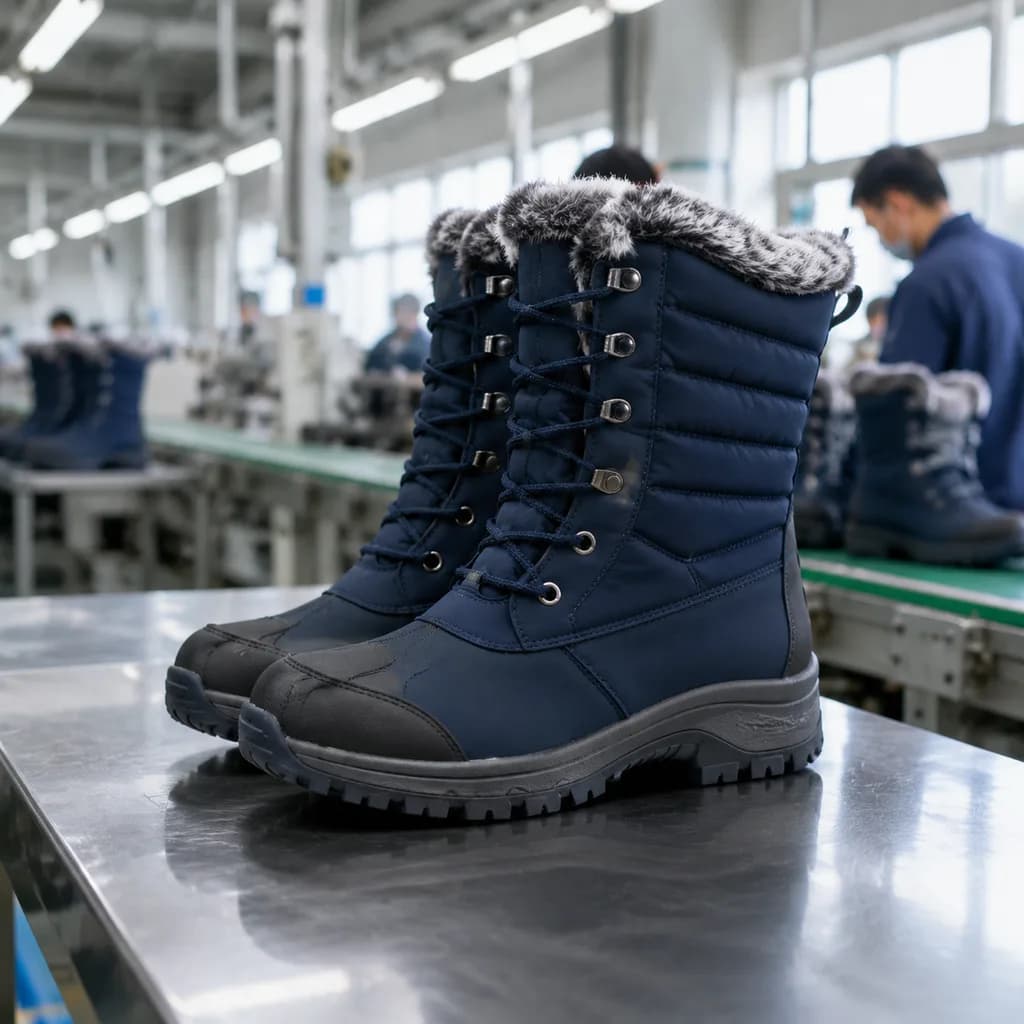
Build a buyer-side approval matrix that separates fixed, reference-led and open winter boot requirements before a supplier inquiry.
Custom winter boot approval criteria need to show more than the features a sourcing team wants. Consider a hypothetical brief in which construction is fixed, material selection remains open and a reference sample guides appearance but not fit. Written as one undifferentiated list, those requirements conceal three different decision states. A supplier inquiry becomes clearer when each requirement records what has been decided, which source supplies direction and which question still needs discussion.
SnowBootWorks' capabilities overview describes OEM custom snow boot development to the buyer's own specification, with construction, materials and approval standards driving decisions. The framework below is an editorial recommendation for the buyer's internal preparation. It does not describe a SnowBootWorks-managed approval workflow or promise that every open requirement can be developed.
What has actually been decided?
Begin by assigning one of three statuses to every requirement. Apply the status to the buyer's current position, not to an expected supplier response.
- Fixed
The buyer has made the decision. Record the controlling specification or internal source, the exact requirement and the buyer-side person authorized to revise it. Supplier applicability can remain a separate inquiry question.
- Reference-led
A named sample, document or other buyer-selected source provides direction. Define the attributes it governs. A reference intended to guide appearance, for example, should not silently become the authority for fit, construction or materials.
- Open
The buyer has not closed the decision. Write the uncertainty as a direct question and identify the information the buyer needs before assigning a final status.
Assess status row by row. Calling the whole project “open” or “approved” hides the decisions that have already been made and the points that still need an owner. A custom snow boot approval matrix should expose that difference at a glance.
The approval matrix
Use one row for each requirement that may have its own source, status or approver. Construction and material selection should occupy separate rows when they are controlled by different documents or remain at different decision stages.
Recommended buyer-side matrix fields
| Requirement | Status | Source or reference | Buyer-side owner | Approval basis | Inquiry question |
|---|---|---|---|---|---|
| Construction definition | Fixed, reference-led or open | Buyer specification or bounded reference | Named person or role | Construction details the buyer will review | Unresolved applicability or development point |
| Material definition | Fixed, reference-led or open | Material record, brief or named reference | Named person or role | Buyer-selected attributes or comparison basis | Selection or discussion point |
| Target sizing system | Fixed, reference-led or open | Buyer size standard or range definition | Fit or technical owner | Named sizing basis | Information needed to close the row |
| Fit reference | Fixed, reference-led or open | Identified sample or fit document | Fit or technical owner | Attributes the reference is intended to guide | Reference scope to discuss |
| Desired product outcome | Fixed, reference-led or open | Product or merchandising brief | Relevant business owner | Buyer-defined evidence for approval | Missing intent or evaluation basis |
| Project-specific requirement | Fixed, reference-led or open | Relevant buyer record | Named person or role | Requirement-specific review basis | Point to raise in the inquiry |
The approval-basis field should identify how the buyer will recognize an acceptable decision. Repeating the requirement with words such as “suitable,” “appropriate” or “standard” leaves the basis undefined. Name the controlling document, bounded reference, attributes to review or buyer-selected evaluation method instead.
Outcome or acceptance evidence?
SnowBootWorks' industries overview describes outdoor retail winter footwear programs in terms of balancing comfort, weather protection and shelf appeal. These are useful headings for product intent. The buyer still needs to decide what each term means for the project and what information will support approval.
Separate the desired outcome from the buyer's approval basis
| Desired outcome | Buyer intent to clarify | Approval basis to define |
|---|---|---|
| Comfort | Which wearer experience or product qualities matter for this program? | Buyer-selected review criteria, references and responsible approver |
| Weather protection | Which intended use conditions and product direction should guide the definition? | Applicable project requirements and any buyer-required performance or documentation basis |
| Shelf appeal | Which visual, product and merchandising direction should be preserved? | Approved visual references, specified details and brand-side owner |
Keep broad outcomes in the product brief and place their approval basis in separate matrix fields. If the buyer requires a particular performance level, test method, compliance document or certification, add an independent row based on the buyer's authoritative source. Where that source or requirement has not been chosen, leave the row open rather than inferring a threshold from general outcome language.
Why does fit need two rows?
SnowBootWorks' product catalog identifies fit-led women's snow boot platforms and advises buyers to decide the target sizing system and fit reference first. That guidance is scoped to the documented women's platforms. Requirements for other categories should remain direct inquiry questions unless supported by a separate source.
The target sizing system and fit reference answer different buyer decisions. The sizing-system row identifies the framework the buyer intends to use. The fit-reference row identifies the sample or document that supplies direction for selected fit attributes. Combining both under a phrase such as “standard fit” leaves the source, scope and approver unclear.
- Name the target sizing system in the matrix instead of relying on a market or collection label.
- Identify the fit reference precisely enough for each reviewer to use the same item or document.
- State which attributes the reference is intended to guide.
- Assign a buyer-side owner who can resolve conflicts between the sizing basis, reference and product direction.
Either fit row may be fixed, reference-led or open. The status should reflect the buyer's present definition. See winter boot fit decisions before quotation for a focused discussion of this part of the brief.
Decision ownership
Approval authority varies by buyer organization. Use actual names or roles rather than importing a generic sequence into the matrix. The examples below are buyer-side planning prompts, not documented supplier checkpoints.
Possible buyer-side ownership assignments
| Decision area | Possible buyer-side owner | Decision to document |
|---|---|---|
| Construction | Product developer or technical lead | Which construction definition controls the project? |
| Materials | Product developer, materials owner or technical lead | Which material requirements are fixed, and which remain open? |
| Sizing and fit | Fit or technical reviewer | Which sizing system, reference and review basis govern approval? |
| Appearance and brand direction | Merchandising or brand owner | Which visual references and product details represent the accepted direction? |
| Project-required performance or documentation | Quality or compliance owner | Which buyer requirement and authoritative source apply? |
| Inquiry scope | Procurement or importing owner | Which unresolved questions must be included in the supplier discussion? |
Shared review can contribute information, but the row should identify who can close, revise or reopen the decision. The approval basis should also state what that person needs to review. Assigning a checkpoint without its owner or required information creates another label rather than a usable decision control.
Prepare the inquiry from open rows
For this framework, inquiry readiness means that the buyer can distinguish decisions, references and unresolved questions. It does not require every product requirement to be final. Review the matrix before sharing it and confirm that:
- Each row contains one requirement or decision area.
- Every row is marked fixed, reference-led or open.
- Fixed rows identify the buyer source that controls the decision.
- Reference-led rows define the attributes governed by the reference.
- Each row names a buyer-side owner with decision authority.
- The approval basis is more specific than the desired outcome.
- The documented women's platform guidance is applied only within its stated scope.
- Open requirements appear as questions rather than presumed supplier options.
- Any buyer-required performance, testing, certification or documentation topic has its own source and row, or remains explicitly open.
Keep this pre-inquiry matrix separate from the record used to inspect and disposition a completed sample. The article on custom snow boot sample approval checks addresses that later review task.
Once the rows accurately reflect the current definition, share it through the project inquiry page. Ask which development, sampling or quotation options may apply to the project. Preserve unresolved rows as direct questions so the discussion remains tied to the actual specification and decision scope.
Evidence layer
Evidence checklist: Custom Winter Boot Approval Criteria: Build the Matrix
A buying guide should end in a decision structure, not just a list of styles. Define the customer, climate, channel, opening price, core price, and premium role before setting colorways and size ratios. Use the range to cover distinct needs while keeping enough volume and attention behind the styles that must carry the season. For this guide, map each supplier response to “What has actually been decided?” so a claim is supported by a written specification, sample reference, controlled document, or a clearly marked open question.
Record the assumptions behind the plan—launch date, order window, size curve, color logic, replenishment possibility, and packaging needs. If a demand or sell-through number is not available, label it as an assumption instead of presenting it as a verified forecast. Cross-check the response against “The approval matrix” and keep every unresolved point visible in the approval record.
- Customer and channel role — scoped to custom winter boot approval criteria
- Size, color, and price architecture — cross-checked against “What has actually been decided?”
- Seasonal assumptions and review points — with open risks from “The approval matrix” recorded
Decision framework
Buyer checklist
- A buyer-side matrix should give each requirement its own status, source, owner, approval basis and inquiry question.
- Fixed records a buyer decision, reference-led identifies a bounded source of direction, and open preserves an unresolved issue for discussion.
- For the documented women's snow boot platforms, the target sizing system and fit reference should remain separate decision rows.
- Open rows should become scoped questions about which development, sampling or quotation options may apply to the project.
Sources and verification
Evidence used for this guide.
Continue the specification