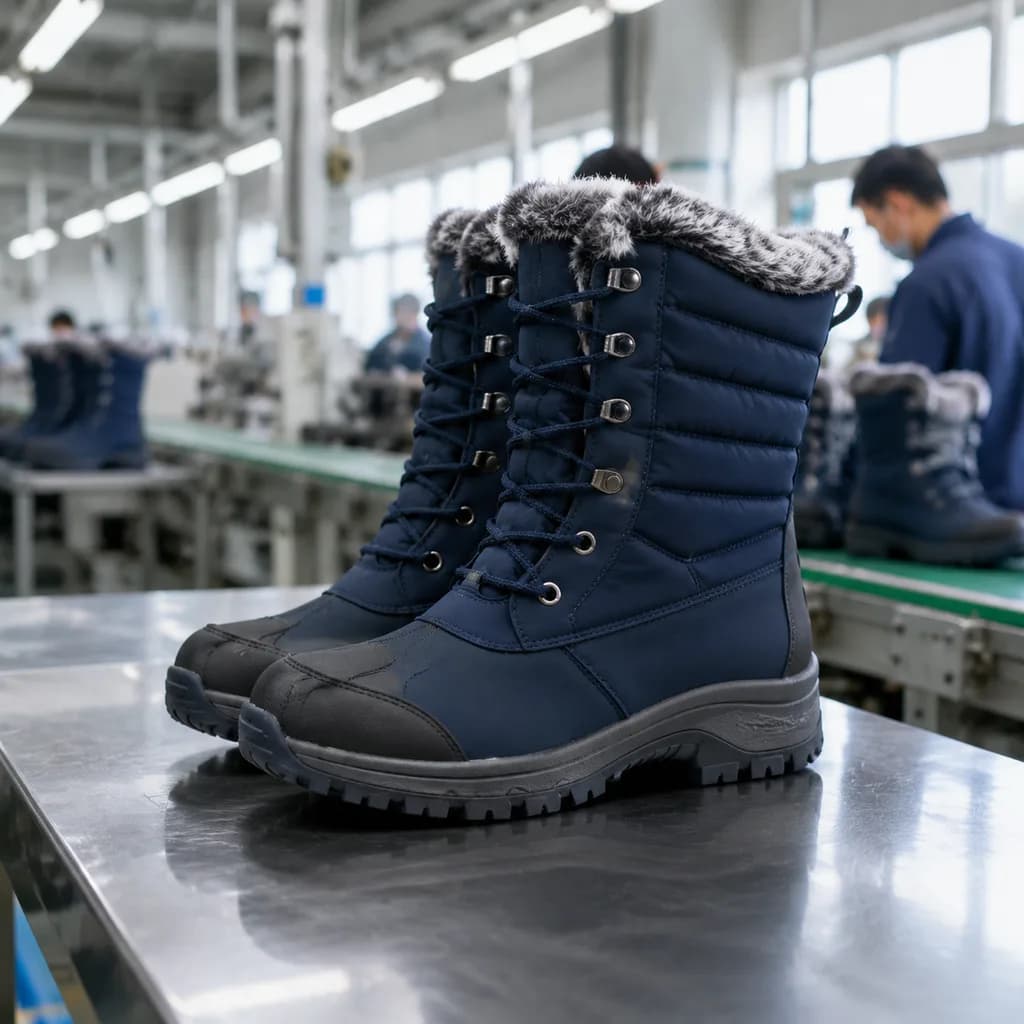
Lock shell fabric, DWR, and membrane choices in a custom snow boots waterproof upper specification so OEM quotes and samples share one construction baseline.
A custom snow boots RFQ that only says “waterproof” rarely locks the textile upper. Shell fabric, finish, and optional membrane stay open, so suppliers fill the gaps differently. Price lines and sample standards then drift before anyone cuts a pair. Two quotes can look close on paper while the uppers they imply are not interchangeable. Writing a custom snow boots waterproof upper specification early is how buyers keep construction on one baseline.
This piece treats that upper package as a pre-quote control layer for everyday flexible boots—not as a finished-boot marketing claim. It maps the published materials definition into brief fields, ties those fields to OEM specification discipline and private-label handoff language already on this site, and ends with a checklist you can reuse for development, sampling, or quotation talks.
When “waterproof” is too vague for a custom snow boot quote
On the OEM manufacturing capabilities page, custom snow boots are developed to the buyer’s own specification. Construction, materials, and approval standards drive each decision. That model only works when the brief already names the material system those decisions should follow.
A line that simply says “waterproof upper” leaves shell, coating, and optional membrane open. Factories propose whatever package they treat as normal for winter footwear. Reviewers later argue about samples that never shared a common definition. The commercial risk is drift, not a dramatic launch failure: one quotation assumes a coated woven shell without a membrane; another assumes a laminated package; a third swaps polyester for nylon without flagging the change.
Until the upper layer is fixed in writing, construction notes, material substitutions, and approval standards cannot be compared fairly. Putting that layer in the RFQ before the first quote is an editorial recommendation for the buyer—it keeps OEM judgment inside your program bounds rather than inside unstated factory defaults.
What a waterproof textile upper covers in a materials brief
The materials page defines a waterproof textile upper as a woven or laminated synthetic fabric upper, typically nylon or polyester, finished with a durable water-repellent (DWR) coating and often backed by a waterproof membrane or laminate. That package is the lightweight, flexible direction for everyday snow boots that need to stay supple in the cold. For waterproof textile upper snow boots, those words set the ceiling for what this article claims about the material itself.
What the definition does not supply matters just as much. It does not name hydrostatic head ratings, breathability numbers, lab methods, membrane trademarks, or finished-boot certifications. Buyers who need those metrics should bring their own test methods and acceptance criteria into the brief rather than treating them as implied company guarantees.
For procurement, the useful move is narrower: treat the textile upper as a materials package with three controllable parts—shell, DWR finish, optional membrane or laminate—then write each part so OEM construction choices have a fixed reference. That package is also not insulation, outsole rubber, seam tape, or full-boot water protection by itself. Upper copy alone cannot certify how a finished boot will perform in wet snow. Keep insulation, sole units, and assembly details as separate brief fields so reviewers do not treat shell language as whole-product proof.
Three upper decisions that must be written before samples
Before anyone cuts samples, lock three decisions the materials definition already implies. Each should appear in the RFQ or tech pack as an owned field—not as a conversation that starts after the first pair arrives. An OEM custom snow boots materials brief that records these fields early gives factories a materials baseline instead of free-form interpretation.
- Shell fabric direction. State whether you want a woven or laminated synthetic shell and whether the base fiber is nylon, polyester, or an open choice the factory may propose with samples. Note weight class or hand-feel targets in buyer language if you have them, without inventing mill codes the program has not chosen.
- Water-repellent finish. Call for a durable water-repellent (DWR) coating on the shell when that is part of the intended package. If DWR is optional for a lower-cost tier, say so explicitly so quotes do not mix coated and uncoated shells under one price column.
- Membrane or laminate backing. Decide whether the upper should include membrane or laminate backing as required, preferred, or not required. Ambiguity here is the most common reason two waterproof quotes describe different constructions.
Recording these three fields before sampling does not replace construction drawings or full bills of materials. It does give OEM teams a materials baseline so construction, materials, and approval standards can track the brief, consistent with how custom programs are described on the capabilities page.
How OEM construction and approval standards use that upper layer
Once the textile upper package is written, construction choices stop floating. Stitch patterns, seam treatments, lining interfaces, and collar or tongue assemblies can be judged against a named shell and finish rather than against whatever sample fabric happens to be available.
Material substitutions become visible decisions. If a mill cannot supply the briefed nylon weight, the factory must propose an alternate against the same DWR and membrane rules instead of silently changing the package. Approval standards benefit the same way: reviewers can check whether the sample upper matches the briefed fiber family, finish intent, and membrane presence before they debate color or branding. That sequence keeps aesthetic comments from masking a construction mismatch.
For buyers running multi-factory or multi-season programs, the same upper fields also make reorders auditable. A later quote can be rejected if it drops the membrane the original brief required, without reopening style-level debate. None of this invents a SnowBootWorks-owned test protocol. It uses the published OEM model—buyer specification driving construction, materials, and approval standards—as the reason to write the upper package early. How strict acceptance criteria become remains a buyer decision: you may add your own lab methods later, but the materials package should already be clear enough that those methods have something concrete to test against.
Where fit platforms meet a private-label waterproof program
Textile upper language does not replace fit decisions. On the products catalog, women’s snow boots are framed as fit-led platforms spanning clean urban, quilted, and plush cold-weather directions. For women’s retail and private-label winter collections, the page advises deciding the target sizing system and fit reference first. That order still applies when the upper is waterproof textile: lock sizing system and fit reference, then attach the shell, DWR, and membrane fields so the platform and the materials package do not fight each other during sampling.
Separately, the case studies overview describes a private label waterproof winter boot upper path as a brand brief that moves from reference samples to an export-ready, branded production run. Keep that description inside its published scope. It is program-path language, not a quantified customer result, endorsement, or guarantee of any particular upper construction. For buyers, the useful reading is process shape: reference samples carry the briefed upper package forward until branded production is ready for export. If your assortment is women’s private label and waterproof, write both the fit reference and the textile upper package before those reference samples are ordered so the path starts from one definition rather than two competing ones.
| Decision layer | What to lock first | Evidence-bound note |
|---|---|---|
| Women’s retail / private-label fit | Target sizing system and fit reference | Fit-led women’s platforms; decide sizing and fit reference before deeper style work |
| Waterproof textile upper | Shell family, DWR intent, membrane or laminate yes/no | Woven or laminated nylon/polyester with DWR; often membrane-backed; everyday flexible direction |
| Private-label waterproof program path | Brand brief continuity from reference samples to export-ready branded run | Program overview only; not a measured outcome or client case metric |
Specification checklist for comparable waterproof-upper quotes
Use the following fields so each supplier responds against the same textile construction definition. Leave blank any field you are intentionally keeping open, and mark required items so factories cannot treat them as optional.
- Program type: OEM to buyer specification, private-label waterproof path, or both.
- Upper package label: waterproof textile upper for everyday flexible snow boots (or a tighter internal name you control).
- Shell: woven, laminated, or either; nylon, polyester, or open with sample proposals.
- DWR finish: required, preferred, or not required for this tier.
- Membrane or laminate backing: required, preferred, or not required; note if coated shell alone is acceptable.
- Hand-feel or flexibility note: stay supple in cold for daily wear (buyer language, not a lab claim).
- What this field is not: no hydrostatic rating, no named membrane brand, no finished-boot certification implied by upper copy alone.
- Fit context (when women’s retail or private label): sizing system and fit reference decided before or with the upper package.
- Approval baseline: sample upper must match briefed shell, finish, and membrane presence before style sign-off.
- Open questions for the factory: which development, sampling, or quotation options apply once this definition is shared.
If two factories return quotes that still describe different upper packages, the checklist is incomplete or ignored. Send the same field set again and ask each respondent to map their materials line-by-line. Comparable quotes depend on that discipline more than on any single adjective in the product name.
Share your winter footwear definition next
A usable custom snow boots waterproof upper specification is short, explicit, and early. It names shell direction, DWR intent, and whether a membrane or laminate is part of the package. Construction, materials, and approval standards then follow that definition under an OEM model built around the buyer’s own specification. When women’s platforms or private-label waterproof paths are in play, add sizing system and fit reference so the upper package rides on a stable last and size story rather than competing with it.
Share the current winter footwear definition you are working with, including the waterproof-upper fields above if you have them. Ask which development, sampling, or quotation options may apply to the project. That invitation keeps the next conversation on comparable construction instead of on unstated waterproof assumptions. Start from the request a quote page when you are ready to put the brief in front of the team.
Evidence layer
Evidence checklist: Custom Snow Boots Waterproof Upper Specification
OEM, ODM, and private label are not just marketing labels. The practical difference is who owns the starting design, how much the construction changes, and which decisions must be approved before bulk production. Put the decision in writing: reference style, required changes, branding locations, packaging scope, tooling assumptions, and the point at which a sample becomes the production reference. For this guide, map each supplier response to “When “waterproof” is too vague for a custom snow boot quote” so a claim is supported by a written specification, sample reference, controlled document, or a clearly marked open question.
A strong brief also records what is out of scope. That prevents a fast sample discussion from silently becoming a new mold, a new size run, or a new compliance requirement. Use the same approval language in the quote, sample comments, and purchase documentation. Cross-check the response against “What a waterproof textile upper covers in a materials brief” and keep every unresolved point visible in the approval record.
- Design ownership and permitted adaptations — scoped to custom snow boots waterproof upper specification
- Branding, packaging, and tooling boundaries — cross-checked against “When “waterproof” is too vague for a custom snow boot quote”
- Sample approval gates before bulk commitment — with open risks from “What a waterproof textile upper covers in a materials brief” recorded
Decision framework
Buyer checklist
- Write shell fabric, DWR finish, and membrane or laminate presence before the first OEM quote so waterproof quotes share one construction baseline.
- Use the published materials definition as a ceiling: nylon or polyester textile upper with DWR, often membrane-backed, for everyday flexible boots; do not invent ratings or finished-boot proof from upper copy alone.
- For women’s retail or private-label paths, lock sizing system and fit reference alongside the upper package so fit platforms and waterproof materials do not diverge in sampling.
- Treat private-label waterproof program language as a brief-to-export path description, not as a quantified case result.
- Share your winter footwear definition and ask which development, sampling, or quotation options may apply once the upper fields are fixed.
Sources and verification
Evidence used for this guide.
Continue the specification
Move from research to a controlled brief.
Frequently asked questions
Questions buyers ask next
What belongs in a custom snow boots waterproof upper specification?
At minimum: shell direction (woven or laminated nylon/polyester intent), whether a DWR finish is required, and whether a waterproof membrane or laminate backing is required, preferred, or not required. Keep insulation, outsoles, and finished-boot test methods as separate fields.
Does specifying a waterproof textile upper prove finished-boot waterproof performance?
No. The materials definition covers the textile upper package only. Whole-boot performance depends on construction, seams, and other components, which need their own brief fields and any buyer-defined acceptance criteria.
Should fit reference or upper materials be locked first for women’s private-label programs?
For women’s retail and private-label winter collections, decide the target sizing system and fit reference first, then attach the waterproof textile upper fields so sampling starts from both a stable fit baseline and a fixed materials package.