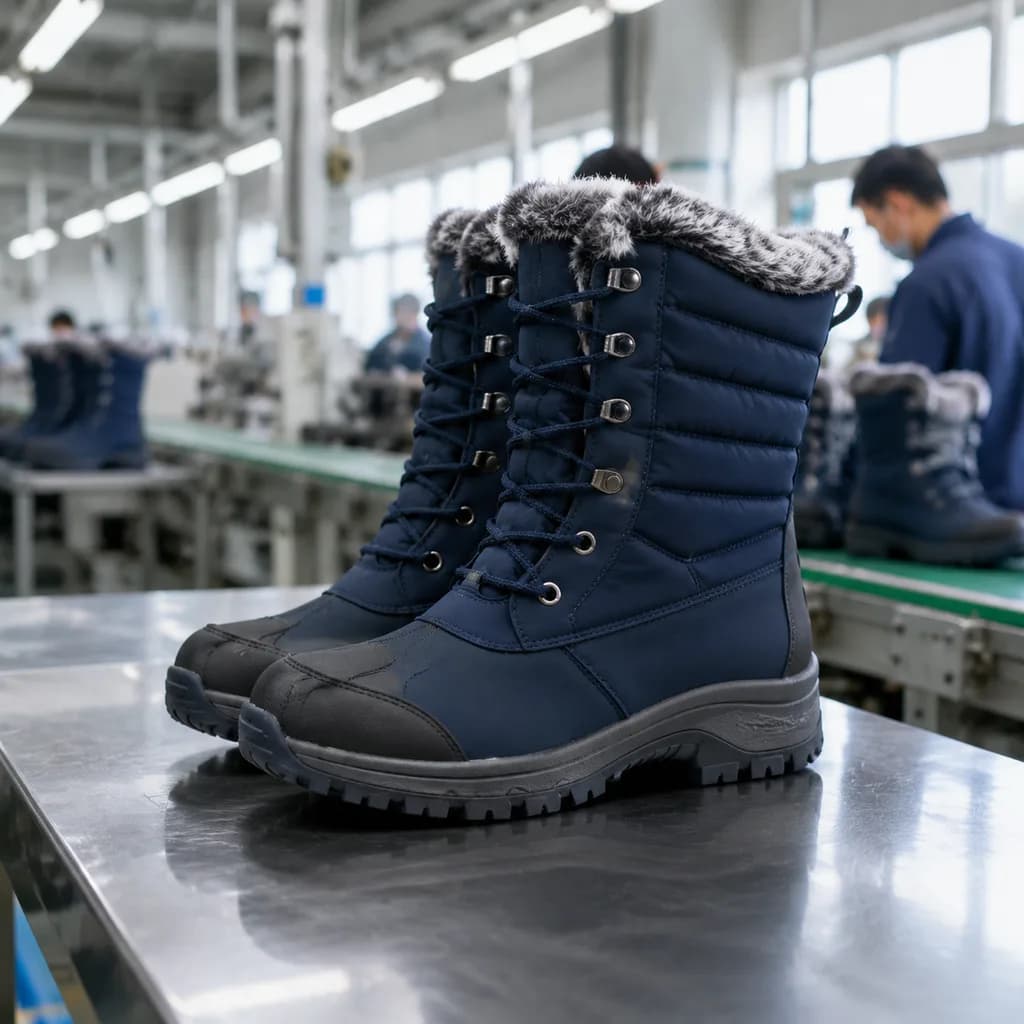
Create a custom snow boot specification brief that separates settled buyer inputs from open fit, material, approval, and inquiry questions.
A winter-footwear reference pack may establish a direction, but it does not automatically show which details are required, which are preferred, and which remain undecided. A custom snow boot specification brief is a buyer-owned record for making those distinctions before an inquiry.
The framework below is editorial guidance for the buyer, not a stated SnowBootWorks workflow. It is designed to keep the current definition, the material wording, the fit inputs, and the unresolved questions readable in one place. Company-specific statements are limited to the supplied SnowBootWorks capabilities, catalog, and materials excerpts.
The decision record comes before the reference pack
SnowBootWorks says it develops custom snow boots to a buyer's own specification, with construction, materials, and approval standards driving every decision. Those three factors provide a useful structure for the buyer's record, but the record should also show the level of certainty behind each entry.
Editorial recommendation: use a status beside every product point. A visible status prevents a preference from being read as a fixed requirement and prevents an unanswered question from disappearing inside a group of images or notes.
- Confirmed
- The buyer has selected the current requirement and wants it recorded as such.
- Preferred
- The buyer has a direction in mind but has not made it a fixed requirement.
- Open
- The buyer needs to discuss the point before it can be defined further.
Use construction, materials, and approval standards as separate entries. Do not merge them into a broad instruction such as "make it winter-ready." That wording does not show which part of the definition is settled or where a decision is still needed.
Fit starts with the selling framework
In its buyer-fit catalog text for women's retail and private-label winter collections, SnowBootWorks says to decide first the target sizing system and fit reference. Record those as two separate inputs. A sizing system identifies the selling framework; a fit reference identifies the footwear direction the buyer wants considered during the conversation.
Editorial recommendation: state the intended wearer and collection context, then add one target sizing system. Where a fit reference is available, identify it clearly enough that the buyer's own team can locate it again. A name, internal reference, or style code can serve that purpose.
| Brief field | Buyer entry |
|---|---|
| Intended wearer | The buyer's stated wearer or collection context. |
| Target sizing system | One named selling system rather than several implied market systems. |
| Fit reference | An identifiable reference, recorded separately from the sizing system. |
| Fit question | Any fit point that the buyer has not yet resolved. |
A private label snow boot fit reference can remain an input while some fit questions are open. The useful distinction is between the reference the buyer is providing and the points the buyer still wants to raise.
Describe an upper without expanding its meaning
The SnowBootWorks materials detail is headed "Waterproof Textile Upper" and names a coated nylon upper, water-resistant fabric upper, and technical textile shell. Select only the label that matches the buyer's current direction. Those labels should not be treated as interchangeable wording.
The same detail describes a woven or laminated synthetic fabric upper, typically nylon or polyester. It also describes a durable water-repellent coating and says a waterproof membrane or laminate backing is often used. The qualifiers matter: "typically" and "often" describe the source's material direction rather than a universal build for every textile-upper program.
Editorial recommendation: preserve each known layer as a separate field. This keeps an upper descriptor from being enlarged into a complete material specification or into a statement about the finished boot.
| Material record | How to write it |
|---|---|
| Upper label | Use one selected source term: coated nylon upper, water-resistant fabric upper, or technical textile shell. |
| Textile form | Record woven or laminated synthetic fabric only when that direction is known. |
| Fiber direction | Record nylon or polyester when selected; otherwise keep the field open. |
| Finish | Record a durable water-repellent coating when it belongs in the current buyer definition. |
| Backing | Record a waterproof membrane or laminate only when confirmed for the current direction. |
| Buyer acceptance condition | Write this separately from the upper description as the buyer's own requirement or question. |
This format gives a snow boot manufacturing specification a clear material vocabulary without adding assumptions about layers that the buyer has not selected.
Approval standards are a separate buyer entry
SnowBootWorks includes approval standards in the factors driving every decision in its capabilities statement. The supplied excerpt does not set out a project-specific review procedure or an approval protocol. The buyer should therefore record its own current approval standard as a requirement, preference, or open point rather than assuming a particular process.
For the buyer's internal brief, an approval standard can be written as the condition that requires a decision. It may relate to the recorded construction direction, the stated material direction, or another buyer-defined criterion. The point is to make the required decision visible, not to present an incomplete preference as settled.
| Decision area | What the buyer records | Status |
|---|---|---|
| Construction | The current construction direction and any unresolved construction questions. | Confirmed, preferred, or open. |
| Materials | The selected upper wording and any material layers already chosen. | Confirmed, preferred, or open. |
| Approval standard | The buyer's stated threshold or the decision that remains to be made. | Confirmed, preferred, or open. |
An open approval entry is still useful. It tells the reader that the buyer has not yet defined that part of the brief and that it belongs in the inquiry discussion.
Give each reference one job
After the decision record exists, attach references to the entries they actually inform. Editorial recommendation: identify the visible role of each file rather than treating the entire pack as one settled requirement.
- Silhouette reference: identifies the profile or shaft direction the buyer wants to discuss.
- Feature reference: identifies a visible point such as panel treatment, closure appearance, trim, or color placement.
- Material cue: identifies the material look or upper direction the buyer is considering.
- Open reference: shows a direction the buyer wants to discuss but has not selected as a requirement.
Add a file name, style code, or other identifier beside each reference. When one image appears to inform several fields, note each field separately. That makes it possible to see whether the reference supports a construction note, a material note, a fit input, or only a visual preference.
Separate the handoff into facts and questions
The completed brief should have two lanes: what the buyer can define now and what the buyer wants to ask. This division keeps inquiry topics from being represented as documented SnowBootWorks services, availability, or promises.
| Buyer-defined record | Questions for the inquiry |
|---|---|
| Reference identifiers, the role assigned to each reference, and the status of visible features. | Which construction or material directions may apply to the defined product direction? |
| Intended wearer, target sizing system, and identified fit reference. | Which development or sampling options may apply to the project? |
| Selected upper terminology, confirmed material fields, and the buyer's current approval entries. | Which quotation options may apply to the current definition? |
Keep questions in question form. A request for information about a membrane, sampling, development, or quotation is not the same as a claim that the item will be used or offered for the project.
Send a defined starting point
Before sharing the brief, review it as a reader who has not seen the original reference pack. The reader should be able to find the buyer's current construction direction, target sizing system, fit reference, selected upper wording, approval entries, and open questions without interpreting unstated assumptions.
Share the current winter-footwear definition through the request-a-quote form and ask which development, sampling, or quotation options may apply to the project. A defined custom snow boot specification brief gives the conversation a clear starting point while preserving the questions that still need discussion.
Evidence layer
Evidence checklist: Custom Snow Boot Specification Brief for Buyers
OEM, ODM, and private label are not just marketing labels. The practical difference is who owns the starting design, how much the construction changes, and which decisions must be approved before bulk production. Put the decision in writing: reference style, required changes, branding locations, packaging scope, tooling assumptions, and the point at which a sample becomes the production reference. For this guide, map each supplier response to “The decision record comes before the reference pack” so a claim is supported by a written specification, sample reference, controlled document, or a clearly marked open question.
A strong brief also records what is out of scope. That prevents a fast sample discussion from silently becoming a new mold, a new size run, or a new compliance requirement. Use the same approval language in the quote, sample comments, and purchase documentation. Cross-check the response against “Fit starts with the selling framework” and keep every unresolved point visible in the approval record.
- Design ownership and permitted adaptations — scoped to custom snow boot specification brief
- Branding, packaging, and tooling boundaries — cross-checked against “The decision record comes before the reference pack”
- Sample approval gates before bulk commitment — with open risks from “Fit starts with the selling framework” recorded
Decision framework
Buyer checklist
- Editorial recommendation: show each buyer entry as confirmed, preferred, or open before attaching reference files.
- Record the target sizing system and fit reference as separate buyer inputs.
- Keep the upper label, textile form, fiber direction, finish, backing, and buyer acceptance condition in separate fields.
- Use one handoff lane for the buyer's current definition and another for questions about applicable options.
Sources and verification
Evidence used for this guide.
Continue the specification