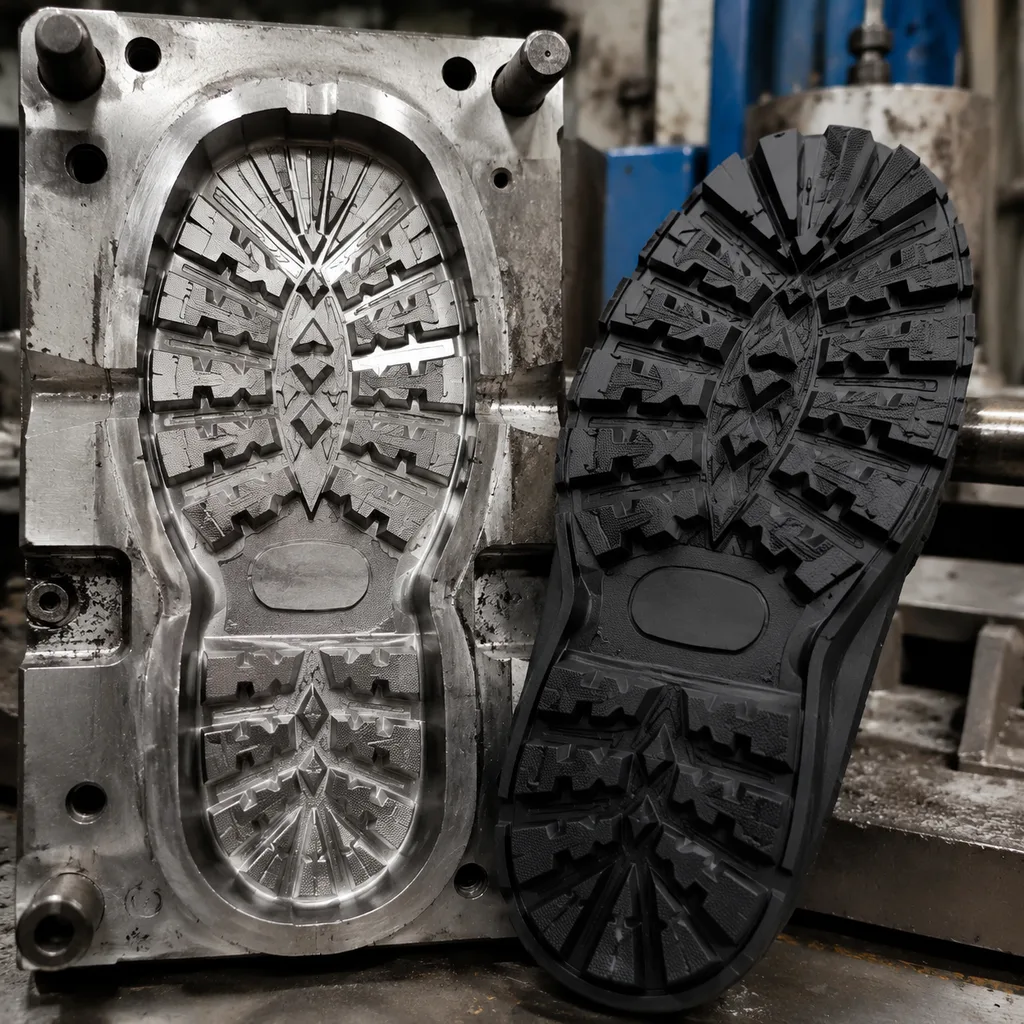
This guide is written for product teams, importers, wholesalers, and brand operators. Use it to structure supplier conversations and document decisions before samples or bulk production move forward.
Define which tool is actually new
A custom program may require outsole molds, lasts, cutting dies, logo molds, embossing plates, print screens, or packaging plates. List each tool and whether it is new, modified, or existing. New outsole geometry usually has the greatest size and engineering impact, while a logo insert may be a smaller change. Quote tools separately so ownership and repeat-order economics remain visible.
Approve design data before cutting metal
Review dimensions, last compatibility, flex lines, lug geometry, branding, material shrinkage, attachment surfaces, size grade, and file version. Use renderings or prototypes where appropriate, but keep final approval tied to controlled data. Changes after machining can require rework or replacement. Name the person authorized to approve each release.
Validate pilot parts and full size coverage
First molded parts should be checked for dimensions, fit to the last and upper, weight, hardness, finish, color, flex, bonding, and relevant performance. Do not assume a base-size approval automatically proves every size. Inspect size markings and grade transitions, especially at the smallest and largest tools where geometry may behave differently.
Document ownership, storage, and maintenance
The agreement should identify who pays, who owns, where tools are stored, whether they are exclusive, how maintenance is handled, expected retention, and what happens after inactivity or supplier change. Record tool numbers and condition. Obtain legal advice where ownership or exclusivity is commercially important, especially for buyer-created designs.
Decision framework
Buyer checklist
- Inventory every new and existing tool
- Control final design files and approvals
- Inspect pilot parts on the intended boot
- Review all size tools and markings
- Document ownership, exclusivity, storage, and maintenance
Continue the specification
Move from research to a controlled brief.
Frequently asked questions
Questions buyers ask next
Do custom snow boots always need new outsole molds?
No. A custom upper can be developed on an existing last and outsole. New molds are needed only when the approved sole geometry, fit platform, or molded branding requires them.
Who owns footwear molds paid for by the buyer?
Ownership depends on the written agreement and applicable law. Define payment, ownership, use rights, storage, transfer, maintenance, and disposal with appropriate legal advice.