This guide is written for product teams, importers, wholesalers, and brand operators. Use it to structure supplier conversations and document decisions before samples or bulk production move forward.
Waterproof urban lace-up boots
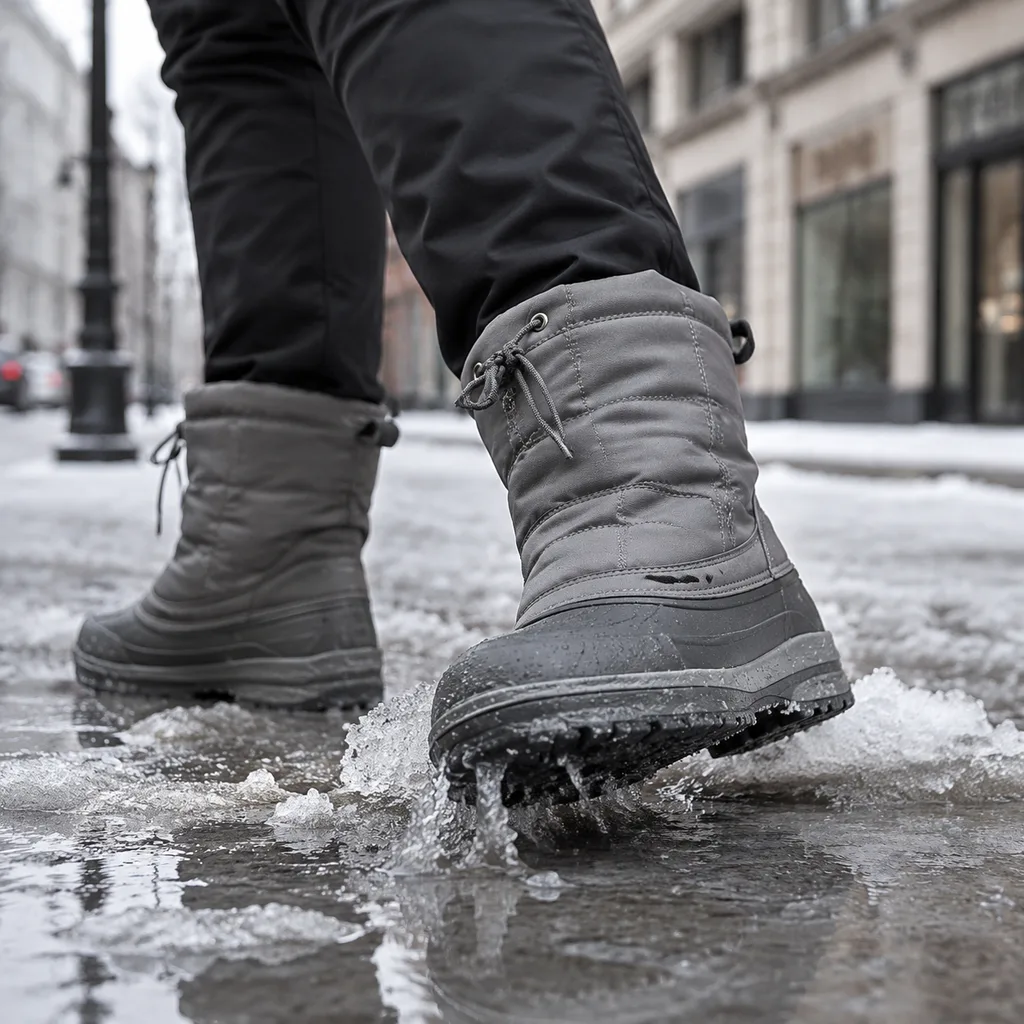
A clean lace-up can serve commuters and everyday winter consumers when the waterproof construction, entry, and outsole match the use case. Keep the silhouette versatile, then differentiate through material blocking, hardware, collar shape, and color. Review lace length and tongue gusset coverage together.
Insulated mid-calf boots
Mid-calf styles offer more coverage and visual presence for colder markets, but shaft fit and entry require attention. Balance lining bulk, opening circumference, closure adjustment, and weight. Size-set review should include calf and instep feedback rather than only foot length.
Lightweight pull-on winter boots
Pull-on designs support convenience and casual use, especially when a wide opening or elastic element improves entry. The construction must still control heel hold and water paths. Avoid making the boot so soft that the shaft collapses during entry or packing.
Faux-fur and après-ski styles
Warm visual cues such as faux-fur collars, plush linings, quilting, and bold material combinations can support après-ski or fashion positioning. Confirm shedding, compression, color consistency, and trim attachment. Do not let decorative warmth cues replace a defined insulation and fit specification.
Winter hiking hybrid boots
A hiking-inspired direction can combine supportive lacing, reinforced zones, a lower-profile shaft, and an outdoor outsole. Define the intended trail and climate level so the boot is not overbuilt for casual consumers or underbuilt for outdoor positioning. Flex and weight are central tradeoffs.
Decision framework
Buyer checklist
- Define urban use, water exposure, gusset height, and outsole needs
- Approve shaft dimensions, entry, lining volume, and total boot weight
- Test entry, heel retention, shaft recovery, and packing shape
- Separate visual warmth details from measurable lining and insulation requirements
- Set terrain, support, flex, weight, and traction priorities
Continue the specification
Move from research to a controlled brief.
Frequently asked questions
Questions buyers ask next
What should buyers prioritize first from this list?
Start with the style that addresses the largest proven consumer need in the target channel. For many assortments that is a versatile waterproof lace-up, but climate, historical sell-through, and retail position should determine the anchor.
Does every snow boot program need all five items?
A wholesale range does not need all five. Use one or two core shapes, then add a warmth, convenience, fashion, or outdoor direction only when each SKU has a distinct role and volume expectation.