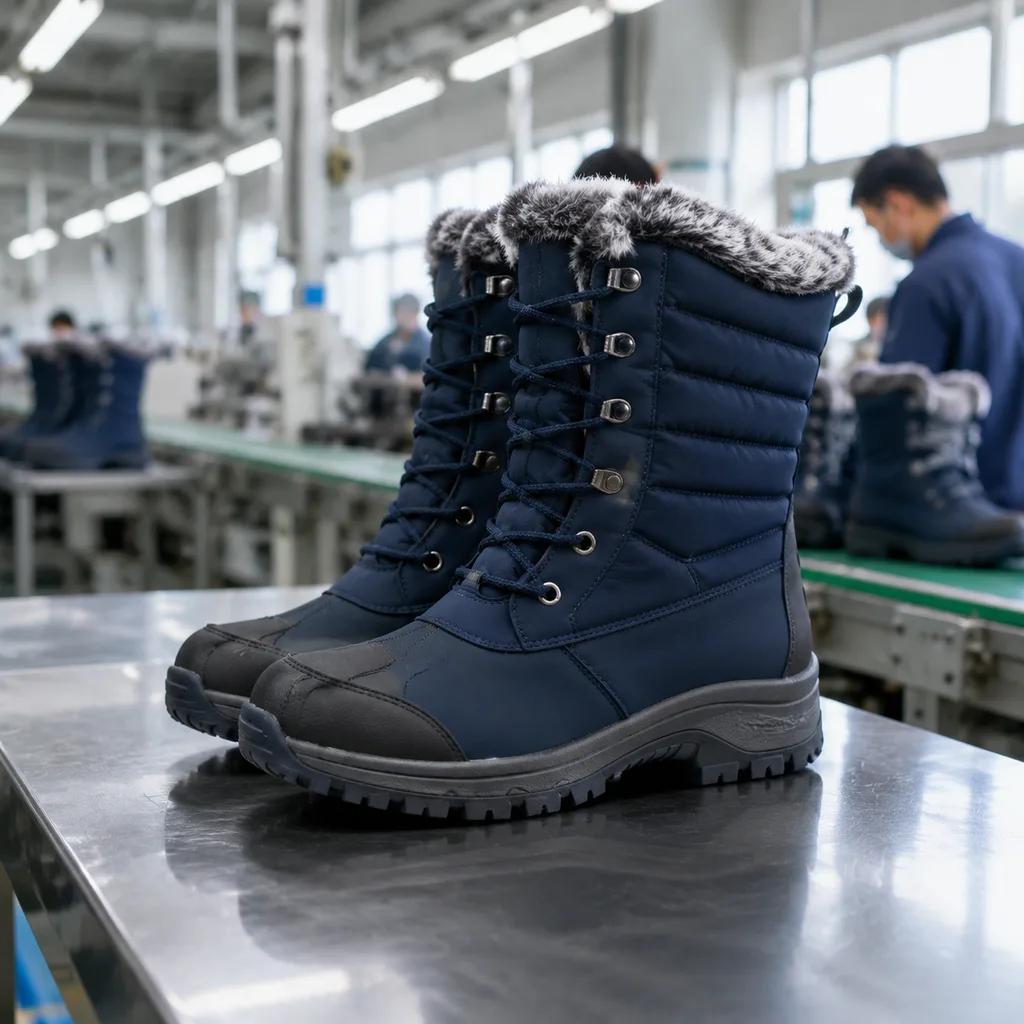
This guide is written for product teams, importers, wholesalers, and brand operators. Use it to structure supplier conversations and document decisions before samples or bulk production move forward.
Define the consumer, channel, and climate
Write a one-page use profile covering age, gender or fit range, retail channel, price tier, climate, primary activity, exposure, style expectations, and return-risk concerns. A winter city commuter, family value customer, workwear user, and resort traveler need different products. This profile gives every later material and construction decision a reason.
Rank fit, weather, warmth, and traction priorities
Decide which performance areas are required, which are preferred, and which claims need qualified evidence. Define fitting sock, internal volume, entry, closure, shaft height, waterproof boundary, lining and insulation, outsole surfaces, and weight target. Avoid requesting maximum performance in every category without accepting the cost, bulk, and development implications.
Build an assortment that shares intelligently
Give each style a role by consumer, use, price, or silhouette. Share lasts, outsoles, linings, hardware, packaging structures, and core colors where this does not blur the range. Use size ratios and color quantities based on demand rather than equal splits. A focused line reduces MOQ and improves repeatability while preserving visible differentiation.
Evaluate suppliers through controlled samples
Send one normalized RFQ, compare construction and commercial assumptions, then score samples for fit, materials, workmanship, function, branding, packaging, and revision discipline. Maintain an approved sample and document package. Supplier communication should be scored separately from manufacturing and quality evidence.
Plan quality, import, and delivery before order release
Define in-line checks, final inspection, test responsibilities, labels, documents, carton plan, incoterm, and release authority. Work backward from the warehouse and retail launch, not the factory finish date. Confirm current compliance, customs, and shipping inputs with qualified specialists. The buying decision is complete only when the product can arrive, clear, and sell as intended.
Decision framework
Buyer checklist
- Write a consumer and use profile
- Rank required versus preferred performance
- Assign one role to each SKU
- Compare suppliers with one brief and scorecard
- Plan compliance, inspection, freight, and launch together
Continue the specification
Move from research to a controlled brief.
Frequently asked questions
Questions buyers ask next
What should an importer include in a snow boot buying brief?
Include consumer, market, use, price tier, quantity, sizes, materials, construction, claims, branding, packaging, quality plan, incoterm, and required delivery.
What should buyers approve before bulk snow boot production?
Approve the physical sample, fit and grade, bill of materials, colors, artwork, packaging, inspection criteria, test scope, quantities, commercial terms, and schedule.