This guide is written for product teams, importers, wholesalers, and brand operators. Use it to structure supplier conversations and document decisions before samples or bulk production move forward.
Wide, structured entry
Children and caregivers need an opening that works with winter socks and limited patience. A wide entry should not create loose heel hold or a collapsing shaft. Review opening circumference, tongue or gusset movement, pull tabs, and the ability to put the boot on without excessive force.
Simple, secure adjustment
Hook-and-loop straps, elastic laces, toggles, or combined closures should be easy to understand and hard to loosen accidentally. Check small-part and market requirements with qualified specialists where relevant. Evaluate glove use, strap reach, abrasion, attachment, and repeated opening cycles.
Waterproof lower protection
Wet snow and slush often challenge the lower boot first. Use suitable lower materials, controlled seams, bottom sealing, and adequate gusset height for the intended exposure. Keep decorative stitching and attachments away from critical water-barrier areas where possible.
Warmth without excessive bulk
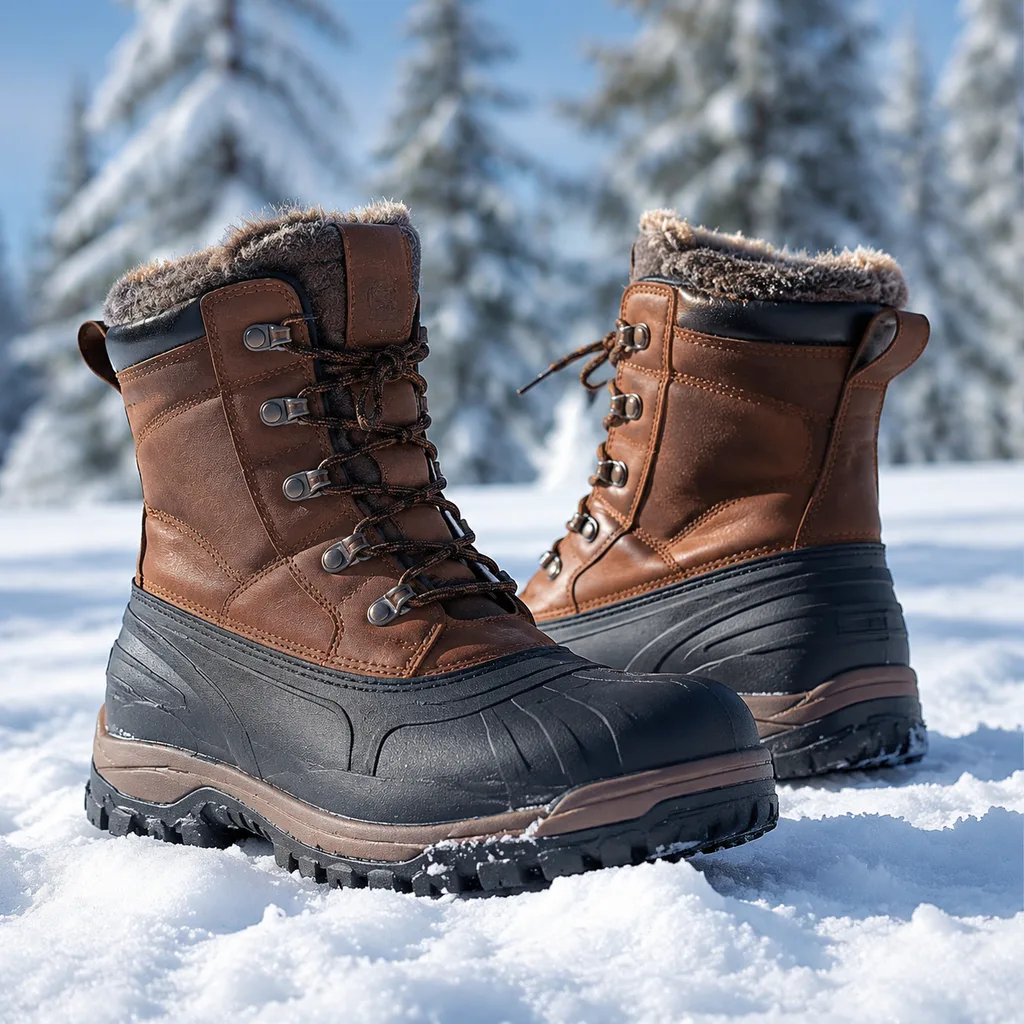
Thick faux fur can look warm but may reduce internal fit volume and make drying slower. Balance lining, insulation, sock assumption, and removable footbed choices. Confirm that the child can flex the boot naturally and that size selection remains understandable for caregivers.
Lightweight flex, traction, and visibility
Children benefit from manageable weight and a sole that flexes in appropriate zones while retaining stability. Tread and compound should match the intended surfaces and climate. Reflective or high-contrast details can support visibility, but placement and durability must be verified on the finished boot.
Decision framework
Buyer checklist
- Test entry with intended socks across representative children's sizes
- Validate closure usability, retention, attachment, and applicable requirements
- Map lower-zone water paths and approve the assembled barrier
- Review warmth package together with fit volume, flex, and drying
- Set weight, flex, traction, and visibility targets for the use case
Continue the specification
Move from research to a controlled brief.
Frequently asked questions
Questions buyers ask next
What should buyers prioritize first from this list?
Entry and secure adjustment should be solved first because a boot that is difficult to put on or cannot be retained will fail regardless of its other features. Then validate water protection and fit volume.
Does every snow boot program need all five items?
Most kids' programs benefit from all five feature groups, but the execution changes by age and channel. Avoid adding hardware or complexity that does not improve caregiver or child use.