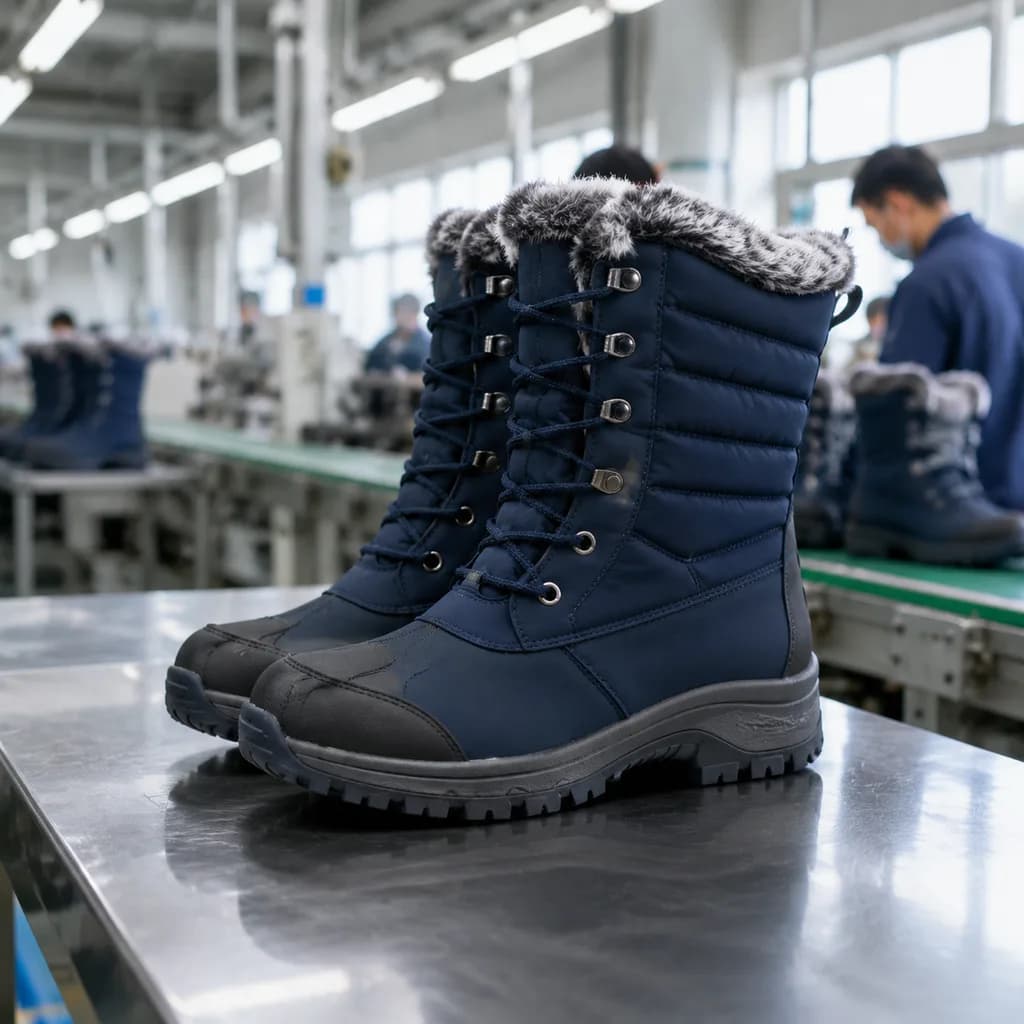
Women's snow boot platforms wholesale work stays coherent when you name a fit-led platform and sizing reference before styling, private-label, or OEM quotes.
For women's snow boot platforms wholesale programs, the product catalog sets a clear control order. Fashion-and-fit women's snow boots are presented as fit-led winter boot platforms spanning clean urban, quilted, and plush cold-weather directions. Buyer fit is described as women's retail and private-label winter collections. Target sizing system and fit reference appear as decide-first items on the product brief. Name the platform family and the fit reference before color, trim, packaging, or quotation packages expand.
When those two items stay open, samples can look related in photos while last, volume, or wear feel diverge from the shelf story. This guide turns that catalog sequence into a buyer-facing decision path for retail and private-label collections. It does not rank the three directions as sell-through winners.
Name one platform direction from the fit-led range
The product range names three platform families for fashion-and-fit women's snow boots: clean urban, quilted, and plush cold-weather. Those labels are wholesale directions for women's retail and private-label winter collections, not a ranked style list. Use them to narrow ownership of the first sample set.
| Catalog platform direction | Buyer brief prompt |
|---|---|
| Clean urban | Write the wearer, channel, and adjacent assortment rules your team will use when judging the first clean-urban sample set. |
| Quilted | Write the same fields for a quilted-direction line so upper treatments and grading stay inside one owned family. |
| Plush cold-weather | Write the same fields for a plush cold-weather line, with a separate fit reference if the assortment needs more than one direction. |
Buyer-side practice: pick one primary direction per core line. If the assortment needs two directions, treat them as distinct lines with separate fit references rather than blending them in a single vague brief.
Review the women's platform range on the product catalog only after the team can name wearer, channel, and which of the three directions owns the first sample set.
Lock target sizing system and fit reference first
The catalog instruction to decide target sizing system and fit reference first is operational. A women's wholesale program needs a written pack that sampling and grading can follow without reinterpretation. The fields below are procurement discipline for buyers, not additional factory product claims.
At minimum, lock these items before construction samples expand:
- Sizing system. State the labeled system the retail market expects (for example, US women's, EU, or UK) and whether dual labeling is required on hangtags or boxes.
- Size range and run logic. Name the planned size span and how sample sizes will be allocated for fit review. For the buying team: sample the extremes and a mid size so last and upper volume can be judged across the run.
- Fit reference object. Identify what "good fit" is measured against: a retained physical sample, a last code the brand already owns, or a competitor product used only as a dimensional reference (not as a copy instruction).
- Fit checkpoints. List which body points matter for this line: heel hold, instep volume, toe room, calf opening, shaft height, and walk-off comfort for the intended wear time.
- Approval ownership. Name who can accept or reject fit on women's winter boots fit reference samples so feedback does not ping-pong between merchandising and product development.
Without those items, a competent sample can still fail an unspoken last preference. Put the women's winter boots fit reference in the brief before colorways, packaging mockups, or logo placement debates consume the calendar.
Hold styling until platform and fit are stable
Color boards, trim options, and early packaging work are useful only after platform direction and fit reference are named. Platform choice answers which family owns the collection. Fit reference answers how that family grades across sizes and how the team will judge comfort. Until both are fixed, private-label waterproof detailing or OEM construction notes have nothing stable to attach to.
Procurement note for the buyer: treat early mood boards as optional. Treat a named platform direction and a written sizing/fit reference as mandatory before development conversations expand. Approving mixed silhouettes without agreeing which family owns the line is a common source of later brief revisions.
Balance outdoor retail priorities after the lock
Outdoor retail brands are described as running winter footwear programs that balance comfort, weather protection, and shelf appeal. That balance is useful only after platform and fit are no longer open questions. Comfort depends on the last and volume already chosen. Weather protection depends on construction and materials that must sit on a stable silhouette. Shelf appeal is the visual layer, not the foundation.
A practical order for outdoor retail women's lines:
- Confirm platform family (clean urban, quilted, or plush cold-weather) against the store's adjacent assortment.
- Confirm sizing system and fit reference so merchandising language about comfort will match the product on foot.
- Only then rank weather-protection features and visual trims relative to each other. If both matter, decide which can yield when sample complexity rises.
Channel context for outdoor retail programs is outlined on the industries page. Use it to keep the assortment brief coherent rather than as a checklist of every possible feature.
Private-label waterproof versus OEM specification routes
After platform direction and fit reference are named, manufacturing path becomes a clearer choice. Keep the routes separate; they answer different buyer responsibilities.
Private-label waterproof programs. A private label waterproof winter boot program is shown as moving a brand brief from reference samples to an export-ready, branded production run. That path fits buyers who already know the platform family and can supply or approve reference samples, branding, and commercial packaging intent. It is not presented as women-only in the case material, so apply it to private label women's winter boots only when the brief already carries women's sizing and fit language.
OEM specification programs. OEM manufacturing is described as developing custom snow boots to the buyer's own specification, with construction, materials, and approval standards driving every decision. That path fits teams writing an OEM women's snow boots specification from the ground up: last and platform already chosen, materials and construction notes owned by the brand, and approval gates defined before tooling or bulk commitments.
Do not merge the two into a single service claim. Private-label waterproof work centers on advancing a brand brief through reference samples toward branded export-ready runs. OEM work centers on the buyer's specification and the construction, materials, and approval standards that govern decisions. Choose the path that matches who owns the specification, then review program examples or OEM capability notes with that ownership model in mind.
Product-brief gate before development or quote questions
Before asking which development, sampling, or quotation options may apply to the project, complete this readiness gate. The gate is buyer procurement discipline; it does not invent commercial terms or service promises beyond what the public pages state.
- Wearer and channel named (women's retail, private-label collection, or outdoor retail balance of comfort, weather protection, and shelf appeal).
- One primary platform direction selected: clean urban, quilted, or plush cold-weather.
- Target sizing system written, including market labeling expectations.
- Fit reference identified (physical sample, last code, or dimensional reference product) with approval owner named.
- Manufacturing path preference stated at a high level: private-label waterproof progression from reference samples, or OEM development against the buyer's construction, materials, and approval standards.
- Open styling items (color, trim, packaging) listed as secondary and explicitly deferred until platform and fit are stable.
If any of the first four bullets is still open, pause the quote request. Revising a platform after samples start usually costs more calendar time than a short internal alignment delay.
When the gate is complete, share the current winter footwear definition with the manufacturing partner and ask which development, sampling, or quotation options may apply to the project. Use the request form only after the platform and fit reference can be stated in plain language a third party can sample against.
Evidence layer
Evidence checklist: Women's Snow Boot Platforms Wholesale: Platform Before Styling
OEM, ODM, and private label are not just marketing labels. The practical difference is who owns the starting design, how much the construction changes, and which decisions must be approved before bulk production. Put the decision in writing: reference style, required changes, branding locations, packaging scope, tooling assumptions, and the point at which a sample becomes the production reference. For this guide, map each supplier response to “Name one platform direction from the fit-led range” so a claim is supported by a written specification, sample reference, controlled document, or a clearly marked open question.
A strong brief also records what is out of scope. That prevents a fast sample discussion from silently becoming a new mold, a new size run, or a new compliance requirement. Use the same approval language in the quote, sample comments, and purchase documentation. Cross-check the response against “Lock target sizing system and fit reference first” and keep every unresolved point visible in the approval record.
- Design ownership and permitted adaptations — scoped to women's snow boot platforms wholesale
- Branding, packaging, and tooling boundaries — cross-checked against “Name one platform direction from the fit-led range”
- Sample approval gates before bulk commitment — with open risks from “Lock target sizing system and fit reference first” recorded
Decision framework
Buyer checklist
- Name one catalog platform direction (clean urban, quilted, or plush cold-weather) before color, trim, or packaging debates.
- Write the target sizing system and a concrete fit reference with an approval owner before sampling expands.
- Weigh outdoor retail comfort, weather protection, and shelf appeal only after platform and fit are fixed.
- Choose private-label waterproof progression or OEM specification ownership as separate paths, not a merged promise.
- Ask which development, sampling, or quotation options apply only after the readiness gate is complete.
Sources and verification
Evidence used for this guide.
Continue the specification
Move from research to a controlled brief.
Frequently asked questions
Questions buyers ask next
Should women's wholesale teams approve colors before platform direction?
No. Color and trim are secondary. Platform family and a named sizing/fit reference should be locked first so samples grade against a stable last and silhouette.
When does private-label waterproof work make more sense than OEM?
Private-label waterproof framing fits when a brand brief can move from reference samples toward an export-ready branded run. OEM fits when the buyer owns the full specification and wants construction, materials, and approval standards to drive decisions. State which ownership model you are using.