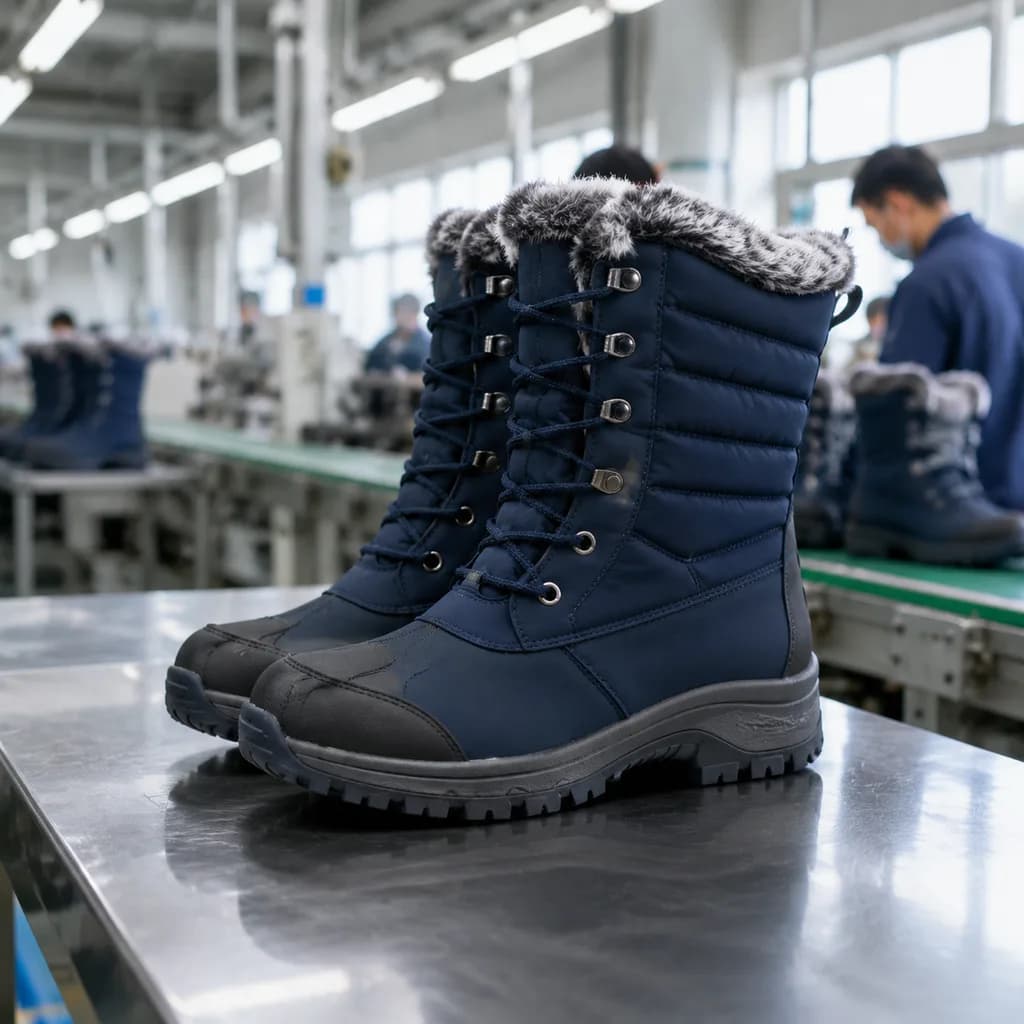
Set a winter boot sizing system and fit reference before samples or OEM quotes so women's private-label platforms and construction choices stay comparable.
A women's custom winter boots fit reference is the commercial gate that should close before samples or quotations go out. Women's retail and private-label teams often price styles, insulation packages, and brand finishes while the brief still omits a named winter boot sizing system and a measurable fit benchmark. Two suppliers can answer the same style description and still deliver different entry feel, volume, and consumer fit. For women's programs, fit definition comes before material boards or logo placement.
Undefined fit makes custom winter boots quotes non-comparable
When line sheets lack a shared fit baseline, buyers are not comparing like with like. A cleaner upper, a different collar height, or a plush lining can each change how a size runs even when the style name looks similar. Price deltas become hard to interpret, sample rounds multiply, and catalog teams cannot hold construction constant long enough to judge value.
The product catalog frames women's snow boots around fashion and fit for retail and private-label winter collections, and it lists target sizing system and fit reference as the first decision. Platform direction and OEM detailing only become useful after the program agrees what "true to size," "room for a thick sock," or an in-house brand last equivalent means in buyer language. Until that reference exists, waterproof methods and insulation options float free of the foot shape the consumer will wear.
Treat undefined fit as a procurement failure mode, not a minor sample note. Product developers who skip this gate often discover the problem late, during wear trials or size-run reviews, when changing last volume or entry would force a rebuild rather than a trim swap.
Name the sizing system and fit reference before any sample request
For women's retail and private-label winter collections, the catalog states that teams should decide first on target sizing system and fit reference. That order is the commercial floor of the brief. Complete these fields before a sample request leaves the brand team so later approvals are enforceable.
- Target sizing system. State which retail or regional system the assortment will sell against, such as the brand's existing women's footwear scale. Do not assume a factory default will match your returns history or conversion tables.
- Fit reference. Point to a specific product the consumer already understands, an approved brand standard, or another documented benchmark the team can measure against. Avoid vague labels such as "athletic" or "relaxed."
- Intended consumer use. Note city commuting, mixed outdoor retail, colder plush wear, or another stated setting. Use language that guides volume and entry without inventing last libraries or grading rules the factory has not been given.
- Approval ownership. Name who signs fit acceptance so comments do not arrive from conflicting stakeholders after materials are already in motion.
None of these fields requires publishing a full size chart in the first inquiry. They do require that everyone reading the brief can tell whether a future sample is on-brief or off-brief for fit.
Connect fit reference to women's platform direction
Once the sizing system and fit reference are named, style direction can be chosen without silently rewriting entry or volume. The women's product range is described as fit-led snow boot platforms spanning clean urban, quilted, and plush cold-weather directions. Those labels are commercial lanes from the catalog, not interchangeable skins over an undefined last.
Buyer-side guidance for how each lane typically trades on the floor (not catalog definitions of role):
| Platform direction | Buyer-side commercial role (guidance) | What to keep stable after fit is locked |
|---|---|---|
| Clean urban | Streamlined retail presentation for everyday winter wear | Entry feel and silhouette that match the named fit reference; avoid bulk that changes how the size runs |
| Quilted | Visible cold-weather styling with structured upper panels | Collar and shaft behavior relative to the reference; quilting should not replace a volume decision |
| Plush cold-weather | Softer, warmer-looking consumer impression | Interior volume and sock space against the same fit reference; plush materials can change perceived size if the reference is ignored |
Selecting platform direction after fit reduces a common private-label failure: approving a mood board that implies one consumer foot shape, then sampling a platform that behaves like another. Review the women's snow boot product brief with fit fields filled first so platform talk stays inside the same consumer definition.
Keep OEM construction and materials under approval standards
After fit and platform direction are fixed, construction and materials become controllable variables rather than the only language in the RFQ. OEM manufacturing for custom snow boots is described as development to the buyer's own specification, with construction, materials, and approval standards driving every decision. That boundary is useful precisely because it does not invent waterproof ratings, insulation weights, or lab claims for you.
Write construction choices as decisions under your approval standards: membrane or coating approach if you require one, sole attachment method if it affects flex at the ball of the foot, lining type if it changes sock space relative to the fit reference. Keep performance claims out of the brief unless you will supply the test method and pass criteria yourself. The factory can build to a clear specification; it cannot repair an unstated fit target by upgrading materials after the fact.
Buyers comparing suppliers should hold the same fit reference constant while construction options change. Otherwise a lower quote may simply reflect a different last volume or a looser entry, not a better materials package. Capability detail for specification-led OEM work sits on the manufacturing capabilities page; use it after the fit fields are complete, not as a substitute for them.
Outdoor retail constraints that change fit trade-offs
Outdoor retail programs add a second commercial filter before construction detail expands. Industry positioning for outdoor retail brands describes winter footwear programs that balance comfort, weather protection, and shelf appeal. That balance constrains which fit references remain viable on the floor.
A reference built only for maximum sock room may protect against cold-weather returns yet look bulky next to cleaner competitive product. A slim urban reference may photograph well and still generate fit complaints if the assortment is sold into harsher winter climates. State which of the three outdoor retail pressures is non-negotiable for the season, then check the named fit reference against that pressure before locking a platform among clean urban, quilted, and plush directions.
This is assortment-planning guidance, not a sell-through guarantee. The aim is to prevent late swaps when merchandising discovers the sample no longer matches the shelf story. Context for outdoor retail programs is available under industries served.
Fit-first brief checklist before sampling or quotation
Complete the following fields so development, sampling, or quotation options can be evaluated against one shared definition of the women's winter boot. Leave a field blank only when your team consciously accepts the risk of non-comparable replies.
- Target sizing system for the women's assortment
- Named fit reference (product, brand standard, or other measurable benchmark)
- Intended consumer setting (urban commute, mixed outdoor retail, plush cold-weather, or another stated use)
- Preferred platform direction among clean urban, quilted, and plush cold-weather lanes
- Construction and materials priorities that must stay subordinate to the fit reference
- Approval standards and who signs fit and construction acceptance
- Any outdoor retail weightings among comfort, weather protection, and shelf appeal
With those items filled, a quote can be read as a response to a controlled brief. Without them, price discussion mainly reveals how each respondent filled your blanks differently.
After fit is locked: private-label waterproof program path
Once sizing system and fit reference are defined, the next commercial step is to ask which development, sampling, or quotation options may apply to the project. Do not treat those topics as fixed service promises until they are confirmed for the brief you actually send.
A program overview on the case studies page describes a private label waterproof winter boot path that shows how a brand brief moves from reference samples to an export-ready, branded production run. Read that overview as a high-level route from controlled inputs to branded output, not as a quantified customer case or finished-boot performance evidence. Pair it with the OEM rule that construction, materials, and approval standards drive decisions under the buyer's specification.
If your women's private label winter boots assortment already has a fit reference and a platform direction, share that definition and ask which development, sampling, or quotation path may fit the program. Start from the program overview when you need the private-label waterproof framing, then move to a quote request once the fit-first checklist is complete enough for apples-to-apples replies.
Evidence layer
Evidence checklist: Women's Custom Winter Boots Fit Reference First
OEM, ODM, and private label are not just marketing labels. The practical difference is who owns the starting design, how much the construction changes, and which decisions must be approved before bulk production. Put the decision in writing: reference style, required changes, branding locations, packaging scope, tooling assumptions, and the point at which a sample becomes the production reference. For this guide, map each supplier response to “Undefined fit makes custom winter boots quotes non-comparable” so a claim is supported by a written specification, sample reference, controlled document, or a clearly marked open question.
A strong brief also records what is out of scope. That prevents a fast sample discussion from silently becoming a new mold, a new size run, or a new compliance requirement. Use the same approval language in the quote, sample comments, and purchase documentation. Cross-check the response against “Name the sizing system and fit reference before any sample request” and keep every unresolved point visible in the approval record.
- Design ownership and permitted adaptations — scoped to women's custom winter boots fit reference
- Branding, packaging, and tooling boundaries — cross-checked against “Undefined fit makes custom winter boots quotes non-comparable”
- Sample approval gates before bulk commitment — with open risks from “Name the sizing system and fit reference before any sample request” recorded
Decision framework
Buyer checklist
- Name the winter boot sizing system and fit reference before requesting samples or comparing quotes for women's programs.
- Choose clean urban, quilted, or plush fit-led snow boot platforms only after the fit reference is fixed so style does not rewrite volume or entry.
- Hold OEM construction and materials under the buyer's approval standards once fit is locked, without treating unstated performance claims as part of the brief.
- Use outdoor retail balance among comfort, weather protection, and shelf appeal to test whether the chosen fit reference remains commercially viable.
- Complete a fit-first checklist so development, sampling, or quotation options can be evaluated against one shared women's boot definition.
Sources and verification
Evidence used for this guide.
Continue the specification
Move from research to a controlled brief.
Frequently asked questions
Questions buyers ask next
What should a women's custom winter boots fit reference include before sampling?
At minimum, name the target sizing system and a concrete fit reference your team can measure against, plus who approves fit. Add intended consumer use and platform direction after those two fields are clear.
Why lock fit before choosing clean urban, quilted, or plush platforms?
Those directions change styling and perceived bulk. If fit is still undefined, a platform choice can silently alter entry and volume, making sample rounds and quotes non-comparable.
When should construction and waterproof details enter the brief?
After sizing system and fit reference are named. Then construction, materials, and approval standards can drive OEM decisions under a stable consumer fit definition.