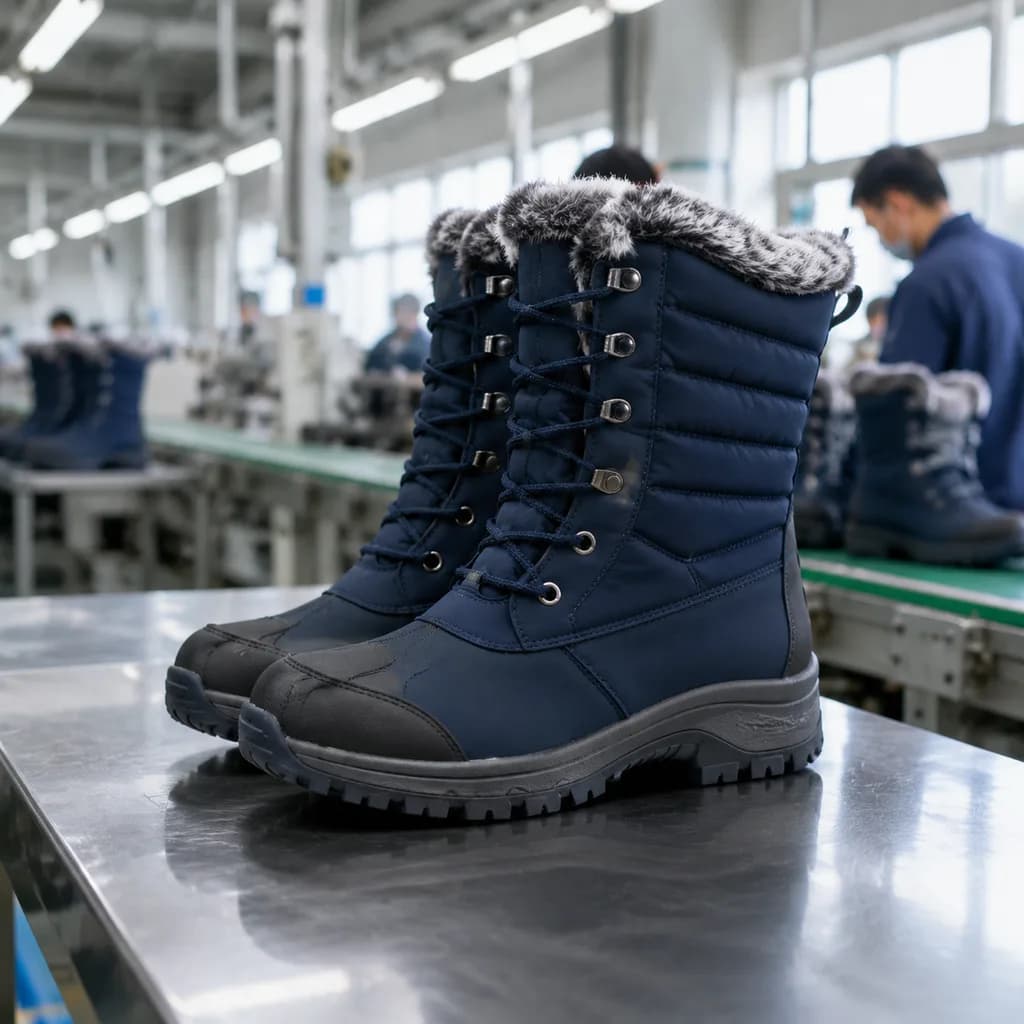
Define a textile-upper direction, fit reference, open construction choices, and approval basis before a snow boot project discussion.
A request for a textile upper can become unclear when one material label is expected to carry every product decision. The label may indicate a preferred direction, but it cannot by itself define fit, final construction, branding, or the basis for approval. A wholesale snow boot textile upper specification is more useful when those subjects are recorded separately before a buyer asks about a project.
The recommendations below are editorial guidance for the buyer preparing an inquiry. They organize what is known, what is being requested, and what still needs a project discussion. The material language cited here describes a material direction on SnowBootWorks' materials page; it does not select components or establish an outcome for a completed boot.
Give the Brief Three Separate Jobs
Start by separating the inquiry into product direction, material direction, and project decisions. This avoids treating a phrase such as waterproof textile snow boot upper as a complete instruction. For a buyer, that phrase can be a useful starting label, but the individual requirements inside it still need to be stated.
| Part of the brief | What the buyer records | Why it stays separate |
|---|---|---|
| Product direction | The intended silhouette, visual character, wearer, sizing system, and fit reference. | These notes explain what the proposed boot is meant to be. |
| Material direction | The textile terminology the buyer wants to discuss, including any stated fiber, finish, or backing preference. | Material terms identify a direction without settling the full product definition. |
| Project decisions | Construction choices, branding details, approval standards, and questions needing review. | These are the open items that should not be filled with assumptions. |
This structure also makes a custom snow boot material specification easier to review. A recipient can see which details are fixed, which are preferences, and which require a response before the brief develops further.
Establish Fit Before Naming Fabric
Fit belongs near the beginning because it gives the textile request a product context. On its products page, SnowBootWorks describes fit-led women's winter boot platforms spanning clean urban, quilted, and plush cold-weather directions. The same listing says to decide the target sizing system and fit reference first. That evidence applies to the described women's platform listing, not to every winter-footwear category.
For the buyer, the editorial recommendation is to record the following points before treating the upper as the main subject of the inquiry:
Product position. Describe the winter-boot direction in practical terms, such as the intended silhouette and visual character.
Target wearer and sizing system. Identify the size convention and the wearer represented by the fit reference.
Purpose of the fit reference. State what the reference is intended to help discuss, such as overall fit, internal volume, shaft feel, or another buyer-defined concern.
Priority order. Identify which known requirements should lead when material, visual, fit, branding, and approval preferences need to be considered together.
These notes do not need to resolve every product choice. Their purpose is to show how the buyer wants the textile upper to relate to the proposed boot, rather than presenting it as an isolated fabric request.
Record the Textile Language Precisely
The materials page uses the heading "Waterproof Textile Upper" and lists coated nylon upper, water-resistant fabric upper, and technical textile shell as related labels. Its description identifies a woven or laminated synthetic fabric upper. It says nylon or polyester is typical. Separately, it says the fabric is finished with a durable water-repellent, or DWR, coating. The page also says the upper is often backed by a waterproof membrane or laminate.
The same source characterizes this material direction as lightweight and flexible for everyday snow boots that need to stay supple in the cold. These are source-specific material descriptions. In a buyer brief, they are best used as controlled vocabulary and not converted into a selected construction or completed-boot requirement.
| Source wording | Editorial record for the buyer | Open point to preserve |
|---|---|---|
| Woven or laminated synthetic fabric upper | Identify the textile category to discuss. | The final fabric selection remains open. |
| Typically nylon or polyester | Record a fiber direction while retaining the word "typically." | Do not imply a final composition. |
| Durable water-repellent coating | List DWR as the finish named by the material source. | State separately whether a finish is being requested for the project. |
| Often backed by a waterproof membrane or laminate | Record backing as a question for discussion. | Neither a membrane nor a laminate should be presumed included. |
| Lightweight and flexible direction | Use this as a source-described material character to discuss. | Do not treat it as the buyer's finished-product approval standard. |
Keeping these entries distinct is important. Nylon or polyester is one source-described fiber direction. DWR is a separately named finish. A membrane or laminate is described as an often-used backing, so its conditional status should remain visible in the inquiry.
Keep Open Decisions Visible
A concise brief can be ready for a conversation while still containing unresolved choices. The editorial recommendation is to label those choices rather than make the material description appear more complete than it is. This gives the buyer a clearer basis for asking what information is needed next.
- Known product definition
- Record the product direction, target sizing system, fit reference, known branding requirements, and the role of any reference sample.
- Requested material direction
- Record the relevant textile terminology and distinguish stated preferences from confirmed selections.
- Questions for the project discussion
- List the construction choices, final material decisions, approval standards, and other requirements that still need to be addressed.
- Approval basis
- Describe the buyer's current review criteria or identify that the criteria remain to be supplied.
This division supports a readable snow boot development inquiry brief. It also prevents a buyer from presenting a pending decision as though it had already been agreed.
Use Reference Samples With Notes
The case-studies page summarizes one private-label waterproof winter boot program in which a brand brief moved from reference samples to an export-ready, branded production run. That excerpt describes one program. It should not be read as a required sequence or an expected result for every inquiry.
For a buyer, the editorial recommendation is to annotate a reference sample before sharing it. The notes can identify the specific aspects that matter to the new discussion:
Use the sample to point to a silhouette, textile appearance, fit point, upper feel, or branding placement the buyer wants reviewed.
State whether the sample is being used for visual direction, fit discussion, branding discussion, or several clearly identified purposes.
List the elements that are not being adopted as part of the new definition until they have been discussed.
Annotations make the sample an input to the conversation. They keep its useful reference value without turning it into an unexamined specification for a different project.
Frame the Quote Conversation as Questions
SnowBootWorks states on its capabilities page that it develops custom snow boots to the buyer's own specification, with construction, materials, and approval standards driving every decision. That stated approach supports sending a structured brief, while the applicability of development, sampling, quotation, or other options remains specific to the inquiry.
The buyer can raise the following questions when the current definition is ready:
Which development options may apply to the product direction and current textile-upper notes?
Which sampling options may apply once the fit reference and open construction choices have been reviewed?
Which material details need clarification beyond the woven or laminated synthetic-fabric direction?
Which construction decisions should be settled before the buyer requests a quotation discussion?
What approval standards or review criteria should the buyer provide with the brief?
Is export logistics a relevant topic for discussion at the current stage?
These are buyer questions, not statements about included services, timing, commercial terms, or production acceptance. The answers can then be used to revise the definition with details actually discussed for that project.
Send a Definition That Can Be Read
Before using the quote request page, review whether the inquiry separates the product position, fit reference, textile terminology, sample notes, known branding requirements, approval basis, and unresolved choices. Share the current winter-footwear definition and ask which development, sampling, or quotation options may apply. A wholesale snow boot textile upper specification is most useful when it gives the project conversation a clear starting point without assuming the decisions that conversation is meant to address.
Evidence layer
Evidence checklist: Before Development: Wholesale Snow Boot Textile Upper Specification
Material selection should connect performance to the commercial brief. Compare abrasion, flex, grip, weight, cold behavior, appearance, supply continuity, and cost together. An outsole compound or upper textile can look attractive in isolation and still be the wrong choice for the target climate, retail price, or repeat-order plan. Use the sample to record what changed and why. For this guide, map each supplier response to “Give the Brief Three Separate Jobs” so a claim is supported by a written specification, sample reference, controlled document, or a clearly marked open question.
When a substitute is proposed, ask which requirement it preserves and which requirement it changes. Keep the approved material reference, color standard, and component source in the same specification pack so the decision survives a handoff between development and production. Cross-check the response against “Establish Fit Before Naming Fabric” and keep every unresolved point visible in the approval record.
- Performance requirement and target environment — scoped to wholesale snow boot textile upper specification
- Cost, weight, appearance, and continuity — cross-checked against “Give the Brief Three Separate Jobs”
- Approved reference and substitution rules — with open risks from “Establish Fit Before Naming Fabric” recorded
Decision framework
Buyer checklist
- Separate product direction, material direction, and unresolved project decisions in the initial inquiry.
- Record nylon or polyester as typical source wording, record DWR as a separate finish, and keep membrane or laminate backing conditional.
- Annotate reference samples to identify what they should inform and what remains open for the new project.
- Ask which development, sampling, quotation, and export-logistics discussions may apply instead of presuming their availability.
Sources and verification
Evidence used for this guide.
Continue the specification