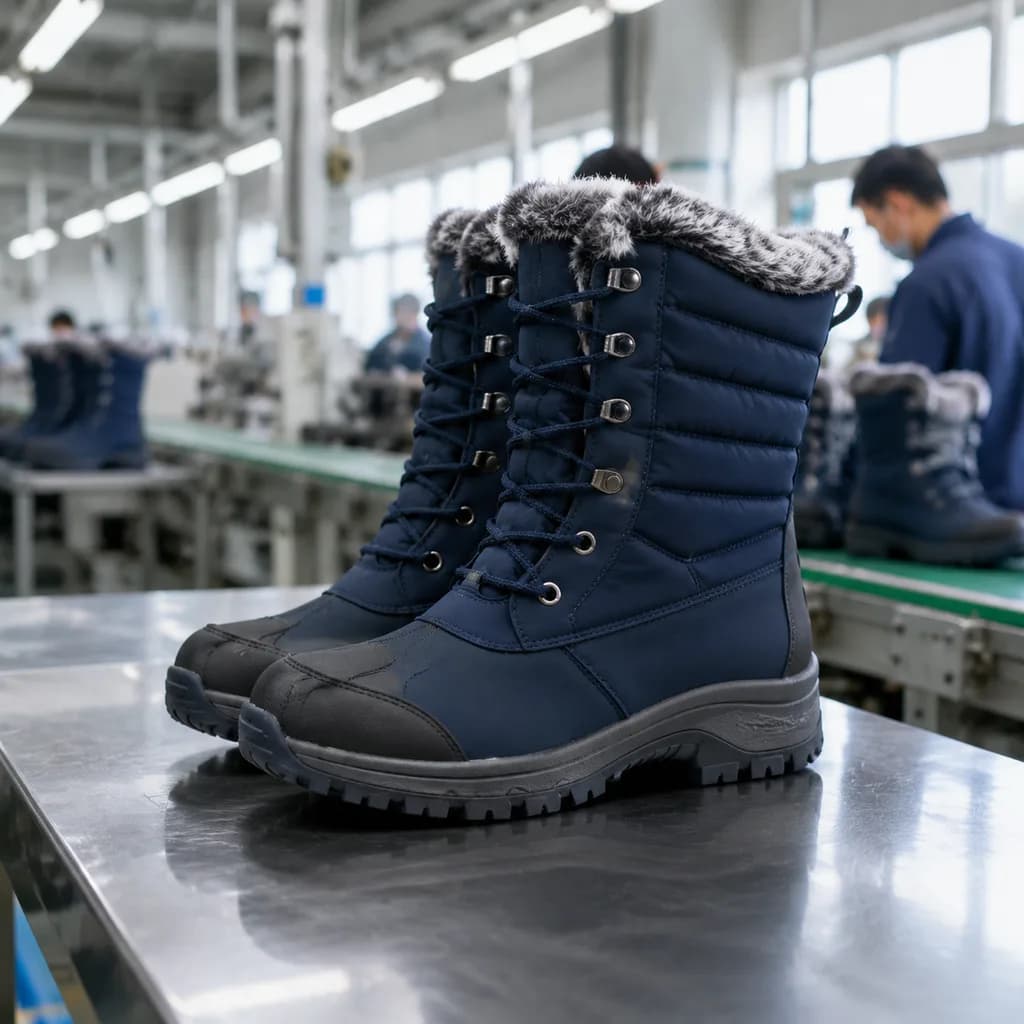
Turn a loose textile-upper direction into a clear material brief: shell, DWR finish, optional backing, fixed vs open fields, and an inquiry-ready winter boot definition.
A winter footwear request that only says “coated nylon” or “water-resistant fabric” still leaves most of the upper undefined. Fiber preference, woven versus laminated construction, finish wording, and any membrane or laminate intent may never appear on the page. Until those items are written down, the note is a direction, not a wholesale snow boot material specification.
On the SnowBootWorks materials page, related labels (coated nylon upper, water-resistant fabric upper, technical textile shell) sit under a waterproof textile upper direction. That direction is described as a woven or laminated synthetic fabric upper, typically nylon or polyester, finished with a durable water-repellent (DWR) coating and often backed by a waterproof membrane or laminate. “Typically” and “often” are scope limits for the brief. They are not silent defaults, and naming the direction does not create a finished-boot waterproof claim.
Does a coated-nylon note define the upper?
For procurement teams, almost never. The phrase can signal hand, weight class, or a familiar look. It does not settle whether the outer textile is woven or laminated, whether nylon or polyester is the intended fiber, or whether a membrane or laminate layer belongs in the stack you want to discuss.
Treat each of those choices as a field you fill, mark open, or escalate. A workable textile upper specification for snow boots lists decisions and unknowns side by side. It does not rely on one material nickname to carry the whole upper definition.
Keep the package on inputs. Finish wording, backing intent, and construction questions belong in the definition. Performance outcomes for a finished boot do not follow automatically from naming a textile family or a DWR coating.
Shell, finish, and backing as brief fields
Split the materials-page description into three buyer-controlled lines. That split is a writing method for a custom snow boot material brief. It is not a factory process map.
| Field | What the brief should capture | When to leave it open |
|---|---|---|
| Outer textile shell | Intended fabric direction: woven or laminated synthetic fabric when known; nylon or polyester when the fiber preference is already decided. The materials page presents nylon or polyester as typical, not universal. | When the reference only shows appearance and hand, and fiber or construction is still under review. |
| Water-related finish | Whether a durable water-repellent (DWR) coating is part of the requested material direction. Keep finish language separate from any broader product expectation. | When the team wants a technical textile look but has not agreed finish wording or review criteria. |
| Membrane or laminate backing | Name a waterproof membrane or laminate backing only when it is intended for the construction. The materials page describes that backing as often present, not always present. | When backing is required, under review, or outside the current definition, and that status is written down. |
Equal detail is not required on day one. A brief that says “backing under review” is clearer than one that implies a layer nobody has approved.
Fixed requirement, open discussion, or approval gate?
On its capabilities page, SnowBootWorks states that it develops custom snow boots to the buyer’s own specification, with construction, materials, and approval standards driving every decision. That language frames OEM decision drivers. It does not, by itself, document sampling stages, quotation menus, or commercial options.
Use those three drivers as status tags on each brief field so product, sourcing, and brand teams share one record. The tags organize the buyer’s definition. They are not SnowBootWorks service levels.
- Defined requirement
- A choice the buyer can already communicate clearly: for example a selected upper direction, a named DWR request, or another material detail the product team has locked.
- Development discussion
- An intended result without a settled material route: woven versus laminated construction, whether a backing belongs in the stack, or how closely a proposed textile should track a reference surface.
- Approval point
- An item that needs a named internal decision and the information that decision requires (material description, swatch, reference photo, or construction note).
Apply the tags per component. Color can be fixed while backing stays open and surface approval sits with a different owner.
What a reference sample can and cannot settle
A reference pair can set silhouette, panel map, color block, stitch placement, hardware position, and surface character. It rarely states fiber content, finish chemistry language, backing presence, or who must sign off.
The SnowBootWorks case-studies page includes a private-label waterproof winter boot program overview that shows how a brand brief can move from reference samples to an export-ready branded production run. That line is a program description for that overview. It does not mean every project inherits a complete material specification from a sample alone, and it does not invent a named customer, timeline, or inspection checklist.
- Use the sample to anchor
- Visible direction the team wants to discuss: shape, layout, blocking, hardware placement, and general upper character.
- State separately in writing
- Textile family, DWR intent, membrane or laminate position if any, and approval requirements. Do not treat resemblance as a settled material instruction.
Write “match the visible upper texture” as an observation. Put shell, finish, and backing on their own lines when those decisions exist. Mixing the two is a common way visual direction gets misread as a full material callout.
What to include before an OEM winter boot sampling inquiry
You do not need every unknown closed before contact. You do need a package that shows what is fixed, what is open, and what the buyer must still approve. Organize that package before using the request-a-quote page.
- Boot category and current upper direction, with reference material only where it clarifies the visual target.
- Shell details already decided: woven or laminated direction, and any nylon or polyester preference already locked.
- DWR status: requested, under discussion, or not yet defined.
- Membrane or laminate backing: required, under review, or outside the current definition.
- Reference notes that separate visible observations from requested material requirements.
- Buyer approval requirements and the internal role for each open decision.
- A single ask: which development, sampling, or quotation options may apply to this project definition.
Share the current winter footwear definition (what is fixed and what still needs discussion) and ask which development, sampling, or quotation options may apply. That keeps the conversation on the material brief you actually have, without treating every commercial topic as a documented service line.
Evidence layer
Evidence checklist: What to Lock in a Wholesale Snow Boot Material Specification
A product category page is a starting point, not an assortment plan. Decide which customer, climate, price band, and selling channel each direction serves. Then compare shaft height, warmth, waterproofing, outsole behavior, color architecture, size coverage, and packaging as a group. A range with fewer clearly differentiated roles is easier to brief, sample, and explain than a long list of near-duplicates. For this guide, map each supplier response to “Does a coated-nylon note define the upper?” so a claim is supported by a written specification, sample reference, controlled document, or a clearly marked open question.
Document the role of every style in the seasonal plan: traffic builder, core repeat, premium option, kids or family extension, or workwear solution. This makes later decisions about size ratios, colorways, and replenishment more explicit. Cross-check the response against “Shell, finish, and backing as brief fields” and keep every unresolved point visible in the approval record.
- One clear role for each style — scoped to wholesale snow boot material specification
- Size, color, and channel assumptions — cross-checked against “Does a coated-nylon note define the upper?”
- Range gaps and avoidable duplication — with open risks from “Shell, finish, and backing as brief fields” recorded
Decision framework
Buyer checklist
- Treat waterproof textile upper as a materials-page direction that still needs separate shell, DWR, and often-backing decisions in the buyer brief.
- Tag each field as a defined requirement, development discussion, or approval point without treating those tags as factory service levels.
- Use a reference sample for visible direction, and write material and approval details that the sample does not state.
Sources and verification
Evidence used for this guide.
Continue the specification