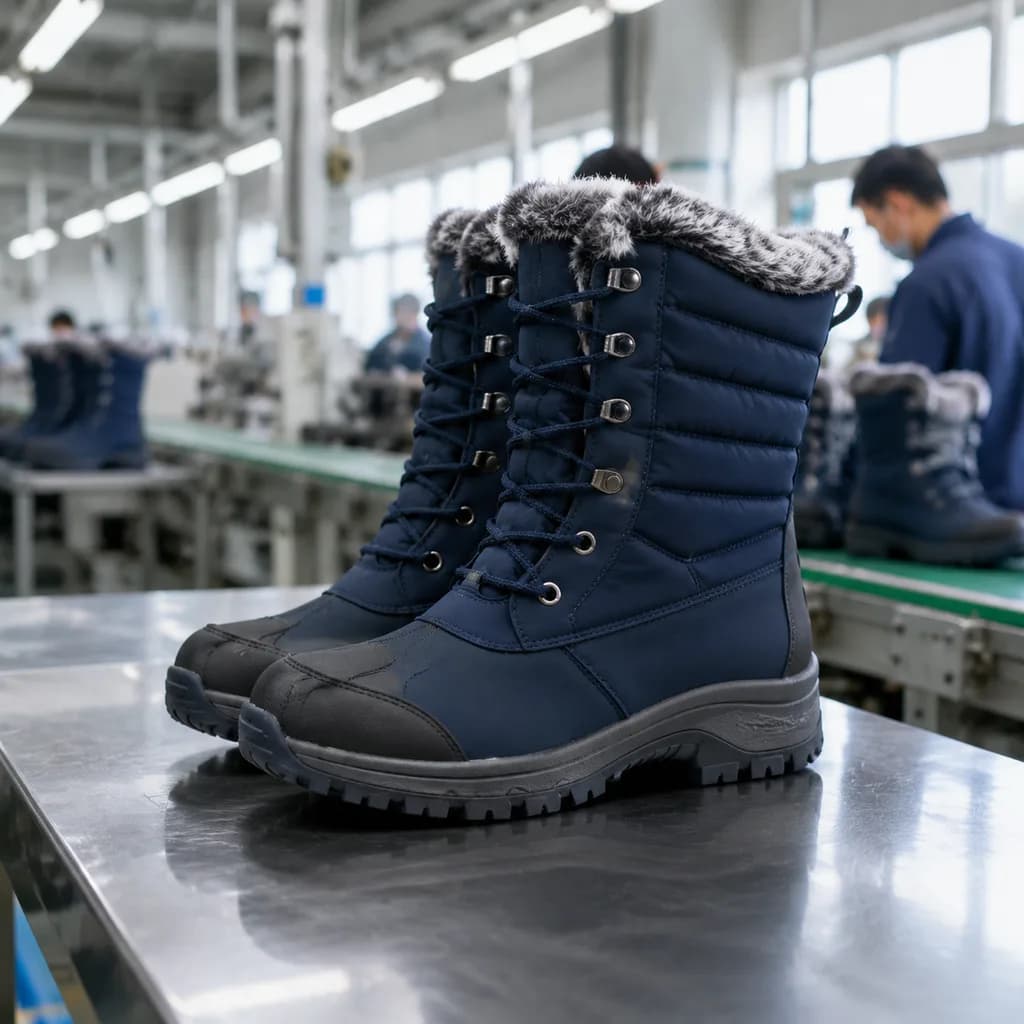
Organize a custom snow boot inquiry around the target sizing system, identifiable fit reference, separate product direction, and open project questions.
A winter footwear definition can describe the intended appearance, upper material, and construction direction without answering a basic fit question: what should the proposed boot fit against? Without a named sizing system and an identifiable reference, the phrase custom snow boot fit remains open to interpretation.
SnowBootWorks tells buyers in the specific context of women's retail and private-label winter collections to decide the target sizing system and fit reference first. The editorial recommendation in this guide is to record those inputs in a compact fit-reference pack before submitting the wider inquiry.
The available SnowBootWorks information does not specify measurement methods, size-conversion rules, grading procedures, fit-test protocols, tolerances, physical-reference handling, or available service levels. Those subjects therefore remain inquiry questions rather than assumed parts of the manufacturer's process.
Start with two named inputs
The first page of the pack can identify the target sizing system and the fit reference. This keeps the central fit decisions visible instead of burying them among styling notes, photographs, and material selections.
- Target sizing system
The sizing framework the buyer intends to use. If it has not been selected, mark the decision as open.
- Fit reference
The item or internal reference that provides the intended comparison point. Give it a clear name or identifier.
These entries form a starting point for discussion. They do not establish conversion tables, grading rules, measurements, or tolerances. Any such requirements supplied from the buyer's own controlled specification can be attached separately; otherwise, they belong on the question list.
Make the reference identifiable
A useful reference entry lets the recipient distinguish the relevant item from other footwear, images, and files in the project. As an editorial recommendation, record the reference name or internal identifier, the relevant size, and the reason it has been included.
| Recommended reference entry | Wording that needs clarification |
|---|---|
| Identify the footwear item or internal reference and its relevant size. | “Use our current boot.” |
| State whether the item is being supplied as a fit, styling, construction, or material reference. | “Follow the reference” without naming the feature to follow. |
| Describe what is intended to remain aligned with the reference. | “Keep it similar.” |
| List any desired difference as a point for discussion. | “Make it roomier” without identifying the comparison point. |
| Label photographs and files with the same reference identifier. | Unlabeled files collected from several products. |
Terms such as “close,” “roomy,” or “generous” may express the buyer's intended direction, but they are not technical definitions in the supplied sources. Connect each term to the named reference and identify its interpretation as an open issue.
If a physical item may be relevant, ask whether it can be submitted and how assessment, storage, and return would be handled. SnowBootWorks' available information does not confirm those arrangements.
State the sizing decision plainly
A snow boot sizing specification should not depend on the recipient inferring a system from the buyer's location, sales market, or reference photographs. The recommended entry is a direct statement of the intended sizing system or a clear notice that the choice is unresolved.
For editorial purposes, the sizing section can use three short fields:
- Status: selected, under review, or undecided.
- Intended system: name the system under consideration when one has been identified.
- Questions: record any conversion, labeling, or market issues that require discussion.
Do not fill gaps with assumed size equivalences, numeric allowances, measurement points, or grading instructions. Include those details only when they come from an established buyer requirement or have been separately confirmed for the project.
Keep product direction apart from fit
SnowBootWorks lists clean urban, quilted, and plush cold-weather directions for its fit-led women's winter boot platforms. That wording applies to the stated context of women's retail and private-label winter collections. It does not establish a sizing system or define how a boot fits.
The fit-reference pack can therefore separate two kinds of information:
| Brief area | Recommended content |
|---|---|
| Product direction | Record the category, collection context, appearance, construction direction, and materials being considered. |
| Fit direction | Record the target sizing system, identifiable reference, intended relationship to that reference, and unresolved fit questions. |
If one of the women's platform directions is relevant, retain its exact role as product-direction language. Add the sizing and fit-reference entries independently. This prevents a styling term from being asked to communicate a fit requirement that it does not contain.
Place fit inside the wider specification
SnowBootWorks states that it develops custom snow boots to the buyer's own specification. Its capabilities page also states that construction, materials, and approval standards drive decisions.
As an editorial recommendation, a winter footwear product brief can give construction, materials, sizing, fit references, branding, and any applicable approval standards separate entries. This is a way to organize the buyer's information, not a list of confirmed SnowBootWorks procedures.
References should also have defined roles. A photograph might communicate a visual preference, while a named footwear item might provide the fit comparison. Labeling those purposes prevents one reference from being treated as the instruction for every aspect of the proposed product.
The same structure can distinguish settled requirements from preferences and questions. A chosen sizing system can be recorded as a requirement. A desired relationship to the reference can be marked as a preference requiring discussion. The applicable development approach can remain an inquiry question.
Record materials without assigning fit results
Material language belongs in the specification, but it does not replace the fit reference. SnowBootWorks describes its waterproof textile upper direction as a woven or laminated synthetic fabric upper. The fabric is typically nylon or polyester.
The material description states that the upper has a durable water-repellent coating. It also says the upper is often backed by a waterproof membrane or laminate. SnowBootWorks characterizes this direction as lightweight and flexible for everyday snow boots that need to stay supple in the cold.
When this direction is relevant, place it in the material section of the inquiry. Record the sizing system and fit relationship elsewhere. The material description does not provide a grading rule, internal-volume requirement, or finished-boot waterproof result.
| Entry | Purpose |
|---|---|
| Material direction | Name the upper or other materials being considered and flag undecided selections. |
| Fit direction | Name the sizing system and reference, then describe the relationship to be discussed. |
| Project questions | Ask how the submitted construction and material choices may be considered within the proposed definition. |
Check the pack before inquiry
A concise fit-reference pack does not need to answer technical questions that have not yet been discussed. It needs to show which inputs are settled, which reference controls each part of the brief, and which decisions remain open.
- Winter footwear definition: identify the product category, intended context, and current direction.
- Wearer or collection context: state the range or audience covered by the definition.
- Target sizing system: name the intended system or mark it as unresolved.
- Fit reference: provide an identifiable item or internal reference and its relevant size.
- Reference purpose: state whether each reference concerns fit, appearance, construction, materials, or another specified feature.
- Desired fit direction: record what should remain aligned and what the buyer wants to reconsider.
- Construction and materials: keep these selections separate from the fit instruction.
- Approval standards: include any applicable standards or mark the subject for clarification.
- Open questions: collect unresolved technical, handling, timing, and commercial topics in one visible section.
The product range, capabilities overview, and materials information can help frame the inquiry. The brief should still state the relevant direction directly rather than relying on a link as the sole instruction.
Ask what applies to the project
Before submission, confirm that the pack names the sizing framework, identifies the fit reference, separates product and material direction from fit, and exposes unresolved decisions. Then list the project-specific questions that require a response.
Possible inquiry topics include measurement submission, fit assessment, physical-reference handling, size conversion, grading, testing, tolerances, timing, minimum order quantities, and commercial terms. Listing these topics does not mean that a particular method, service, or term is available.
Share the current winter footwear definition through the project inquiry. Include the target sizing system or mark it as open, identify the intended fit reference, and ask which development, sampling, or quotation options may apply to the submitted project.
Evidence layer
Evidence checklist: Custom Snow Boot Fit Reference Pack
A product category page is a starting point, not an assortment plan. Decide which customer, climate, price band, and selling channel each direction serves. Then compare shaft height, warmth, waterproofing, outsole behavior, color architecture, size coverage, and packaging as a group. A range with fewer clearly differentiated roles is easier to brief, sample, and explain than a long list of near-duplicates. For this guide, map each supplier response to “Start with two named inputs” so a claim is supported by a written specification, sample reference, controlled document, or a clearly marked open question.
Document the role of every style in the seasonal plan: traffic builder, core repeat, premium option, kids or family extension, or workwear solution. This makes later decisions about size ratios, colorways, and replenishment more explicit. Cross-check the response against “Make the reference identifiable” and keep every unresolved point visible in the approval record.
- One clear role for each style — scoped to custom snow boot fit
- Size, color, and channel assumptions — cross-checked against “Start with two named inputs”
- Range gaps and avoidable duplication — with open risks from “Make the reference identifiable” recorded
Decision framework
Buyer checklist
- The recommended fit-reference pack names the intended sizing system or marks that decision as unresolved.
- An identifiable fit reference includes a clear item or internal identifier, its relevant size, and the purpose for which it is being supplied.
- Clean urban, quilted, and plush cold-weather remain product directions within SnowBootWorks' stated women's platform context; they are not fit definitions.
- Construction, material, product-direction, and fit information occupy separate entries in the recommended buyer brief.
- Measurement methods, grading, testing, physical-reference handling, service levels, and commercial terms remain questions for the project inquiry.
- The buyer can ask which development, sampling, or quotation options may apply without assuming that any option is available or guaranteed.
Sources and verification
Evidence used for this guide.
Continue the specification