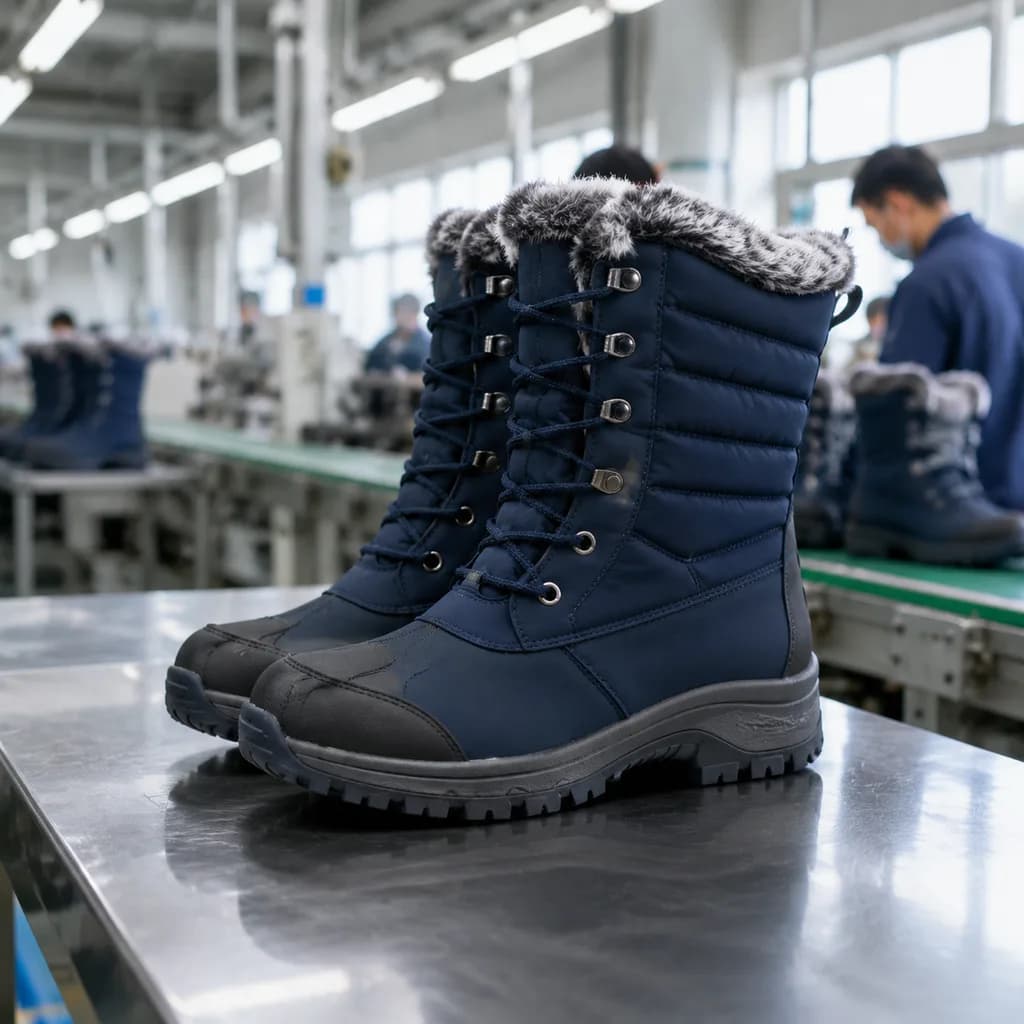
Build a sizing system brief with a women's custom snow boots fit reference so OEM and private-label samples, grades, and quotes stay comparable.
RFQs that skip size labels and wear standards produce samples no two teams can score the same way. A sizing system brief that freezes a women's custom snow boots fit reference before construction or material talks is the control that keeps platforms, grades, and wear comments comparable across suppliers and rounds. On the women's path in the product catalog, fit-led snow boot platforms for women's retail and private-label winter collections start with a buyer decision on target sizing system and fit reference rather than with style or insulation chatter.
That order is a procurement choice, not a factory process map. The sections below walk the decisions that belong in the brief first, then show how OEM specification work and a private-label waterproof path become cleaner once those inputs are buyer-owned.
Why women's custom snow boot quotes stall without a fit lock
Women's winter footwear sits in channels that already argue about last volume, shaft height, and how a boot should feel on first wear. When two suppliers grade to different size labels, or when sample feedback uses vague phrases like "runs small," cost sheets stop being apples-to-apples. Reorders amplify the problem: a later round cannot be judged against an earlier one if nobody recorded the fit standard the first samples were meant to meet.
Catalog language for women's programs points buyers at fit-led platforms spanning clean urban, quilted, and plush cold-weather directions, and it pairs that range with a clear cue: decide first on target sizing system and fit reference for women's retail and private-label winter collections. Treat that cue as a hard gate before you ask for development, sampling, or quotation detail. Without it, every later discussion of sole unit, shaft, or upper becomes a renegotiation of wear rather than a controlled build against a shared reference.
Sizing system versus fit reference: two decisions, one brief line
Buyers often collapse these into one line item called "size run." They are different controls and should appear as separate fields in the brief.
| Decision | What you freeze | Why it matters before quotes |
|---|---|---|
| Target sizing system | How sizes are labeled and graded for the selling channel (for example regional size tables and grade rules your retail or wholesale partners already use) | Suppliers quote and sample against the same size map, so grade jumps and size assortment can be compared |
| Fit reference | The wear and entry standard samples will be judged against (how the boot should seat, flex, and close for the intended wearer profile) | Approval comments stay tied to one standard instead of drifting with each sample round or factory last |
Write both on one brief line if space is tight, but keep the meanings separate. The sizing system is the commercial language of the assortment. The fit reference is the wear language of the sample room. A custom snow boots sizing system without a fit reference still leaves wear feedback free-floating. A fit reference without a sizing system still leaves grade and size-run quotes hard to align.
What a women's platform brief must state before materials talk
Before anyone debates coated nylon versus a technical shell, the brief for a women's platform should already answer a short set of fit-led questions. Use the catalog framing as scope, not as a style menu you must fill completely: platforms may lean clean urban, quilted, or plush cold-weather, and the buyer still owns which direction is in scope for this program.
- Channel intent: women's retail, private-label winter collection, or both for this SKU family.
- Target sizing system: size table, grade rules, and any half-size or width policy the channel expects.
- Fit reference: the wear/entry standard that will govern sample approval language.
- Platform direction only at the level needed to keep lasts and shaft talk honest (urban, quilted, or plush cold-weather intent), without pretending materials are already locked.
- What is explicitly out of scope for the first sample cycle so suppliers do not invent parallel options.
Construction and materials become comparable only after that lock. Two waterproof upper quotes mean little if one sample was built to a narrow last and another to a roomier retail fit with no shared reference. As an editorial recommendation for the buyer, keep materials notes as optional annexes until sizing and fit are frozen; otherwise the annex drives the brief instead of supporting it.
How a locked fit reference supports OEM specification work
OEM manufacturing for custom snow boots is described as development to the buyer's own specification, with construction, materials, and approval standards driving every decision. That model only works cleanly when the buyer actually owns those inputs. Fit is one of them. Once sizing system and fit reference sit in the brief as buyer-controlled fields, approval standards can reference them directly instead of inventing new wear language mid-round.
A practical OEM sequence after the fit lock looks like this:
- Confirm the brief carries target sizing system, fit reference, and women's channel intent as non-negotiable inputs.
- Map construction and materials choices to those inputs so last, shaft, and closure talk stay subordinate to the wear standard.
- Write approval standards that cite the fit reference in plain language (entry feel, seating, flex points the team will check) rather than only listing materials callouts.
- Only then invite development, sampling, or quotation discussion against that controlled package.
Nothing in that sequence requires inventing a factory-owned size lab. It requires the buyer to stop treating fit as a late sample surprise. Capability language on OEM manufacturing centers specification ownership; use it that way.
Where waterproof textile uppers enter after fit is fixed
Waterproof textile upper choices belong after fit is fixed, not instead of it. Materials documentation describes coated nylon uppers, water-resistant fabric uppers, and technical textile shells: woven or laminated synthetic fabric (typically nylon or polyester), finished with a durable water-repellent (DWR) coating and often backed by a waterproof membrane or laminate. That direction is framed as the lightweight, flexible path for everyday snow boots that need to stay supple in the cold.
For a women's program, the order of work is still fit first. A flexible textile shell can change how a boot flexes and how volume feels in wear, so choosing the shell before the fit reference invites another round of "does this run small?" comments that are really materials interactions, not size-table errors. After the women's custom snow boots fit reference is set, textile upper options can be compared for hand, cold flexibility, and how they support the already-agreed wear standard. See the materials detail for the upper descriptions above; keep them as a materials layer, not as a substitute for sizing system and fit decisions.
Private-label path: reference samples to export-ready unit
Private-label work for women's private label winter boots benefits from the same pre-quote discipline. A published program overview describes a private label waterproof winter boot path in which a brand brief moves from reference samples to an export-ready, branded production run. That overview is a process sketch, not a measured case outcome and not a promise of volumes or timelines.
What the overview does make useful is the role of the brand brief. If the brief already carries sizing system and fit reference, reference samples have a standard to meet, and later branded production has a documented wear baseline instead of tribal knowledge. If the brief only carries logo, color, and a vague "women's winter boot" note, reference samples become style explorations and export readiness is delayed by fit arguments that should have been closed before tooling and labeling talk.
Keep the private-label waterproof program in its documented scope: brand brief, reference samples, export-ready branded run. Pair it with the women's catalog cue to decide sizing and fit first. Together they describe a cleaner handoff, not a guaranteed assortment strategy. Review the program overview for that path language, then bring your own fit fields into the brief before you request next steps.
Buyer checklist before sampling or quotation
Use this short list before you open a sampling or quotation conversation. It is editorial procurement practice, not a published service menu.
- Women's channel intent stated (retail, private-label winter collection, or both for this family).
- Target sizing system named, including grade rules the channel expects.
- Fit reference written so sample approval can cite it without new interpretation each round.
- Platform direction limited to what the first cycle needs (urban, quilted, or plush cold-weather intent as applicable).
- Construction and materials notes held as secondary until the three items above are locked.
- If waterproof textile uppers are in play, list coated nylon, water-resistant fabric, or technical textile shell options only after fit is fixed.
- OEM path: confirm construction, materials, and approval standards will be buyer-driven against that brief.
- Private-label path: confirm the brand brief is ready to move from reference samples toward an export-ready branded unit once fit is stable.
When those fields are filled, share the current winter footwear definition with the manufacturing team and ask which development, sampling, or quotation options may apply to the project. That question keeps commercial detail project-specific instead of treating any single page as a universal price or MOQ card. Start from the request a quote path once the fit gate is honest.
Most private-label and OEM delays on women's winter footwear start as brief gaps, not factory gaps. Put the women's custom snow boots fit reference and the target sizing system on the first page of the brief, then let construction, textile uppers, and branded production talk earn their place once those fields are stable.
Evidence layer
Evidence checklist: Sizing System Brief for Women's Custom Snow Boots Fit Reference
OEM, ODM, and private label are not just marketing labels. The practical difference is who owns the starting design, how much the construction changes, and which decisions must be approved before bulk production. Put the decision in writing: reference style, required changes, branding locations, packaging scope, tooling assumptions, and the point at which a sample becomes the production reference. For this guide, map each supplier response to “Why women's custom snow boot quotes stall without a fit lock” so a claim is supported by a written specification, sample reference, controlled document, or a clearly marked open question.
A strong brief also records what is out of scope. That prevents a fast sample discussion from silently becoming a new mold, a new size run, or a new compliance requirement. Use the same approval language in the quote, sample comments, and purchase documentation. Cross-check the response against “Sizing system versus fit reference: two decisions, one brief line” and keep every unresolved point visible in the approval record.
- Design ownership and permitted adaptations — scoped to women's custom snow boots fit reference
- Branding, packaging, and tooling boundaries — cross-checked against “Why women's custom snow boot quotes stall without a fit lock”
- Sample approval gates before bulk commitment — with open risks from “Sizing system versus fit reference: two decisions, one brief line” recorded
Decision framework
Buyer checklist
- Freeze target sizing system and fit reference before RFQs so women's samples and quotes stay comparable.
- Treat sizing system (channel labels and grades) and fit reference (wear/entry standard) as separate brief fields.
- Hold waterproof textile upper and other materials choices until after the fit lock.
- Use buyer-owned fit inputs so OEM construction, materials, and approval standards can run against a stable brief.
- For private-label waterproof paths, put fit into the brand brief before reference-sample rounds.
Sources and verification
Evidence used for this guide.
Continue the specification
Move from research to a controlled brief.
Frequently asked questions
Questions buyers ask next
What should appear first on a women's custom snow boot brief?
Channel intent for women's retail or private-label winter collections, the target sizing system, and a written fit reference samples will be judged against. Construction and materials notes come after those fields are locked.
How is a sizing system different from a fit reference?
The sizing system is how sizes are labeled and graded for the selling channel. The fit reference is the wear and entry standard used to approve samples. Both belong in the brief; neither replaces the other.
When should waterproof textile uppers be specified?
After sizing system and fit reference are fixed. Textile shells affect flex and volume feel, so choosing them first often reopens fit debates that should already be closed.