This guide is written for product teams, importers, wholesalers, and brand operators. Use it to structure supplier conversations and document decisions before samples or bulk production move forward.
Start with a defined last and fitting protocol
Record last code, sample size, target foot, fitting sock, internal length, width, instep, heel hold, toe room, entry, and closure position. Lining and insulation must be final enough to represent internal volume. Approving only outsole length or a generic size label does not prove fit. Keep notes from more than one suitable tester where possible.
Grade the whole three-dimensional boot
Length increments are only one part of grading. Width, girth, instep, opening, shaft height, collar, gusset, tongue, closure range, logo position, and pattern proportions may need controlled changes. Kids’ ranges can require different rules by age band. Tall and heavily lined boots deserve special attention at the smallest and largest sizes.
Confirm component coverage across every size
Check that lasts, outsoles, footbeds, protective components, zippers, labels, and packaging cover the full run. Some components may group sizes, while others are individual. Review size markings on the boot, box, sticker, and carton and align regional conversions with the buyer’s system. Do not rely on one automatic conversion table for every last.
Use edge-size and production checks
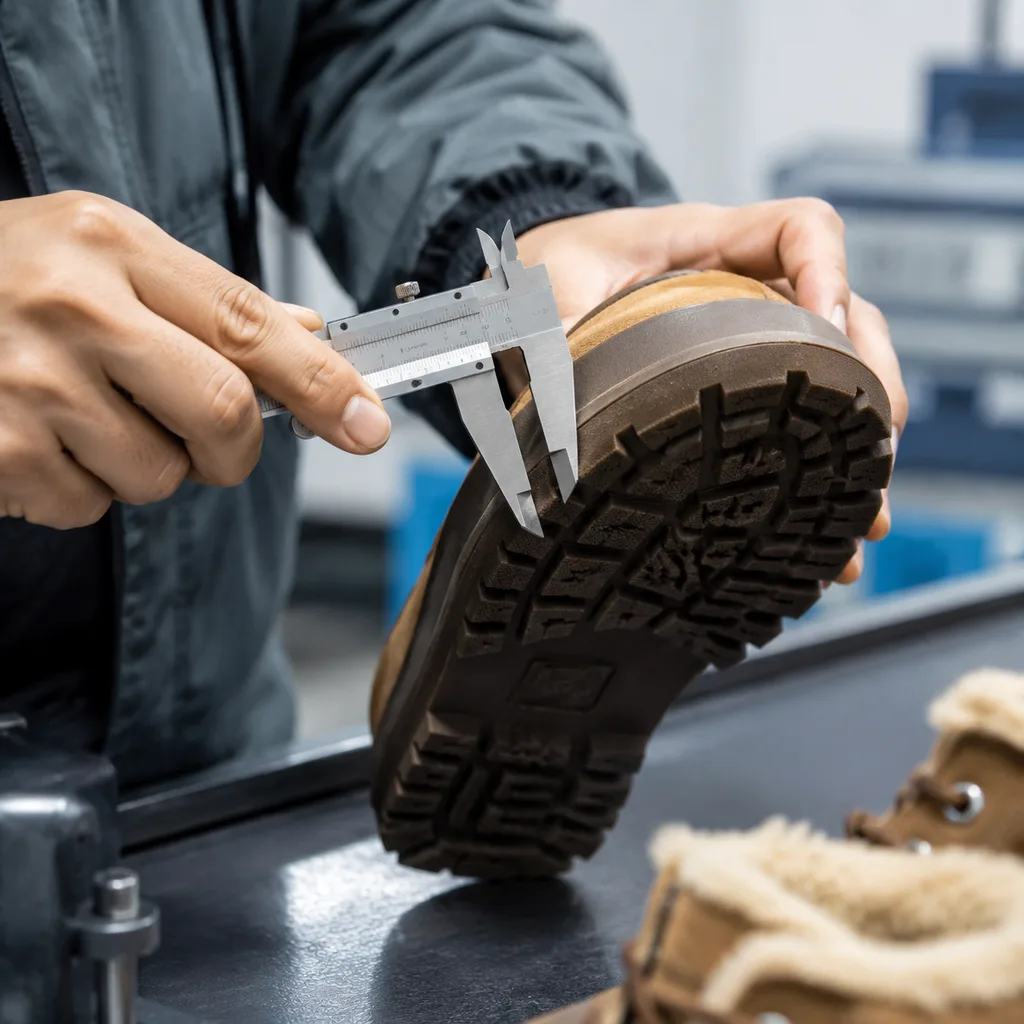
Request samples or at least measurement confirmation at strategic small, middle, and large sizes. During bulk, measure a risk-based spread across sizes and compare to approved tolerances. Keep measurement method consistent because soft uppers and thick linings can be difficult to read. Connect size ratios and carton packs to the final graded range.
Decision framework
Buyer checklist
- Define last, fitting sock, and measurement method
- Grade girths, openings, shafts, and closures
- Verify every component covers the full size run
- Review regional labels and conversions
- Inspect strategic edge sizes in production
Continue the specification
Move from research to a controlled brief.
Frequently asked questions
Questions buyers ask next
Can one snow boot sample size approve the full size run?
It can approve the design direction, but grading should be checked through measurements and strategic edge-size review because fit and proportions can change across the run.
Why do lined boots fit differently?
Lining and insulation occupy internal volume and may compress over time. Fit approval must use the final lining construction and intended socks.