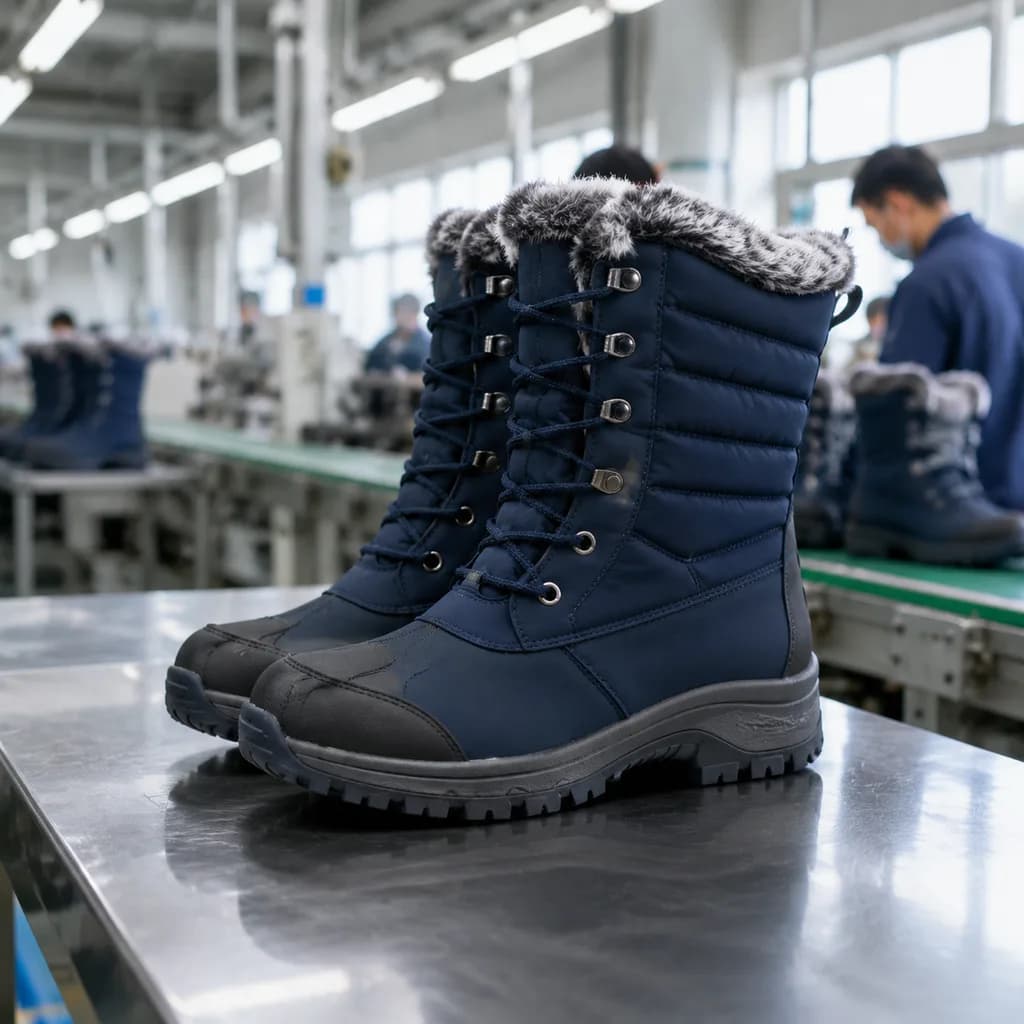
Build a private label snow boot sample brief with product direction, fit references, approval criteria, and clear project questions.
A reference image can establish a starting direction for a snow boot, but it cannot settle every development decision. It may show a silhouette or visible finish while leaving fit, construction priorities, branding details, and approval expectations unstated. A private label snow boot sample brief gives the buying team one place to distinguish what has been decided from what still needs discussion.
The structure below is an editorial recommendation for the buyer's own project preparation and sample review. It is a way to organize the buyer's definition, not a standard SnowBootWorks workflow or a statement that particular project options will apply.
Does the Reference Set a Requirement?
References are most useful when their role is clear. Some assets establish a requirement. Others communicate a direction without resolving the underlying specification. A third group exists to surface questions the team has not yet answered.
| Reference status | Meaning in the brief | What reviewers use it for |
|---|---|---|
| Confirmed requirement | The buyer has made a current decision and identifies the controlling asset or note. | Check whether the sample represents that stated decision. |
| Review priority | The reference establishes a feature that matters, but it is not the only factor in the decision. | Discuss the feature against the buyer's stated priorities. |
| Open project question | The reference exposes a choice that has not been settled. | Keep the question visible for project discussion rather than treating it as approved. |
This distinction prevents a photo, mood board, or earlier comment from acquiring more authority than the buyer intended. It also gives a reviewer a reason for each comment: confirm a requirement, assess a priority, or identify an unanswered question.
Product Direction Is the First Decision
SnowBootWorks' industry material presents winter footwear programs for outdoor retail brands around comfort, weather protection, and shelf appeal. That framing can help a buyer describe the product's intended role before the brief moves into individual materials or visible details.
Start the brief with a compact definition of the product direction. The goal is not to predict every component. It is to give design, merchandising, and review teams a shared basis for deciding which references matter most.
- Wearer and collection context
- State the intended wearer and the collection or retail context the team is working within.
- Product role
- Describe the boot's intended role in the buyer's range in plain language.
- Silhouette direction
- Identify the profile, shaft direction, visual volume, and reference assets that guide the intended appearance.
- Visual priorities
- List the limited set of appearance cues that need focused review rather than giving every image detail equal weight.
For example, a hypothetical brief may treat a high-volume shaft profile as a visual priority while leaving the construction direction open for project discussion. That is more useful than presenting both points as settled requirements.
Construction Priorities Need a Clear Rank
SnowBootWorks' capabilities page states that custom snow boots can be developed to a buyer's own specification. It also states that construction, materials, and approval standards drive every decision.
In a snow boot product development brief, record the buyer's current decisions in those areas, then separate them from preferences and unresolved questions. The brief should show what takes precedence when internal comments point in different directions.
- Construction direction
- Describe the direction the buyer wants to discuss and mark it as a requirement, priority, or open question.
- Material priorities
- Name the material areas the buyer considers important, such as the upper, lining, insulation, or outsole. Keep a named requirement separate from a visual or tactile preference.
- Decision priority
- State which buyer concern should guide review when appearance, fit, intended use, or another recorded consideration conflicts.
- Unresolved point
- Write the question plainly. An unanswered material or construction choice should remain a question rather than be presented as a confirmed specification.
A clear rank makes later feedback easier to interpret. It tells the team whether a comment is asking to protect a requirement, reconsider a preference, or obtain an answer before making a decision.
Fit Feedback Has a Baseline
The SnowBootWorks product catalog identifies fit-led women's winter boot platforms. For women's retail and private-label winter collections, it directs buyers to decide the target sizing system and fit reference first, then review the product brief.
For private label winter boot sampling, establish that comparison point before feedback starts. The source supplies the order of those decisions; the following review fields are editorial guidance for the buyer's team.
- Record the target sizing system used for the project definition.
- Name the fit reference, or state the team's internal fit expectation where that is the available baseline.
- Associate feedback with a review size when the team needs that detail to interpret a comment.
- Assign one internal owner to consolidate fit observations against the stated baseline.
With a named baseline, terms such as short, narrow, or loose can be tied to the buyer's reference instead of becoming unsupported standalone comments. The brief can then preserve both the observation and the point of comparison used to make it.
Where Branding Needs a Source
SnowBootWorks' case-studies page describes a private-label waterproof winter boot program. In the program described there, a brand brief moves from reference samples to an export-ready, branded production run.
For a buyer's own review record, each visible identity detail needs a named source and a decision about what reviewers should assess. An approved artwork file alone does not establish every placement, orientation, or appearance choice.
- Identify the artwork file or approved reference associated with each visible brand element.
- Record the intended location and orientation of the element.
- List other appearance points that need review, such as panel lines, trim placement, stitch treatment, or hardware appearance.
- Mark whether each detail is confirmed, directional, or still open for discussion.
This creates a reviewable link between a visible feature and the buyer's current instruction. It also keeps visual preferences from being confused with requirements that the buyer has explicitly confirmed.
Approval Criteria and Usable Comments
In this article, custom snow boot approval standards means the buyer's written criteria for deciding how a sample should be reviewed. Each criterion should connect an observation with a decision, rather than simply collecting general reactions.
| Review area | What the brief should identify | Decision to record |
|---|---|---|
| Product direction | The controlling references and visual priorities. | Whether the intended direction is accepted, changed, or left open. |
| Fit | The sizing system and named fit reference. | Feedback stated against that comparison point. |
| Construction and materials | Requirements, ranked priorities, and unanswered questions. | Whether the buyer's direction is confirmed or needs discussion. |
| Visible details | Artwork sources, locations, and appearance points for review. | Whether each recorded detail is represented as intended. |
Keep one feedback owner responsible for combining internal product, brand, and commercial comments before they are shared. The purpose is not to eliminate disagreement. It is to ensure that a change request, an approval, and an open question remain distinct outcomes.
The Brief and the Inquiry Have Different Jobs
A completed private label snow boot sample brief records the decisions the buyer can make now. A project inquiry carries that current definition forward while identifying the points that still need discussion.
| The brief contains | The inquiry adds |
|---|---|
| Product direction, controlling references, sizing system, fit reference, visible requirements, construction and material priorities, and review criteria. | The same current definition plus questions about which development, sampling, or quotation options may apply to the project. |
Share the current winter footwear definition through the project inquiry. State the unresolved points separately, then ask which development, sampling, or quotation options may apply. That preserves a clear approval boundary while leaving unconfirmed project questions open.
Evidence layer
Evidence checklist: Private Label Snow Boot Sample Brief: What to Define
OEM, ODM, and private label are not just marketing labels. The practical difference is who owns the starting design, how much the construction changes, and which decisions must be approved before bulk production. Put the decision in writing: reference style, required changes, branding locations, packaging scope, tooling assumptions, and the point at which a sample becomes the production reference. For this guide, map each supplier response to “Does the Reference Set a Requirement?” so a claim is supported by a written specification, sample reference, controlled document, or a clearly marked open question.
A strong brief also records what is out of scope. That prevents a fast sample discussion from silently becoming a new mold, a new size run, or a new compliance requirement. Use the same approval language in the quote, sample comments, and purchase documentation. Cross-check the response against “Product Direction Is the First Decision” and keep every unresolved point visible in the approval record.
- Design ownership and permitted adaptations — scoped to private label snow boot sample brief
- Branding, packaging, and tooling boundaries — cross-checked against “Does the Reference Set a Requirement?”
- Sample approval gates before bulk commitment — with open risks from “Product Direction Is the First Decision” recorded
Decision framework
Buyer checklist
- Use a private label snow boot sample brief to separate confirmed requirements, review priorities, and open project questions.
- Set the product direction and fit baseline before feedback is collected.
- Give each visible brand detail a named source and a clear review decision.
- Use the project inquiry to share the current definition and ask which development, sampling, or quotation options may apply.
Sources and verification
Evidence used for this guide.
Continue the specification
Move from research to a controlled brief.
Frequently asked questions
Questions buyers ask next
Should unresolved choices appear in a snow boot sample brief?
Yes. The buyer should keep unresolved choices visible as open project questions, separate from confirmed requirements and review priorities.
What belongs in a project inquiry after the brief is prepared?
Share the current winter footwear definition, identify the remaining questions, and ask which development, sampling, or quotation options may apply to the project.