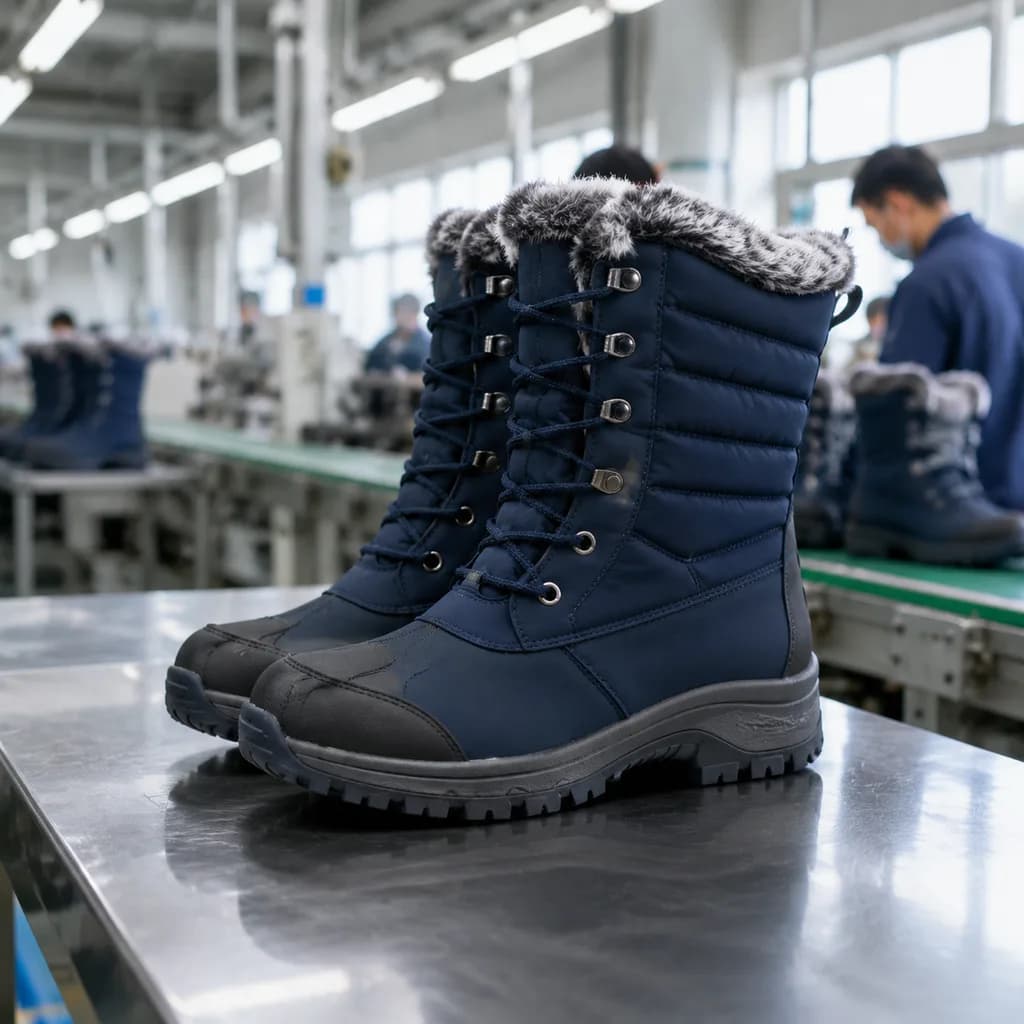
Structure a private label snow boot program around who owns construction, fit, materials, sample approval, and export-ready branding before you quote.
Wholesale private label snow boots often stall for a simple reason: construction, materials, fit reference, and approval standards never get a named owner. Brands, importers, and product developers open style boards and unit-cost questions first; sampling loops and export calendars then absorb the delay. A private label snow boot program works when each stage—from brand brief through reference samples to an export-ready branded run—is gated by who decides the product definition.
Private label wholesale fails when nobody owns the brief
Private label means the brand’s label rides on a boot whose construction, materials, and sign-off rules were defined early enough to control sampling. When those decisions stay informal, teams reopen last shape, upper stack, and branding hardware after samples already exist. That pattern is a process gap on the buyer side, and suppliers cannot close it with a catalog page alone.
Separate two early jobs. First, write the product definition the brand will stand behind at retail: use case, climate claim language you can defend, silhouette family, and who can approve a sample as production-ready. Second, only then open development, sampling, or quotation topics with a manufacturing partner. On the OEM manufacturing path, an OEM snow boot manufacturer develops custom snow boots to the buyer’s own specification, with construction, materials, and approval standards driving decisions. That boundary is the ceiling for what a custom route can mean at this stage: the buyer’s specification leads. Editorial recommendation for the buyer: treat MOQs, lead times, and certificates as project-specific inquiry items, not assumptions in the brief.
Where construction, materials, and approval standards take over
Once the brand accepts that OEM work follows its specification, three decision clusters should be named before sampling multiplies.
- Construction. Name the structural approach the brief will defend (for example, how the upper joins the midsole and outsole, how waterproofing is intended to behave at the system level, and which cold-weather use the silhouette is meant for). Keep the language at decision level; finished-boot lab ratings belong only where your own compliance plan requires them.
- Materials. Point to a materials family that matches the claim, rather than a mood board of fabrics. A later section uses one documented everyday-snow-boot upper direction as an example buyers can put in a brief.
- Approval standards. Decide who signs the reference sample, what “pass” means (fit, workmanship, branding placement, packaging readiness), and what still remains open for a later inquiry. Without that ownership map, each sample becomes a redesign session.
If your team cannot answer those three clusters in a short internal memo, pause style exploration. Custom snow boots specification work is cheaper on paper than on a second or third physical sample that reopens the same debates.
Sizing system and fit reference before style language
Fit belongs early in the program, long before a late QC note. For women’s retail and private-label winter collections, the product catalog documents a fit-led order: decide the target sizing system and fit reference first, then review the product brief. Editorial recommendation for the buyer: apply that same sequence when you structure any private label snow boot program, even if the assortment is mixed gender or not limited to women’s fashion stories.
- State the sizing system the retail channel expects (for example, US women’s, EU, or a dual-scale plan you will print on the box and hangtag).
- Name a fit reference the brand will use for sample review: a commercial last or a proven in-line boot the team already understands, plus any known width or volume notes for your customer base.
- Record who can accept or reject fit on a sample day, and whether fit sign-off is separate from aesthetic sign-off.
- Hold decorative language (quilted panels, plush collars, urban clean lines) until the fit reference is stable enough that style changes will not silently change volume.
Nothing in that gate invents last measurements or grading tables. It forces the private-label team to treat “women’s winter boot” as a fit contract rather than a style adjective. Review the product catalog’s fit-first buyer notes when you need a concrete prompt for that conversation.
Materials direction that matches the product claim
Materials direction should match the story you will sell, and the fabric that photographs well is secondary. One documented path for everyday snow boots is the waterproof textile upper: a woven or laminated synthetic fabric upper, typically nylon or polyester, finished with a durable water-repellent (DWR) coating and often backed by a waterproof membrane or laminate. That stack is described as the lightweight, flexible direction for everyday snow boots that need to stay supple in the cold.
Use that description as a briefable materials family. It is not a finished-boot performance certificate. In a private label snow boot program, the brand still decides whether “everyday snow” is the right claim, whether membrane or laminate is required for the market, and which approval tests (if any) the brand’s compliance team will run. Keep insulation, outsole compound, and midsole systems as separate line items in the brief so the upper choice does not silently stand in for a full cold-weather system.
| Brief element | What to name early | What to leave for inquiry |
|---|---|---|
| Upper family | Coated nylon or polyester textile path with DWR; membrane or laminate if the claim needs it | Exact mill codes, colorways, and any lab methods your market requires |
| Product claim | Everyday snow use that needs a flexible cold-weather shell | Retail temperature marketing language and third-party marks |
| Related systems | Placeholder lines for insulation, lining, sole unit | Packing, carton marks, and quotation detail for the full bill of materials |
When you need more depth on upper options, read the materials notes on waterproof textile uppers and map only what your brief will actually defend.
Reference samples as the contract between brief and production
The documented private label program arc is short and strict: a brand brief moves to reference samples, then to an export-ready, branded production run. Treat the approved reference sample as the contract that links those stages. Until that sample freezes the right attributes, volume language is premature.
On the sample the brand intends to approve, freeze at least:
- Construction decisions that affect waterproofing intent, sole attachment, and silhouette volume.
- Materials family and visible trims that define the retail story.
- Fit against the sizing system and fit reference you already named.
- Brand marks: logo placement, hangtag logic, and any label content that must match the export carton story later.
- Workmanship standards the approver will re-check on production pairs.
The case overview of a waterproof snow boot private label program is useful as a stage map. It does not promise that every project follows the same round count or calendar. Ask which sampling path applies to your brief; do not assume a fixed number of iterations. The program overview on case studies is the right place to re-read that arc before you escalate from sample talk to production talk.
Export-ready branded readiness versus aesthetic approval
Aesthetic approval covers silhouette, color, and brand mark placement the design team can defend. Export-ready branded readiness is a later operational layer: brand identity applied as the production run will ship it, with no open construction or materials debates that would force a re-sample mid-run. Keep those gates on separate lines in your internal checklist.
If branding art is still in draft, you are still in development or sampling conversation. Packing, carton marks, size-run logic, and destination paperwork remain buyer inquiry topics until a project-specific exchange confirms them. They are not automatic deliverables, even when the boot looks finished on the sample table.
What to send for development, sampling, or quotation
When the team is ready to open a conversation, send a compact handoff rather than a mood board alone. A practical pack includes:
- Program type: private label snow boot program under your brand, with OEM development to your specification if that is the route.
- Fit package: target sizing system, fit reference, and approval owner for fit.
- Materials direction: for example, waterproof textile upper with DWR and whether membrane or laminate is in scope for everyday snow use.
- Construction and approval standards: what “pass” means on the reference sample and who signs it.
- Branding readiness: logo files status, label content status, and whether you are asking about development, sampling, or a quotation path for a later export-ready branded run.
Share the current winter footwear definition your channel will sell, then ask which development, sampling, or quotation options may apply to the project. That question keeps commercial detail (including any MOQ or timing that might apply) inside a real project exchange instead of inventing numbers in the brief. Start from the request a quote path when the ownership memo is ready enough to discuss seriously.
A private label snow boot program is a sequence of ownership gates. Brands that lock the brief, fit reference, materials direction, and sample contract before they chase wholesale pricing keep sampling honest and leave export-ready branding as a deliberate final gate rather than a late scramble.
Evidence layer
Evidence checklist: Private Label Snow Boot Program: Spec Ownership
OEM, ODM, and private label are not just marketing labels. The practical difference is who owns the starting design, how much the construction changes, and which decisions must be approved before bulk production. Put the decision in writing: reference style, required changes, branding locations, packaging scope, tooling assumptions, and the point at which a sample becomes the production reference. For this guide, map each supplier response to “Private label wholesale fails when nobody owns the brief” so a claim is supported by a written specification, sample reference, controlled document, or a clearly marked open question.
A strong brief also records what is out of scope. That prevents a fast sample discussion from silently becoming a new mold, a new size run, or a new compliance requirement. Use the same approval language in the quote, sample comments, and purchase documentation. Cross-check the response against “Where construction, materials, and approval standards take over” and keep every unresolved point visible in the approval record.
- Design ownership and permitted adaptations — scoped to private label snow boot program
- Branding, packaging, and tooling boundaries — cross-checked against “Private label wholesale fails when nobody owns the brief”
- Sample approval gates before bulk commitment — with open risks from “Where construction, materials, and approval standards take over” recorded
Decision framework
Buyer checklist
- Treat a private label snow boot program as specification ownership, with the brand defining the product before volume language starts.
- Name construction, materials, and approval standards before sampling multiplies; OEM work follows the buyer’s specification.
- Use the women’s catalog fit-first order as documented source material, then apply the same sizing and fit-reference lock as buyer guidance for broader private-label work.
- Use materials families such as a waterproof textile upper as briefable directions rather than finished-boot certificates.
- Freeze the reference sample as the contract, then treat export-ready branded readiness as a separate gate from aesthetic approval.
Sources and verification
Evidence used for this guide.
Continue the specification
Move from research to a controlled brief.
Frequently asked questions
Questions buyers ask next
What should a brand own before requesting a private label snow boot quotation?
Own the product definition first: construction approach, materials direction, sizing system and fit reference, and who can approve the reference sample. Then ask which development, sampling, or quotation path applies to that brief.
How does an OEM private label path differ from shopping a finished wholesale boot?
On the documented OEM path, custom snow boots are developed to the buyer’s own specification, and construction, materials, and approval standards drive decisions. A finished wholesale SKU starts from a supplier’s existing product; private label branding alone does not replace that ownership work.
When is a private label program export-ready?
After the brand brief has produced approved reference samples and the team is prepared for a branded production run that can ship under the brand’s identity. Aesthetic sample approval alone is not the same as export-ready branded readiness. Packing, carton marks, and destination paperwork stay inquiry topics until confirmed for the project.