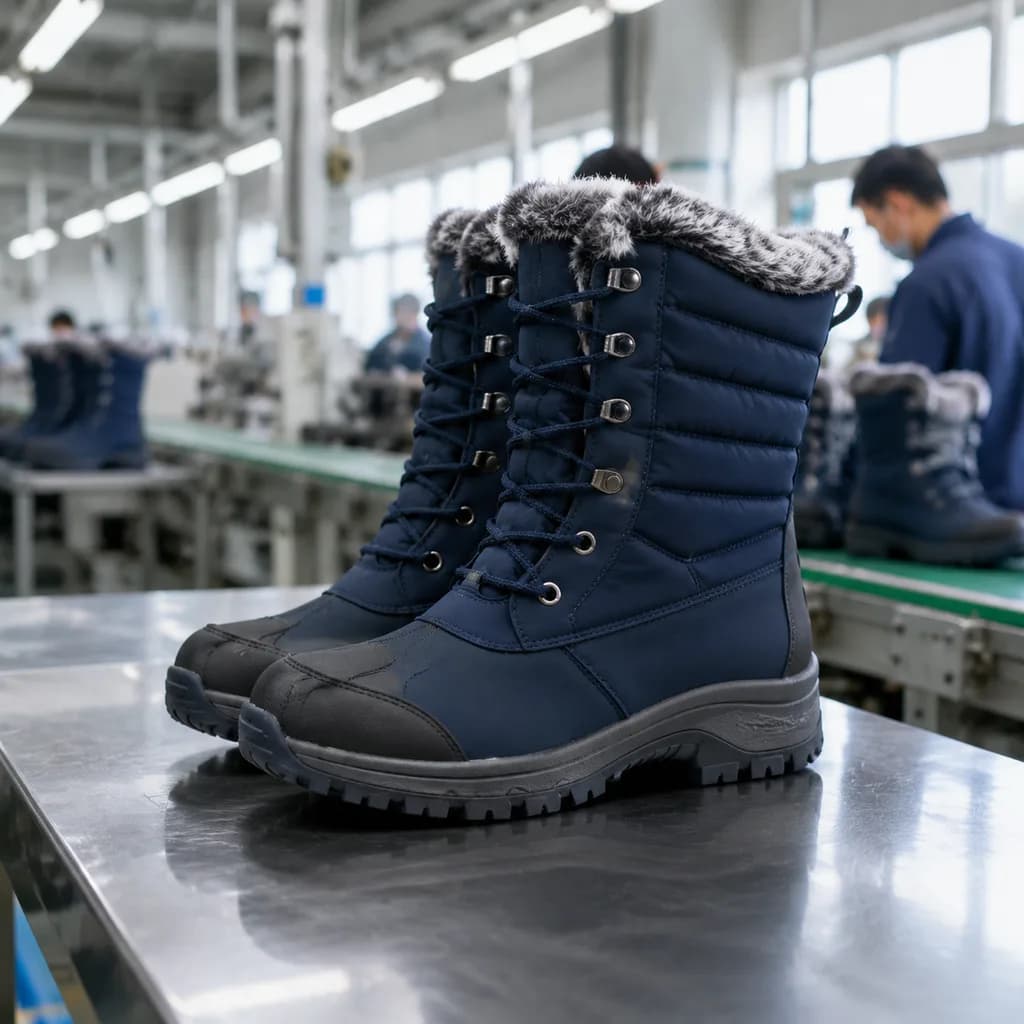
Turn a reference boot into a clear change map that separates fixed instructions, requested changes, approval bases and open questions.
A reference boot may show a profile, material, fit direction or branding position without identifying which details the buyer means to preserve. For inquiry preparation, a private label snow boot reference sample brief should make those choices visible. Each relevant decision receives one status: keep from the reference, change from the reference or leave open for discussion.
The document proposed here is a buyer-side decision register. Used as a custom snow boot development brief, it separates the reference artifact from the product currently being requested. The keep, change and open framework throughout this article is an editorial recommendation for buyers, not a documented SnowBootWorks form or company workflow.
Which Details Actually Govern?
A SnowBootWorks case-studies excerpt describes a private-label waterproof winter boot program in which a brand brief moves from reference samples to an export-ready, branded production run. That excerpt describes a single program. It does not establish reference samples as the starting point, or that sequence as the standard, for other projects.
For a new inquiry, the buyer should give every physical sample, photograph, drawing or product link an identifier and a limited role. A reference intended to communicate profile should not silently govern its materials or fit. Written boundaries belong beside the reference rather than being left for the recipient to infer.
- Reference ID
- A short identifier used consistently in the brief, attachments and correspondence.
- Intended role
- The particular decision that the buyer wants the reference to inform.
- Excluded cues
- Visible details that should not be read as product instructions.
- Linked decision
- The corresponding row in the buyer's change map.
If one reference informs several decisions, create a separate map entry for each role. This keeps a selected detail from turning the rest of the reference into an implied specification.
The Fillable Change Map
The SnowBootWorks capabilities page states that custom snow boots are developed to the buyer's own specification, with construction, materials and approval standards driving every decision. Those are the documented company-specific inputs. Profile, appearance, branding and fit are included below as editorial categories that a buyer may need to define for the inquiry.
The map uses one status field per row. When different parts of an attribute have different statuses, divide them into narrower rows instead of combining keep, change and open instructions in one entry.
| Decision line | Component or area | Reference ID | Selected status | Current instruction | Approval basis | Open question or owner |
|---|---|---|---|---|---|---|
| Profile and layout | Selected shape, proportion or panel area: ___ | ___ | Keep / Change / Open | Describe only the profile or layout that should govern. | Controlling drawing, image or buyer criterion: ___ | ___ |
| Construction | Construction decision being addressed: ___ | ___ | Keep / Change / Open | Set out the requested direction separately from its visible effect. | Governing buyer specification: ___ | ___ |
| Materials | Relevant component or material area: ___ | ___ | Keep / Change / Open | Give the fixed material, requested direction or pending selection. | Material document or buyer criterion: ___ | ___ |
| Color and finish | Area affected by the appearance decision: ___ | ___ | Keep / Change / Open | Define the current color or finish instruction for that area. | Controlling color or finish reference: ___ | ___ |
| Branding | Brand element and location: ___ | ___ | Keep / Change / Open | Link the current artwork and describe the intended placement direction. | Artwork file or buyer approval criterion: ___ | ___ |
| Fit and sizing | Fit aspect or sizing decision: ___ | ___ | Keep / Change / Open | Name the fit direction that the buyer currently intends. | Fit reference or buyer document: ___ | ___ |
| Approval standard | Attribute covered by the standard: ___ | ___ | Keep / Change / Open | Define the requirement or mark the criterion as pending. | Governing buyer document: ___ | ___ |
A phrase such as “similar to the reference” should be replaced with the exact detail the buyer wants to carry forward. If the decision is not settled, an open status is more accurate than wording that makes the reference appear controlling.
Visible Cue or Product Instruction?
Observation and instruction serve different purposes in the brief. The observation describes what the reference shows. The instruction states what the buyer currently requests. A detail that has not been decided belongs in the open column.
| Reference cue | Buyer-side entry |
|---|---|
| Shape or panel layout | Describe the visible arrangement, then specify whether that arrangement should be kept, changed or left open. Do not infer an unseen construction decision from appearance. |
| Surface appearance | Separate color and finish observations from the requested material. A material selection that has not been made remains open. |
| Branding shown on the reference | State whether the reference informs position, scale or another selected detail. Link the buyer's current artwork as its own file. |
| Waterproof wording | The cited SnowBootWorks excerpt applies this wording to one private-label program. For another inquiry, present waterproofing as a requested project requirement and ask which specification and approval information may apply. |
When a photograph, written instruction and buyer specification address the same decision, the brief should identify the controlling item. If precedence is still undecided, place the conflict in the open-question field.
Women's Fit: Two Inputs First
For women's retail and private-label winter collections, the SnowBootWorks products excerpt places “Decide first” beside the target sizing system and fit reference. That guidance has a stated women's collection scope and should not be extended to other footwear categories from this excerpt.
- Set the target sizing system. Use the same terminology in the map and its linked documents.
- Name the fit reference. Include its reference ID and the particular fit direction it is meant to inform.
- Separate fit from appearance. When references serve different roles, connect each one to its own decision line.
- Expose pending choices. Put unresolved fit points in the open-question field and name the buyer-side owner where one has been assigned.
These entries prepare the buyer's inquiry. They do not define a sampling sequence or a fit-approval procedure.
What Will Govern Review?
Because the capabilities excerpt identifies approval standards as a decision input, the buyer should connect each fixed instruction to its approval basis. The entry might point to a buyer specification, artwork file, reference or another existing buyer document.
- Pair every approval entry with a specific decision line.
- Distinguish a directional preference from a fixed buyer requirement.
- Cite an existing criterion by its current file name or revision identifier.
- Mark a pending criterion as open instead of inventing a threshold.
- Phrase requested review material as a question until its availability is confirmed.
The cited capability statement does not supply a sampling sequence, test method or acceptance threshold. Any such requirement should come from the buyer's existing documentation or remain an inquiry question.
Conflicts Need Their Own Record
A buyer may find that two current instructions cannot both control the same decision. The editorial recommendation is to show that conflict directly, then either identify the buyer's precedence decision or leave a focused question for discussion.
- Conflict
- The instructions or references that compete.
- Current sources
- The file names, reference IDs or decision lines involved.
- Buyer precedence
- The controlling instruction when the buyer has already chosen one.
- Open question
- The unresolved choice, addressed to the manufacturer or a buyer-side owner.
- Affected entries
- The map rows and approval notes to revisit after the choice is made.
Add a date or revision identifier to the map. When an instruction changes, update its status and any linked approval basis so the handoff reflects the buyer's current product definition.
A Decision-Led Inquiry Package
A private label winter boot inquiry can be organized around the decisions already made and the questions that remain:
- A short definition of the requested product and collection context.
- A reference index with an intended role and excluded cues for each item.
- The current keep, change and open map.
- Separate construction, material, appearance and branding instructions where defined.
- For an applicable women's collection, the target sizing system and fit reference.
- The buyer's current approval standards and governing documents.
- Recorded precedence decisions, conflicts and open questions.
- Current file names or revision identifiers for the attached materials.
This package should describe the product as it is currently defined without filling gaps with assumptions. Availability, timing, quantities and project outcomes remain open until they are addressed for the inquiry.
Share the current winter footwear definition and ask which development, sampling or quotation options may apply. Include the unresolved decision lines so the discussion can address the requested product rather than resemblance alone.
Evidence layer
Evidence checklist: Mark the Differences: Private Label Snow Boot Reference Sample Brief
OEM, ODM, and private label are not just marketing labels. The practical difference is who owns the starting design, how much the construction changes, and which decisions must be approved before bulk production. Put the decision in writing: reference style, required changes, branding locations, packaging scope, tooling assumptions, and the point at which a sample becomes the production reference. For this guide, map each supplier response to “Which Details Actually Govern?” so a claim is supported by a written specification, sample reference, controlled document, or a clearly marked open question.
A strong brief also records what is out of scope. That prevents a fast sample discussion from silently becoming a new mold, a new size run, or a new compliance requirement. Use the same approval language in the quote, sample comments, and purchase documentation. Cross-check the response against “The Fillable Change Map” and keep every unresolved point visible in the approval record.
- Design ownership and permitted adaptations — scoped to private label snow boot reference sample brief
- Branding, packaging, and tooling boundaries — cross-checked against “Which Details Actually Govern?”
- Sample approval gates before bulk commitment — with open risks from “The Fillable Change Map” recorded
Decision framework
Buyer checklist
- Buyer guidance: give each decision line one status, either keep, change or open.
- Buyer guidance: assign every reference a limited role and identify visible cues that should not govern the request.
- Buyer guidance: keep observations, current instructions and approval bases in separate fields.
- Buyer guidance: expose competing instructions in a conflict record instead of resolving them through assumption.
Sources and verification
Evidence used for this guide.
Continue the specification