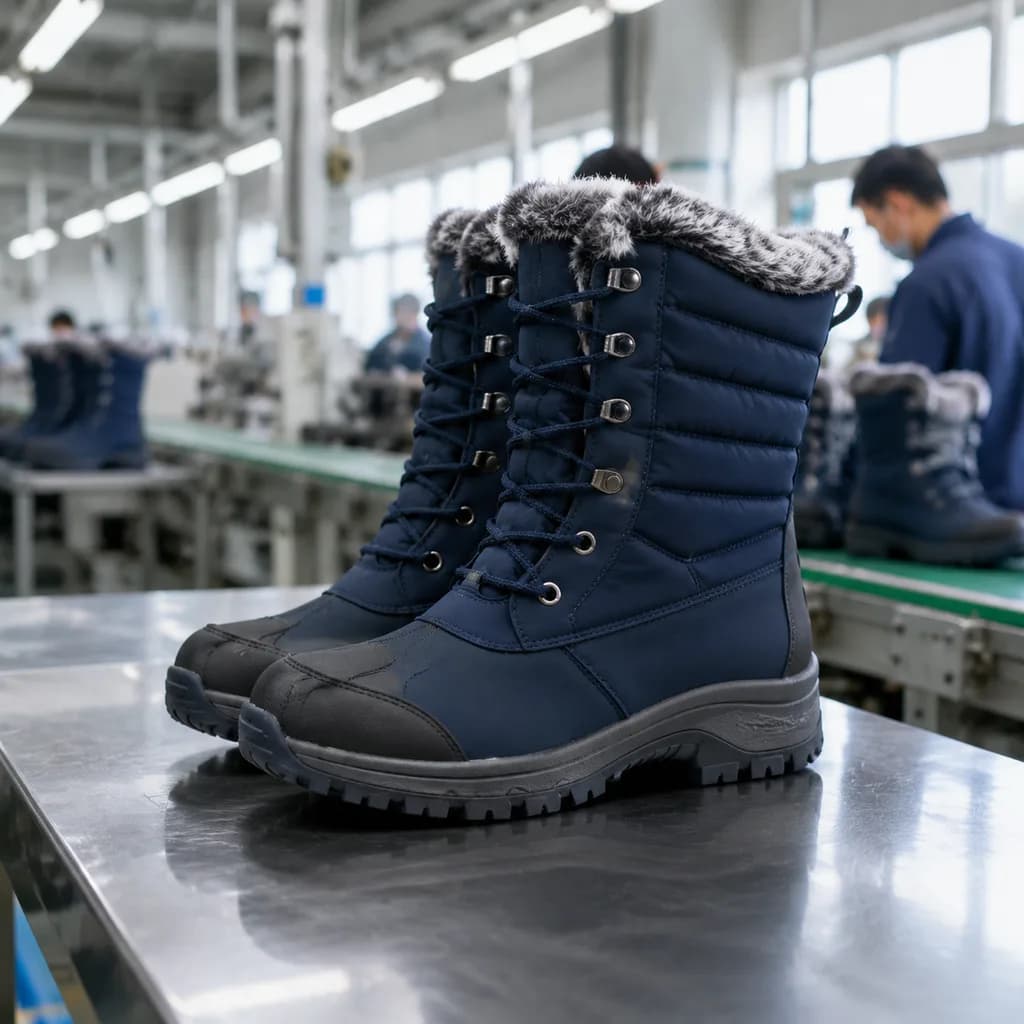
Map comfort, weather protection, and shelf appeal before you share a winter footwear definition and ask which development, sampling, or quotation options may apply.
For custom winter boots for outdoor retail brands, the first useful step is a clear statement of the balance the range is meant to hold. On its industries page, SnowBootWorks places outdoor retail winter footwear programs in the context of comfort, weather protection, and shelf appeal. Record those as planning priorities. They are not finished-product claims, and they should not be collapsed into one vague goal before the team has named the tradeoffs.
Different contributors often hold different pieces of the same range. A product developer may need a fit direction on record. A retail team may need the boot to sit coherently inside a seasonal assortment. A sourcing colleague may need to know which inputs are settled and which still require discussion. One compact priority map gives each person the same current definition and keeps an unresolved preference from looking like a fixed requirement.
This guide is an editorial recommendation for outdoor retail winter footwear sourcing. It helps you separate the decisions you own from the questions that should stay open at inquiry stage.
What the outdoor retail balance covers
SnowBootWorks identifies comfort, weather protection, and shelf appeal as the balance for outdoor retail brand winter footwear programs. Keep the three terms on separate lines in the project definition. A single combined phrase can hide a conflict the team has not yet discussed.
Comfort can capture the wearer experience the range needs to support, using language already accepted internally. Weather protection can capture the intended protection priority and any evidence or internal requirement the buyer expects to supply later. Shelf appeal can capture the visual role in the assortment, such as a core winter option or a more distinctive seasonal direction. None of those entries needs a construction choice, material package, rating, or performance result.
Ask one practical question for each line: is this firm enough to guide the next conversation? If not, write it as an open question. That discipline is especially useful when an attractive retail direction and a desired weather-protection emphasis have not been reconciled. A named tension is more usable than a false resolution.
A working map for retail priorities
Use the table below as an internal decision record. It is a buyer tool for a winter boot product brief for retailers, not a list of factory options or a performance checklist. In the last column, state whether the point is defined, supported by a supplied reference, or still open.
| Decision area | What to record | Current status |
|---|---|---|
| Comfort | The fit or wearer-experience priority the team can state now, plus any agreed boundary. | Defined, reference available, or open for discussion. |
| Weather protection | The protection objective and any project documentation that gives it meaning. | Defined, evidence to be supplied, or open for discussion. |
| Shelf appeal | The range role, visual direction, and the retail comparison the team is using. | Defined, visual reference available, or open for discussion. |
| Priority conflict | Any point where one stated priority may affect another and needs a decision. | Record the owner and the unresolved question. |
Every cell does not need to be complete. Each status does need to be honest. A blank labelled as an open decision can be discussed. A blank presented as a requirement invites stakeholders to fill it with different assumptions.
Where collection context changes fit decisions
The product catalog presents fit-led women's winter boot platforms for women's retail and private-label winter collections. In that context, it places the target sizing system and fit reference before review of the product brief. Use that sequence only when the project actually sits in the women's retail or private-label winter collection context. Do not extend it to every winter footwear category.
For a relevant project, record the target sizing system before treating fit as settled. Then identify the fit reference, if one exists, and review how the product brief relates to it. The reference becomes useful to the decision at hand instead of a broad instruction for the entire range.
Keeping the scope narrow has a direct procurement benefit. You can separate a confirmed fit input from a retail preference that still needs internal agreement. In private label winter boot planning, identify the collection first, then state which parts of the definition belong to it. That keeps the inquiry from suggesting that a women's collection direction applies to another audience or collection type.
Specification inputs versus reference inputs
Two source pages describe different input contexts. Treat them separately.
The capabilities page describes developing custom snow boots to the buyer's own specification, with construction, materials, and approval standards driving decisions. Separately, the case-study summary describes one private-label waterproof winter boot program and shows how a brand brief moves from reference samples to an export-ready, branded production run. Those statements come from different pages. They are not a universal two-route process for every project.
| Input type | What the source establishes | What the buyer can clarify |
|---|---|---|
| Buyer specification | The capabilities description frames the buyer's own specification as the basis for development, with construction, materials, and approval standards driving decisions. | Which parts of the specification are confirmed, which documents define them, and who can resolve gaps. |
| Reference samples | The case-study summary places reference samples inside one private-label waterproof winter boot program and describes how a brand brief moves from those samples to an export-ready, branded production run. | What the reference is intended to communicate and which aspects remain undecided. |
A specification-led input can be precise without being complete. A reference-led input can be useful without functioning as a full specification. State what each item is being used for. A reference may establish a visual direction while comfort or weather protection remains open. An internal specification may settle one decision area without providing a physical reference.
If a reference sample is available, do not treat every related choice as approved. If only part of a specification is ready, do not present the project as fully defined. Either shortcut makes later comparison harder when the team checks a proposed direction against the retail priority map.
Keeping the case-study scope narrow
The case-study excerpt is useful for one limited reason. It identifies a private-label waterproof winter boot program and shows how a brand brief moves from reference samples to an export-ready, branded production run. It does not state a quantity, timing, price, testing method, performance outcome, or general guarantee for other projects.
Use the page as context for the type of program described. Do not treat it as proof that another reference sample will follow the same path or yield the same commercial outcome. Do not treat it as proof of waterproof performance for another boot. Keep the case-study fact separate from the current project definition, which should stand on its own inputs and decisions.
Turning the map into a current definition
Before contacting a supplier, consolidate the map into a short current definition. This is an editorial recommendation for organizing a request, not a required SnowBootWorks submission format. It helps you present the project without overstating what has been decided.
- Retail balance: State the current comfort, weather-protection, and shelf-appeal priorities, including any conflict that remains unresolved.
- Collection scope: Identify the collection context. Where the project is a women's retail or private-label winter collection, include the target sizing system and fit-reference status.
- Information currently available: Describe the documents, samples, or other materials the team can share now, and the purpose of each item. Distinguish a buyer specification context, where relevant, from any reference-sample context drawn from a single program description. Do not present those source contexts as a complete menu of project routes.
- Decision status: Mark each important point as confirmed, supported by a reference or document, or open for discussion.
- Questions for the inquiry: State which development, sampling, or quotation information the buyer wants to understand for this project.
Prefer a current definition over an exhaustive one. A clear note that a decision is pending is often more actionable than a longer document that mixes confirmed requirements with aspirations. It also gives internal stakeholders a way to review the request before it is shared externally.
Which options may apply?
Once the priorities, scope, and available inputs are recorded, share the current winter footwear definition through the request-a-quote page. Ask which development, sampling, or quotation options may apply to the project. Keep those items as questions. The supplied sources do not establish that a particular option will be available for every inquiry.
The useful output from this preparation is a request that makes present decisions legible: what the range is trying to balance, which collection context applies, what information is already available, and what still needs an answer. That is a stronger basis for a sourcing conversation than a broad request for custom winter boots without a stated retail priority.
Evidence layer
Evidence checklist: Custom Winter Boots for Outdoor Retail Brands: A Priority Map
A product category page is a starting point, not an assortment plan. Decide which customer, climate, price band, and selling channel each direction serves. Then compare shaft height, warmth, waterproofing, outsole behavior, color architecture, size coverage, and packaging as a group. A range with fewer clearly differentiated roles is easier to brief, sample, and explain than a long list of near-duplicates. For this guide, map each supplier response to “What the outdoor retail balance covers” so a claim is supported by a written specification, sample reference, controlled document, or a clearly marked open question.
Document the role of every style in the seasonal plan: traffic builder, core repeat, premium option, kids or family extension, or workwear solution. This makes later decisions about size ratios, colorways, and replenishment more explicit. Cross-check the response against “A working map for retail priorities” and keep every unresolved point visible in the approval record.
- One clear role for each style — scoped to custom winter boots for outdoor retail brands
- Size, color, and channel assumptions — cross-checked against “What the outdoor retail balance covers”
- Range gaps and avoidable duplication — with open risks from “A working map for retail priorities” recorded
Decision framework
Buyer checklist
- Record comfort, weather protection, and shelf appeal as separate retail priorities so unresolved tradeoffs remain visible.
- Use the women's sizing-system and fit-reference sequence only where the project belongs to the women's retail or private-label collection context described by the product page.
- Keep buyer-specification and reference-sample contexts distinct, and state what each available input is intended to define.
- Ask which development, sampling, or quotation options may apply instead of assuming availability.
Sources and verification
Evidence used for this guide.
Continue the specification